




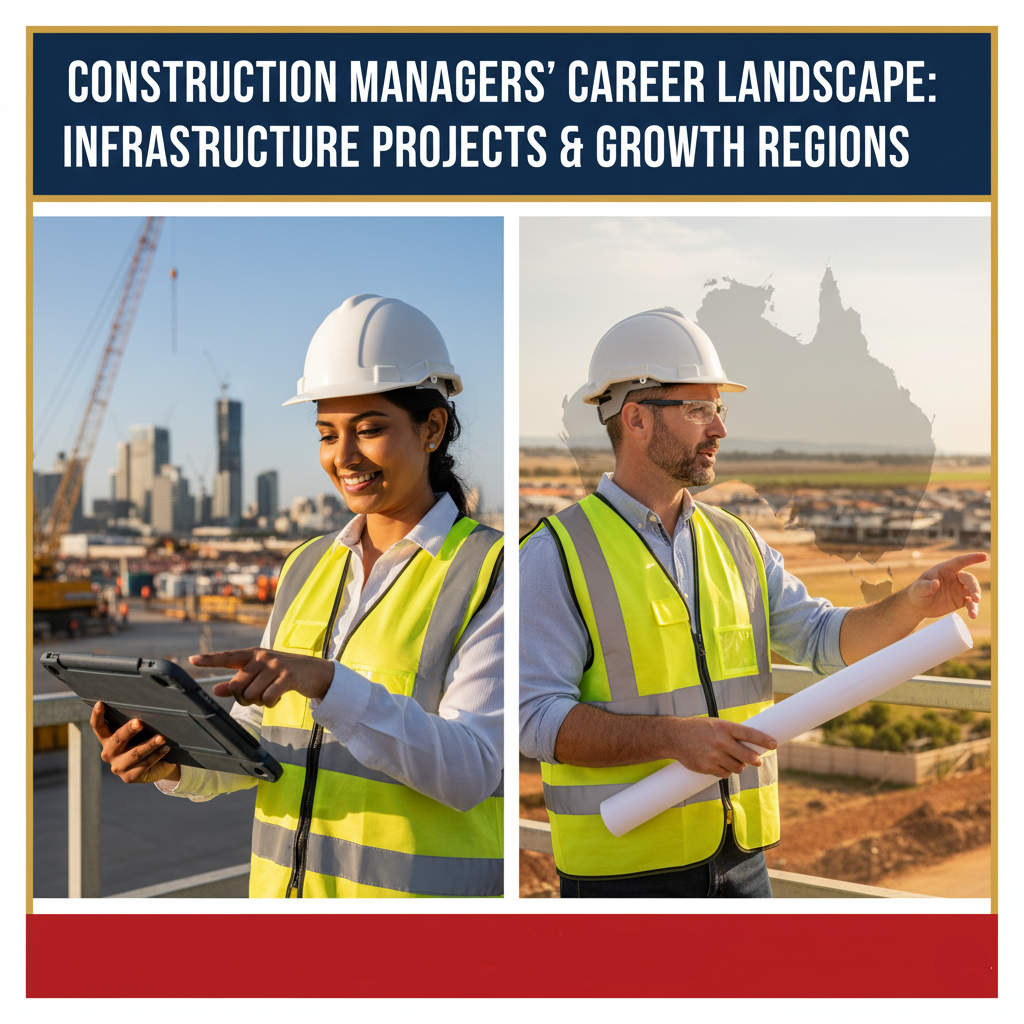
Explore job market trends, salaries, and migration paths for construction managers in Australia’s booming infrastructure sector—urban and regional growth mapped.
Introduction
Australia’s infrastructure boom has propelled demand for construction managers to record levels, with major developments in transport, energy, and urban growth regions driving new recruitment. By 2025, construction manager jobs in Australia will be among the top opportunities for skilled professionals seeking stability, leadership, and high earning potential in a rapidly evolving market.
Infrastructure Projects Fueling Construction Manager Careers
Construction managers are at the heart of Australia’s ambitious infrastructure expansion. The federal and state governments have committed more than AUD 120 billion to critical projects over a four-year span, including new railways, highways, airports, hospitals, and renewable energy developments. This extraordinary investment has created thousands of new roles, with complex, multi-stage builds requiring hands-on leadership, budget management, and technical expertise.
Key sectors driving demand include transportation (rail, road, and ports), energy (solar farms, wind turbines, transmission networks), and urban expansion (commercial buildings, schools, housing developments). The shift toward sustainable infrastructure is shaping industry requirements—managers who understand green building standards, efficiency regulations, and advanced construction technology are especially prized.
Infrastructure projects tend to span several years and involve coordination across government, contractors, engineers, and the public. Construction managers who can deliver on schedule, manage risk, and adapt to evolving requirements are in high demand, especially in regions coping with rapid population growth or climate resilience upgrades.
Growth Regions and State-by-State Job Dynamics
While metropolitan centers like Sydney, Melbourne, and Brisbane traditionally lead in construction manager placements, regional demand is surging as infrastructure investments spread across Australia. Several growth regions now compete with the big cities for top talent, offering both career diversity and lifestyle advantages.
Urban Hotspots
Sydney & Melbourne: Mega-projects like Sydney Metro, WestConnex, Melbourne’s Suburban Rail Loop, and new hospital complexes are creating ongoing construction manager jobs. Urban migration, high-density building, and commercial expansion underpin strong job security and salary growth.
Brisbane & Perth: Major developments in logistics hubs, new suburbs, and port upgrades provide robust opportunities, with regular recruitment for managers skilled in civil, commercial, and industrial construction.
Regional Uplift
Queensland & Western Australia: Mining towns, regional ports, and energy infrastructure in Bowen Basin, Pilbara, and Goldfields drive persistent regional demand. Rural hospital and school builds in Queensland and WA expand career prospects for those willing to relocate.
Victoria & New South Wales: Growth corridors around Geelong, Ballarat, Newcastle, and Wollongong offer mid-to-senior construction manager roles, reflecting strong population growth and public sector spending.
South Australia, Tasmania & Northern Territory: Infrastructure upgrades in Adelaide, Hobart, Darwin, and remote centers focus on roads, renewable energy, Indigenous community projects, and tourism development—often with attractive incentives for experienced managers.
Regional opportunities often include premium salaries, housing allowances, and relocation bonuses. Construction managers who embrace travel or regional living can find rapid career progression and direct impact on local communities.
Salary Trends and Career Advancement for Construction Managers
Earnings for construction managers in Australia outpace many professions, reflecting both demand and leadership responsibility. The average annual salary for a construction manager in 2025 stands at AUD 129,520, markedly higher than the national average. Entry-level managers earn about AUD 71,500, mid-career professionals see AUD 125,000+, while veterans with over 20 years’ experience can command AUD 180,000–200,000 or more each year.
Influencing Factors
Salaries vary by city, sector, experience, and project scale. High-profile infrastructure and energy projects tend to pay more due to their complexity and budget size, especially in state capitals or booming regional areas. Specialist experience in green building, high-rise, or transport infrastructure fetches premium pay.
Education and advanced certifications (bachelor/master’s degree in construction management, PMP or PRINCE2 project management) can further boost income potential and create pathways to director or executive roles.
Example Salary Ranges
- Entry-level construction manager: AUD 71,500–80,000
- Mid-career manager: AUD 125,000–158,000
- Senior manager (10–20 yrs): AUD 158,000–180,000
- Project director: AUD 243,000+
- Regional manager or executive: Up to AUD 200,000+
Top employers include major builders, engineering firms, mining and resources companies, public transport authorities, and renewable energy developers.
Skilled Migration Pathways for Construction Professionals
Australia’s skilled migration policies recognize construction managers as vital contributors to national growth. International professionals seeking Australian opportunities can access several pathways:
- Skilled Independent (subclass 189): For highly qualified managers with accredited experience and English proficiency, no employer sponsorship required.
- Skilled State Nominated (subclass 190): For managers nominated by a state or territory based on occupation demand, with residency commitment.
- Employer Sponsored (subclass 482, 186): Companies may directly sponsor managers for high-priority projects, including infrastructure and regional developments.
- Regional Sponsored (subclass 491): Regional migration incentives encourage managers to relocate outside major metros, with prospects for permanent residency after three years.
Applicants require international credentials recognized by Australian authorities, proof of management experience, and compliance with language and safety standards. Many large projects actively recruit skilled migrants, with onboarding support and competitive remuneration packages.
Highest Paying Construction Management Roles and Career Pathways
Senior construction managers working on infrastructure mega-projects, major mining facilities, or large-scale commercial developments have access to the highest salaries and fastest progression. Top-paying roles include:
- Project Director/Executive: Oversee programs worth hundreds of millions; salaries up to AUD 243,000+.
- Site Manager: Responsible for day-to-day site operations; typically earn AUD 130,000–150,000.
- Project Manager: Coordinate budgets and schedules; salaries average AUD 125,000–153,000.
- Operations Manager: Manage teams and resource allocation; upwards of AUD 120,000.
- Senior Project Manager: Lead large teams; frequently earn AUD 150,000–197,000 annually.
- Regional Manager: Manage projects across growth regions; up to AUD 200,000+.
Construction managers can transition into executive positions, consultancy, training, or specialized project roles as they gain experience. Expertise in digital construction management (BIM, project automation), sustainability, and risk management increasingly shapes career mobility.
Job Market Trends for Construction Managers in Australia
Australia’s construction industry is undergoing transformation. Major trends include:
- Digital innovation: Adoption of BIM, automation, and project analytics is shifting management practices.
- Green infrastructure: Demand for eco-friendly builds is growing; managers with sustainability credentials stand out.
- Diversity & Inclusion: More women and international professionals are entering construction management, filling talent gaps and enriching leadership.
- Regionalization: Projects are expanding beyond metropolitan areas, requiring managers to adapt to varied environments and community needs.
- Flexible career models: Short-term contracts, consultancy, and remote project work are increasingly common, offering diverse career arrangements for managers.
Construction career opportunities in Australia are robust, adaptable, and future-focused. Managers who invest in continual learning, technology skill-upgrading, and sustainable development principles are well placed for lasting career growth.
Conclusion
Australia’s landscape for construction managers is vibrant and expanding, driven by government infrastructure investments, urban and regional development, and technological transformation. High salaries, diverse pathways, and skilled migration incentives make construction management a leading career choice for 2025 and beyond. Professionals who embrace challenges, stay informed, and aim for leadership in growth regions will shape the nation’s future infrastructure.