




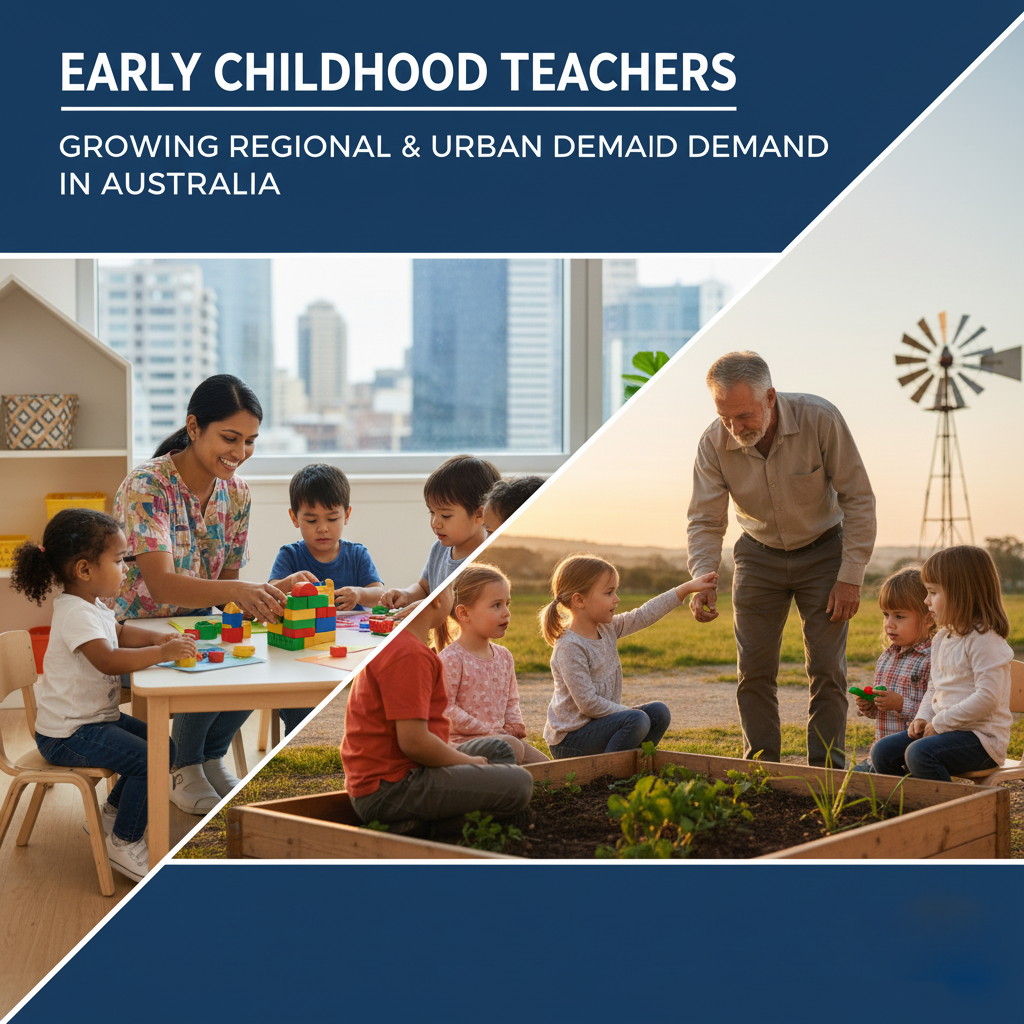
Explore the rising demand for preschool educators in Australia’s regions and cities, career opportunities, and skilled migration pathways for 2025.
Introduction
The demand for early childhood teachers in Australia is experiencing significant growth, driven by population increases and government initiatives. Understanding the regional and urban dynamics of this demand is crucial for educators and migrants eyeing preschool educator roles in 2025.
Rising Demand for Early Childhood Teachers in Australia
Australia is witnessing a substantial rise in demand for early childhood teachers across all states and territories. This is fueled by expanding early learning programs, population growth, and government policies emphasizing quality education from the earliest years. The role of early childhood educators is critical, reflected in their inclusion on the Skilled Occupation List, creating both job security and migration opportunities for qualified individuals. The Australian government’s investment in over 160 new and expanded early education centers further escalates the need for skilled educators nationwide.
Urban vs Regional Demand for Preschool Educators
There is a notable contrast between urban and regional demand for early childhood teachers. Urban centers like Sydney and Melbourne have a concentrated demand due to higher population densities and more childcare facilities. However, regional areas face acute teacher shortages exacerbated by isolation, fewer amenities, and limited local opportunities. Regional schools often struggle to fill vacancies, impacting educational quality and access. While urban areas offer more competitive salaries and career advancement, regional positions come with incentives such as bonuses and faster pathways to permanent residency. Addressing these regional shortages remains a national priority to ensure equitable early childhood education.
Career Opportunities and Highest Paying Roles for Early Childhood Teachers
Career opportunities for early childhood teachers in Australia are diverse, spanning public preschools, private centers, and community-based programs. The highest paying early childhood teacher jobs often reside in urban areas and specialized educational programs, with salaries reflecting qualifications, experience, and location. Migrants with recognized qualifications can find stable employment and career progression in both regional and urban contexts, supported by government-backed skilled migration pathways and visa options. Early childhood education roles are considered among Australia’s top in-demand professions, ensuring robust employment prospects.
Skilled Migration Pathways for Early Childhood Teachers
Australia offers several skilled migration pathways for early childhood educators seeking permanent residence. Key visa options include the Skilled Independent Visa (Subclass 189), Temporary Graduate Visa (Subclass 485), and state nomination programs. Eligibility typically requires positive skills assessment, English proficiency, and meeting points thresholds. State sponsorship is particularly advantageous for those willing to work in regional areas facing acute shortages. Migration pathways emphasize integration into the Australian workforce, with recognition of overseas qualifications facilitating a smoother transition. These pathways not only address workforce needs but also provide migrants with a stable career foundation.
Conclusion
The demand for early childhood teachers in Australia is set to rise significantly in both urban and regional areas in 2025, creating abundant career opportunities. Skilled migration pathways further support educators in securing rewarding roles across the country. Becoming an early childhood teacher in Australia offers a meaningful, stable career with pathways to permanent residency.