




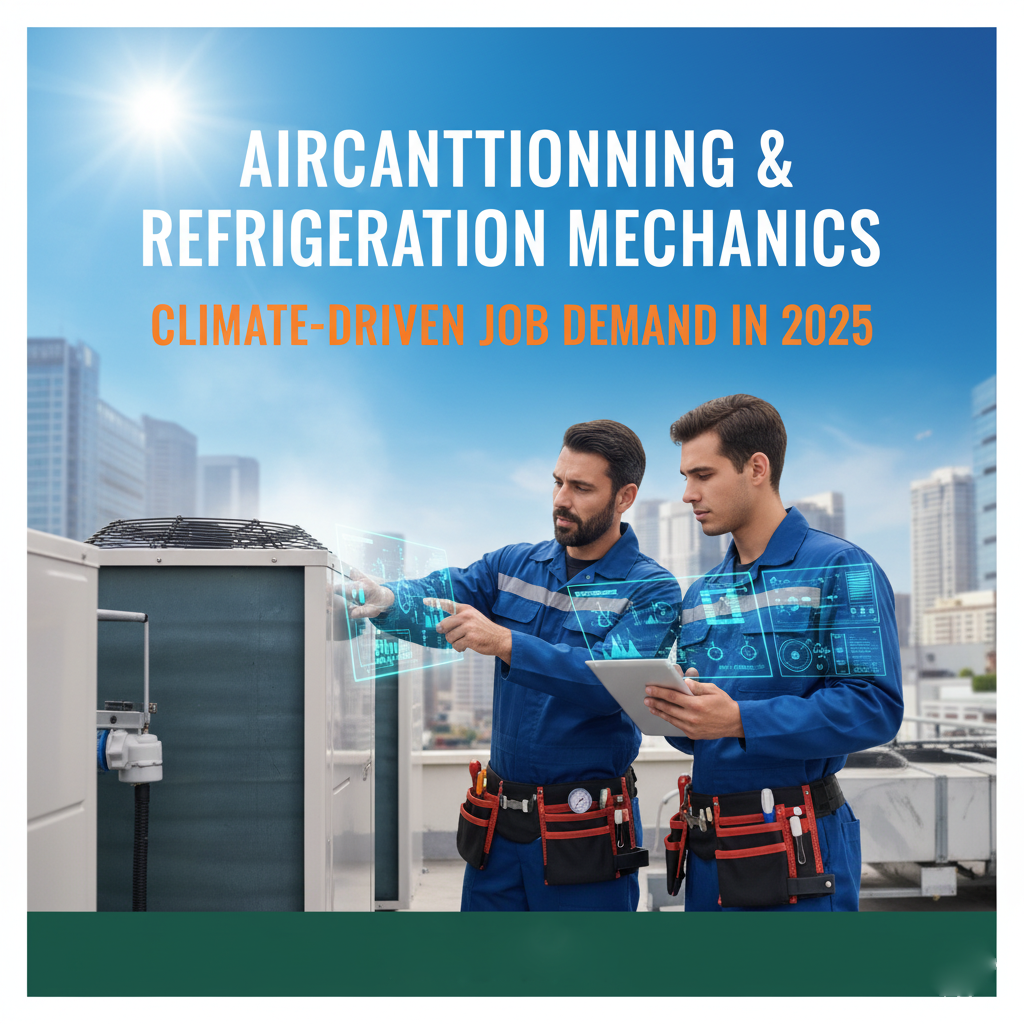
Explore why climate trends are driving strong demand for airconditioning and refrigeration mechanics, with growing opportunities and future career outlooks.
Introduction
Climate change and rising temperatures have spiked demand for skilled airconditioning and refrigeration mechanics globally. These essential tradespeople ensure comfort and safety in extreme weather, maintain energy-efficient systems, and support environmental sustainability. The climate-driven surge in HVAC industry growth offers resilient career paths with strong job security for trained technicians.
Climate Impact and Growing Demand for HVAC Trades
Increasing global temperatures and more frequent extreme weather elevate the need for effective heating, ventilation, air conditioning, and refrigeration (HVACR) systems. Aging infrastructure and regulatory pushes for energy efficiency intensify demand for HVAC technicians skilled in installing and maintaining modern, green technologies. According to U.S. labor data, employment for HVAC mechanics and installers is projected to grow 9% from 2023 to 2033, faster than average for all jobs. The worldwide market expansion towards sustainable building practices further fuels this growth.
Technological Advances Shaping the Future Workforce
Modern HVAC roles require skills beyond traditional mechanics. Air conditioning and refrigeration mechanics are now experts in smart HVAC systems, IoT integration, energy-efficient designs, and environmentally compliant refrigerant handling. Variable refrigerant flow (VRF) systems and heat pump technologies demand advanced technical knowledge. Continuous training programs and certifications help tradespeople adapt, ensuring readiness for evolving climate-driven challenges. Industry forecasts emphasize hands-on trades combined with digital controls proficiency as key for future competitiveness.
Conclusion
The airconditioning and refrigeration mechanic trade offers significant growth driven by urgent climate needs and technological evolution. For aspiring technicians, investing in green HVAC skills promises strong demand and stable career opportunities. As climate challenges drive the industry’s expansion, skilled tradespeople remain essential for advancing energy efficiency and environmental compliance worldwide.