




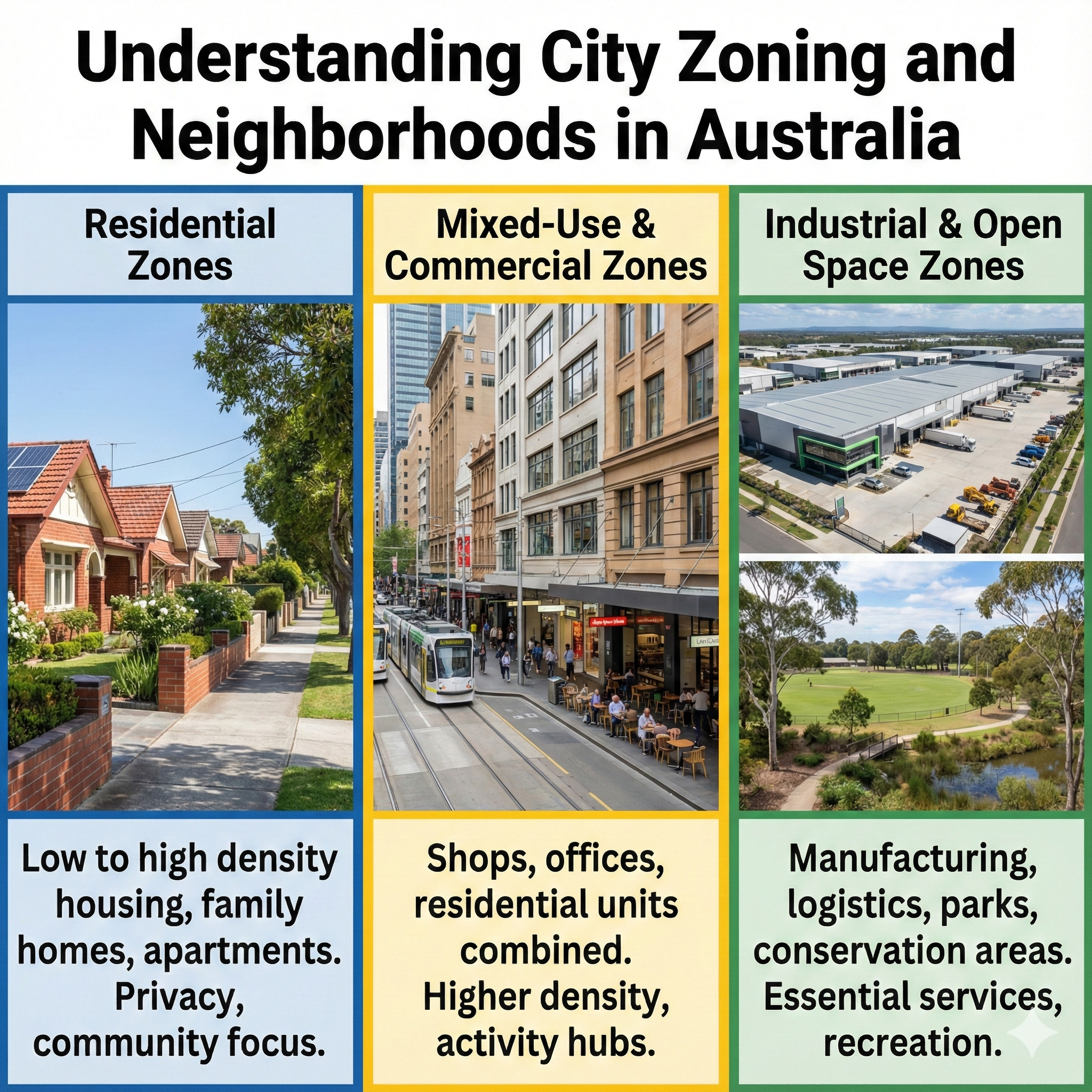
Explore city zoning in Australia, from residential to commercial zones, and learn how urban planning shapes vibrant neighborhoods. Get practical insights now.
Introduction
Australia’s cities are among the most livable in the world, with Sydney and Melbourne consistently ranking high globally. But what shapes these urban landscapes? City zoning Australia and urban planning Australia play pivotal roles in creating functional, sustainable, and vibrant neighborhoods. Whether you’re a homeowner, developer, or new resident, understanding Australian zoning laws and how they influence neighborhood development Australia is essential. This article dives into the essentials of zoning, its impact on communities, and how it drives sustainable urban design Australia. Let’s explore what you need to know to navigate this complex system.
What Is City Zoning and Why Does It Matter?
City zoning is the process of dividing land into zones with specific rules for use, development, and construction. In Australia, local government planning Australia oversees zoning to ensure orderly growth and balance community needs. Zoning determines whether an area is used for residential zoning Australia, commercial zoning Australia, or mixed-use zoning Australia. It affects property values, lifestyle, and access to amenities.
For example, zoning ensures residential areas remain quiet and safe, while commercial zones foster business activity. Australian city planning policies aim to create cohesive neighborhoods that align with community goals. Understanding zoning helps residents and developers make informed decisions about property use and future growth, ensuring compliance with land use regulations Australia.
Zoning also supports sustainable urban design Australia by promoting efficient land use and reducing urban sprawl. It shapes neighborhood character Australia, preserving heritage areas or encouraging modern developments. Without zoning, cities could face chaotic growth, compromising livability.
Types of Zoning in Australian Cities
Australia’s zoning system varies by state but generally includes several key categories. Residential zoning Australia covers homes, apartments, and townhouses, with rules on building height and density. For instance, low-density zones prioritize single-family homes, while high-density zones allow multi-story apartments.
Commercial zoning Australia designates areas for businesses, offices, and retail. These zones, often found in city centers, support economic activity but restrict residential use. Mixed-use zoning Australia blends residential, commercial, and sometimes industrial uses, creating vibrant, walkable neighborhoods. Think of inner-city areas like Melbourne’s Southbank, where cafes, offices, and apartments coexist.
Urban development regulations Australia also include industrial, rural, and environmental zones. Each has specific rules to protect its purpose, like preserving green spaces or supporting agriculture. Zoning codes Australia ensure clarity, but local councils may have unique Australian planning schemes that add complexity. Checking with your local government is key to understanding zoning rules.
How Zoning Shapes Neighborhood Development
Neighborhood development Australia hinges on zoning decisions made by local councils and state governments. Zoning influences Australian neighborhood demographics by determining who lives where. For example, high-density residential zones attract younger professionals, while suburban low-density zones appeal to families.
Urban growth boundaries Australia limit city sprawl, encouraging denser, more sustainable development. This approach preserves natural landscapes and reduces infrastructure costs. Zoning also shapes community planning Australia by dictating where schools, parks, and transport hubs are built. For instance, Australian urban design prioritizes access to public transport in high-density zones, enhancing connectivity.
Zoning can also preserve neighborhood character Australia. Heritage zones protect historic buildings, while modern zones encourage innovative architecture. However, zoning disputes can arise when residents oppose changes, like rezoning for higher density. Understanding property development laws Australia helps navigate these complexities, ensuring developments align with community needs.
Conclusion
City zoning Australia is the backbone of vibrant, functional neighborhoods. From residential zoning Australia to mixed-use zoning Australia, these rules shape how cities grow and thrive. By understanding Australian zoning laws and urban planning Australia, residents and developers can make informed decisions that enhance livability. Want to learn more about your area’s zoning? Check your local council’s planning scheme or consult a professional to stay informed and engaged.