

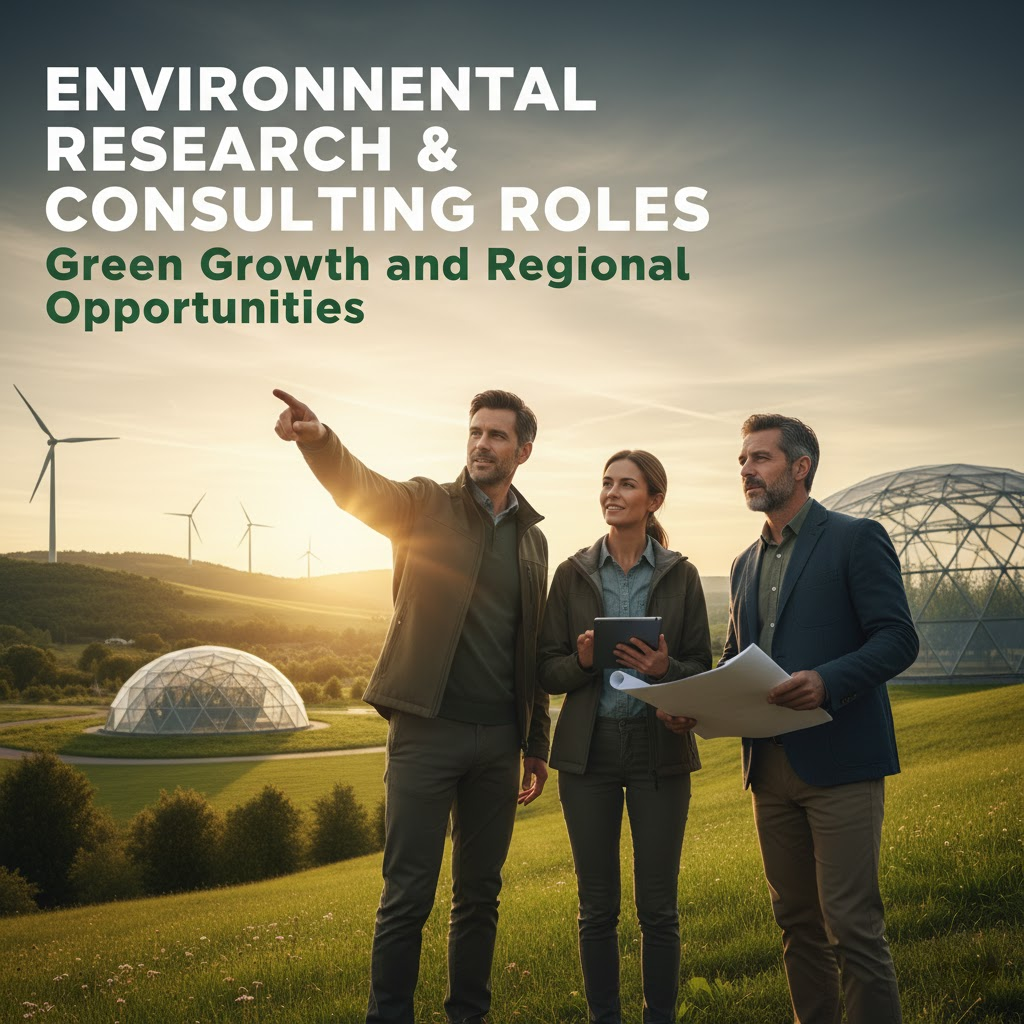
Explore environmental research & consulting roles driving green growth and regional opportunities. Learn about sustainable careers and their impact.
Introduction
The global push for sustainability has created a surge in demand for environmental research and consulting roles, with the green economy expected to generate 24 million jobs by 2030, according to the International Labour Organization. These roles bridge science, policy, and innovation to address climate change and foster sustainable development. This article explores how environmental research and consulting contribute to green growth, highlight regional opportunities, and outline career paths in this dynamic field. Discover how you can make an impact.
The Role of Environmental Research in Green Growth
Environmental research drives green growth by providing data-driven insights into climate change solutions and sustainable practices. Researchers study ecosystems, renewable energy, and carbon reduction strategies to inform policies and innovations. For example, environmental scientists assess the impact of urban development on biodiversity, ensuring projects align with sustainable urban planning goals. These roles often involve collaboration with governments, NGOs, and private sectors to create conservation strategies. By advancing environmental innovation, researchers lay the foundation for a green economy that balances growth with ecological preservation.
Professionals in this field typically hold degrees in environmental science, ecology, or related disciplines. Their work directly supports regional development by identifying local environmental challenges and proposing tailored solutions. For instance, research in coastal regions might focus on ecosystem management to protect marine life, while arid areas prioritize water conservation. These efforts create green jobs and drive sustainable development across diverse geographies.
Environmental Consulting: Bridging Policy and Practice
Environmental consulting translates research into actionable solutions, guiding businesses and governments toward sustainability. Consultants conduct environmental impact assessments to ensure compliance with environmental policy and minimize ecological harm. They advise on green infrastructure projects, such as solar farms or sustainable urban drainage systems, which are critical for carbon reduction. According to a 2023 report, the global environmental consulting market is projected to reach $50 billion by 2028, reflecting growing demand.
Consultants often work on regional opportunities, tailoring strategies to local needs. For example, in rapidly urbanizing areas, they design sustainable urban planning initiatives to reduce emissions and enhance livability. In rural regions, they might focus on conservation strategies to protect natural resources. These roles require expertise in environmental policy, project management, and stakeholder engagement, making them ideal for professionals passionate about sustainability consulting.
Regional Opportunities in the Green Economy
The green economy offers diverse regional opportunities, driven by local environmental needs and economic priorities. In Europe, renewable energy projects, such as wind and solar, create demand for researchers and consultants to optimize energy transitions. In Asia, rapid urbanization fuels opportunities in sustainable urban planning and green infrastructure. Africa’s focus on conservation strategies generates roles in ecosystem management, particularly in biodiversity-rich regions.
North America emphasizes carbon reduction and environmental policy, with consultants advising on regulatory compliance and green technology adoption. In developing regions, green jobs in agriculture and forestry promote sustainable development. These regional differences highlight the need for localized expertise, making environmental research and consulting critical for addressing global challenges while fostering economic growth.
Skills and Pathways to Environmental Careers
Entering environmental research or consulting requires a blend of technical and soft skills. A degree in environmental science, engineering, or policy is often essential, though interdisciplinary backgrounds like economics or geography are valuable. Proficiency in data analysis, GIS mapping, and environmental impact assessment tools is crucial. Soft skills, such as communication and problem-solving, enable professionals to collaborate with diverse stakeholders.
Certifications, such as LEED for green building or ISO 14001 for environmental management, enhance employability. Many professionals start in entry-level roles, such as field researchers or junior consultants, before advancing to project management or policy advisory positions. Networking through industry conferences or platforms like LinkedIn can open doors to green jobs in sustainability consulting or research.
Conclusion
Environmental research and consulting roles are pivotal in driving green growth and addressing regional opportunities. By blending science, policy, and innovation, these careers shape a sustainable future while offering fulfilling opportunities. Whether you’re drawn to renewable energy, sustainable urban planning, or ecosystem management, now is the time to explore these dynamic fields. Start by researching local opportunities or pursuing relevant education to join the green economy.