



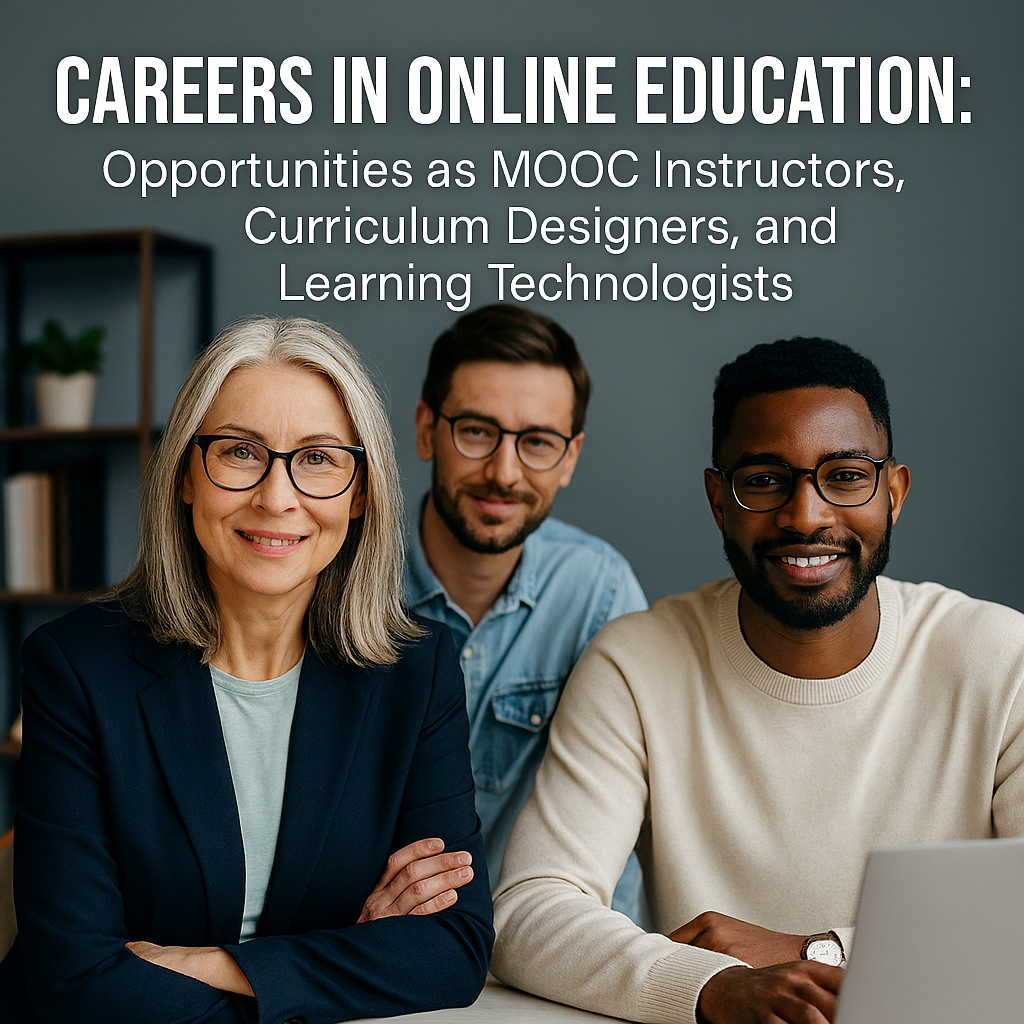
Explore rewarding careers in online education, including MOOC instructors, curriculum designers, and learning technologists. Learn roles, skills, and opportunities.
Introduction
The global e-learning market is projected to reach $848 billion by 2030, driven by the rise of online education platforms. Careers in online education, such as MOOC instructors, curriculum designers, and learning technologists, offer dynamic opportunities for professionals passionate about teaching and technology. These roles combine creativity, technical expertise, and a commitment to shaping the future of learning. This article explores these career paths, their responsibilities, required skills, and how you can thrive in this rapidly growing field.
The Role of MOOC Instructors
Massive Open Online Courses (MOOCs) have revolutionized education by making high-quality courses accessible worldwide. MOOC instructors design and deliver engaging content for diverse learners. They create video lectures, quizzes, and discussion prompts, often collaborating with instructional designers to ensure course quality. These professionals need strong subject expertise, clear communication skills, and the ability to engage remote audiences.
MOOC instructors typically work for platforms like Coursera or edX, or partner with universities to develop courses. Many start as subject matter experts, transitioning into teaching roles with training in online pedagogy. The flexibility of remote work and the ability to impact thousands of learners make this career appealing. To succeed, focus on mastering presentation skills and understanding learner engagement strategies.
Curriculum Designers: Crafting Effective Learning Experiences
Curriculum designers, also known as instructional designers, develop the structure and content of online courses. They align learning objectives with assessments, ensuring courses meet educational standards and learner needs. These professionals collaborate with MOOC instructors and learning technologists to create cohesive, engaging programs. Their work involves researching educational trends, selecting appropriate materials, and incorporating multimedia elements.
A background in education, instructional design, or a related field is often required, along with proficiency in learning management systems (LMS) like Canvas or Moodle. Curriculum designers must balance creativity with analytical skills to create courses that are both engaging and effective. As demand for e-learning grows, these roles offer stable, rewarding opportunities for those passionate about educational content creation.
Learning Technologists: Powering the Future of Education
Learning technologists bridge education and technology, integrating tools like virtual reality, AI, and LMS platforms into online courses. They troubleshoot technical issues, optimize platforms for user experience, and train educators to use digital tools effectively. Their role ensures that online learning environments are accessible, intuitive, and innovative.
A strong technical background, often in computer science or EdTech, is essential, along with knowledge of learning theories. Learning technologists work in universities, e-learning companies, or as consultants, with opportunities to specialize in areas like AI-driven learning analytics. As technology evolves, their expertise is critical in shaping scalable, cutting-edge educational solutions.
Skills and Qualifications for Online Education Careers
Success in online education careers requires a blend of technical, creative, and interpersonal skills. MOOC instructors need expertise in their subject area, public speaking skills, and familiarity with video production tools. Curriculum designers benefit from training in instructional design frameworks, such as ADDIE (Analysis, Design, Development, Implementation, Evaluation), and proficiency in authoring tools like Articulate Storyline. Learning technologists require technical skills in coding, LMS administration, and emerging technologies like AR/VR.
Certifications, such as those from the Online Learning Consortium or Google’s Educator programs, can enhance employability. Soft skills like adaptability, collaboration, and problem-solving are equally vital, as these roles often involve teamwork and navigating evolving technologies. A passion for lifelong learning and education drives success in these fields.
Opportunities and Growth in Online Education
The demand for online education professionals is soaring as institutions and companies invest in digital learning. E-learning specialists and online education consultants are increasingly sought after to design scalable training programs for corporations and universities. Remote teaching professionals and virtual learning facilitators enjoy flexible work arrangements, with opportunities to work globally.
The U.S. Bureau of Labor Statistics projects a 7% growth in instructional coordinator roles (including curriculum designers) from 2020 to 2030, with similar trends for learning technologists. MOOC instructors can leverage their expertise to consult or create independent courses, boosting earning potential. Continuous professional development and networking through platforms like LinkedIn can open doors to these dynamic roles.
Conclusion
Careers in online education, from MOOC instructors to learning technologists, offer exciting opportunities to shape the future of learning. These roles combine creativity, technology, and education to impact learners worldwide. Whether you’re drawn to teaching, designing courses, or integrating technology, the field provides flexibility and growth. Start by exploring certifications, building relevant skills, and connecting with industry professionals to launch your career in this thriving sector.