




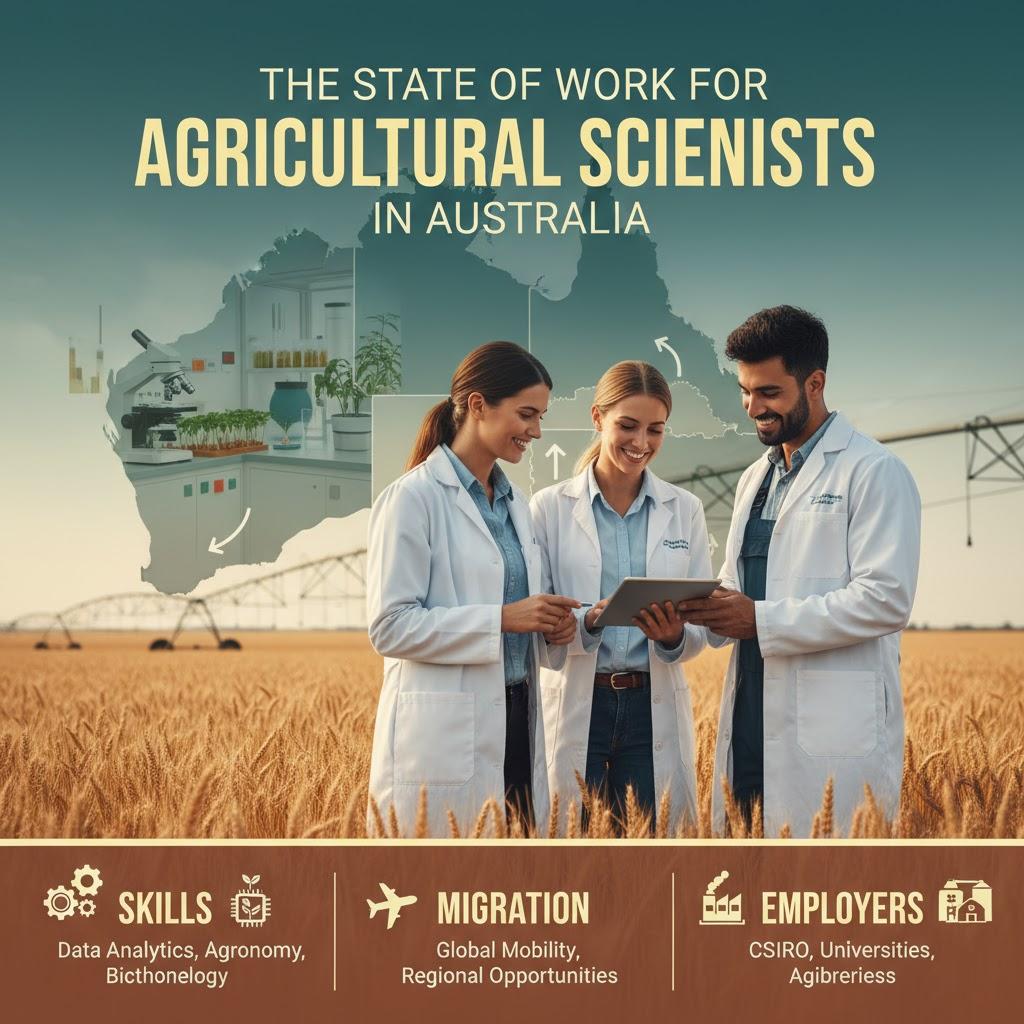
Explore the state of work for Agricultural Scientists in Australia, including key skills, migration pathways like Skilled Visas, and top employers. Start your journey now!
Introduction
Australia’s agricultural sector thrives on innovation, feeding millions and contributing $70 billion annually to the economy. For Agricultural Scientists, this creates a wealth of opportunities to apply expertise in sustainable farming, crop science, and biosecurity. However, navigating the job market and migration pathways can be complex. This article dives into the state of work for Agricultural Scientists in Australia, covering essential skills, visa options like the Skilled Independent Visa 189 and Employer Sponsored Visa 482, and leading employers such as CSIRO Agriculture Jobs and Nutrien Ag Solutions. Whether you’re a graduate agronomist or an experienced researcher, discover how to build a rewarding career Down Under.
Essential Skills for Agricultural Scientists in Australia
Agricultural Scientists in Australia drive advancements in food security, environmental conservation, and farm productivity. Employers seek professionals with specialized skills to address challenges like climate change and soil degradation. Key areas of expertise include:
- Agronomy Skills Australia: Expertise in crop management, soil health, and pest control is critical. Agronomists analyze data to boost yields, often using precision agriculture tools.
- Crop Science Qualifications: Knowledge of plant genetics and breeding techniques enhances crop resilience. This is vital for roles in Plant Breeding Research.
- Soil Science Expertise: Understanding soil composition and nutrient management supports Sustainable Farming Careers. Scientists assess soil health to optimize farming practices.
- Biosecurity Diagnostics: Skills in identifying pests and diseases protect Australia’s agriculture. This is a priority for employers like the Department of Agriculture, Fisheries and Forestry (DAFF).
- Agri-Tech Trends Australia: Familiarity with drones, AI, and data analytics is increasingly valued in Precision Agriculture Jobs.
Most roles require a bachelor’s degree in agricultural science, agronomy, or a related field. Advanced degrees or certifications, such as those in Horticultural Innovation, strengthen applications. Proficiency in fieldwork, laboratory analysis, and advisory roles also sets candidates apart in Field Work Agronomy and Laboratory Agricultural Science.
Migration Pathways for Agricultural Scientists
Australia’s demand for skilled professionals makes it an attractive destination for Agricultural Scientists. The Australian Migration Visas 2025 framework offers several pathways for professionals under the ANZSCO 234112 Occupation code. Here are the main options:
- Skilled Independent Visa 189: This permanent residency visa targets professionals with high-demand skills. Agricultural Scientists must pass a Skills Assessment VETASSESS to prove qualifications and experience.
- Skilled Nominated Visa 190: This visa requires state or territory nomination, ideal for those targeting Regional Agriculture Demand QLD NSW VIC WA. It offers permanent residency with a five-year stay requirement in the nominating region.
- Regional Provisional Visa 491: A provisional visa for regional areas, it suits scientists willing to work in rural hubs. After three years, it can lead to permanent residency.
- Employer Sponsored Visa 482: Companies like Elders Rural Services Careers or JBS Australia Agribusiness sponsor skilled workers for temporary roles, often in Agricultural Research Australia.
- Agriculture Visa Program: Designed for agricultural workers, this visa addresses Agricultural Workforce Shortages in regional areas, though it’s more suited for farm-based roles than scientific ones.
- Designated Area Migration Agreement (DAMA): This program supports regional employers in areas like Northern Territory, offering tailored migration solutions.
Each pathway requires meeting English proficiency standards, health checks, and character requirements. Consulting a migration agent can streamline the process, especially for complex cases like the Regional Provisional Visa 491.
Top Employers and Career Opportunities
Australia’s agricultural sector offers diverse roles, from research to advisory positions. Leading employers seek Agricultural Scientists to tackle pressing challenges. Here’s a look at key players and opportunities:
- CSIRO Agriculture Jobs: The Commonwealth Scientific and Industrial Research Organisation (CSIRO) leads in Agricultural Research Australia. Scientists here focus on climate-resilient crops and Environmental Conservation Farming.
- Department of Agriculture, Fisheries and Forestry (DAFF): DAFF hires for Biosecurity Diagnostics and policy roles, ensuring Australia’s agricultural safety.
- Nutrien Ag Solutions: A major agribusiness, Nutrien offers roles in Field Work Agronomy and advisory services, supporting farmers with cutting-edge solutions.
- Elders Rural Services Careers: Elders employs agronomists for Farm Productivity Techniques, offering graduate programs and regional opportunities.
- Australian Grain Technologies (AGT): AGT specializes in Plant Breeding Research, developing high-yield grain varieties for Australia’s climate.
- University Agricultural Research: Universities like the University of Queensland hire scientists for research and teaching, focusing on Horticultural Innovation.
- Living Farm Graduate Program: This program supports Graduate Agronomist Opportunities, blending fieldwork and mentoring for early-career scientists.
- JBS Australia Agribusiness: JBS offers roles in sustainable livestock management, appealing to scientists with interdisciplinary skills.
The State of Agricultural Work 2025 shows strong demand, particularly in regional areas like Queensland, New South Wales, Victoria, and Western Australia. Agricultural Workforce Shortages drive opportunities, with roles ranging from Rural Industry Advisory Roles to hands-on Laboratory Agricultural Science.
Challenges and Trends Shaping the Industry
Agricultural Scientists face unique challenges and opportunities in Australia’s dynamic job market. Climate change, water scarcity, and global supply chain disruptions demand innovative solutions. Agri-Tech Trends Australia are transforming the sector, with tools like satellite imaging and IoT devices enhancing Precision Agriculture Jobs. Scientists must adapt to these technologies to stay competitive.
Another challenge is the rural focus of many roles. Regional Agriculture Demand QLD NSW VIC WA means professionals often relocate to remote areas, which may not suit everyone. However, programs like the Regional Provisional Visa 491 incentivize regional work with migration benefits.
The Australia Farming Job Market also faces Agricultural Workforce Shortages, creating opportunities for skilled migrants. Employers value candidates who combine technical expertise with practical experience, such as Sustainable Farming Careers or Farm Productivity Techniques. Staying updated on industry trends, like carbon-neutral farming, ensures long-term employability.
Conclusion
Agricultural Scientists in Australia play a vital role in advancing sustainable agriculture and food security. With high-demand skills like Agronomy Skills Australia and Soil Science Expertise, professionals can secure rewarding careers with employers like CSIRO Agriculture Jobs and Nutrien Ag Solutions. Migration pathways, including the Skilled Independent Visa 189 and Employer Sponsored Visa 482, make Australia accessible for global talent. Explore visa options and connect with top employers to start your journey in Australia’s thriving agricultural sector today.
Frequently Asked Questions
What qualifications are needed for Agricultural Scientist roles in Australia?
A bachelor’s degree in agricultural science or related fields is essential, with advanced degrees boosting prospects for Agricultural Research Australia roles.
Which visas are best for Agricultural Scientists migrating to Australia?
The Skilled Independent Visa 189 and Regional Provisional Visa 491 are popular, depending on whether you prefer urban or regional work.
Who are the top employers for Agricultural Scientists in Australia?
CSIRO Agriculture Jobs, Nutrien Ag Solutions, and Elders Rural Services Careers are leading employers offering diverse opportunities.
What skills are most in demand for Sustainable Farming Careers?
Expertise in Soil Science Expertise, Biosecurity Diagnostics, and Agri-Tech Trends Australia is highly sought after.
How can I address Agricultural Workforce Shortages as a migrant?
Apply for the Agriculture Visa Program or Designated Area Migration Agreement (DAMA) to work in high-demand regional areas.