




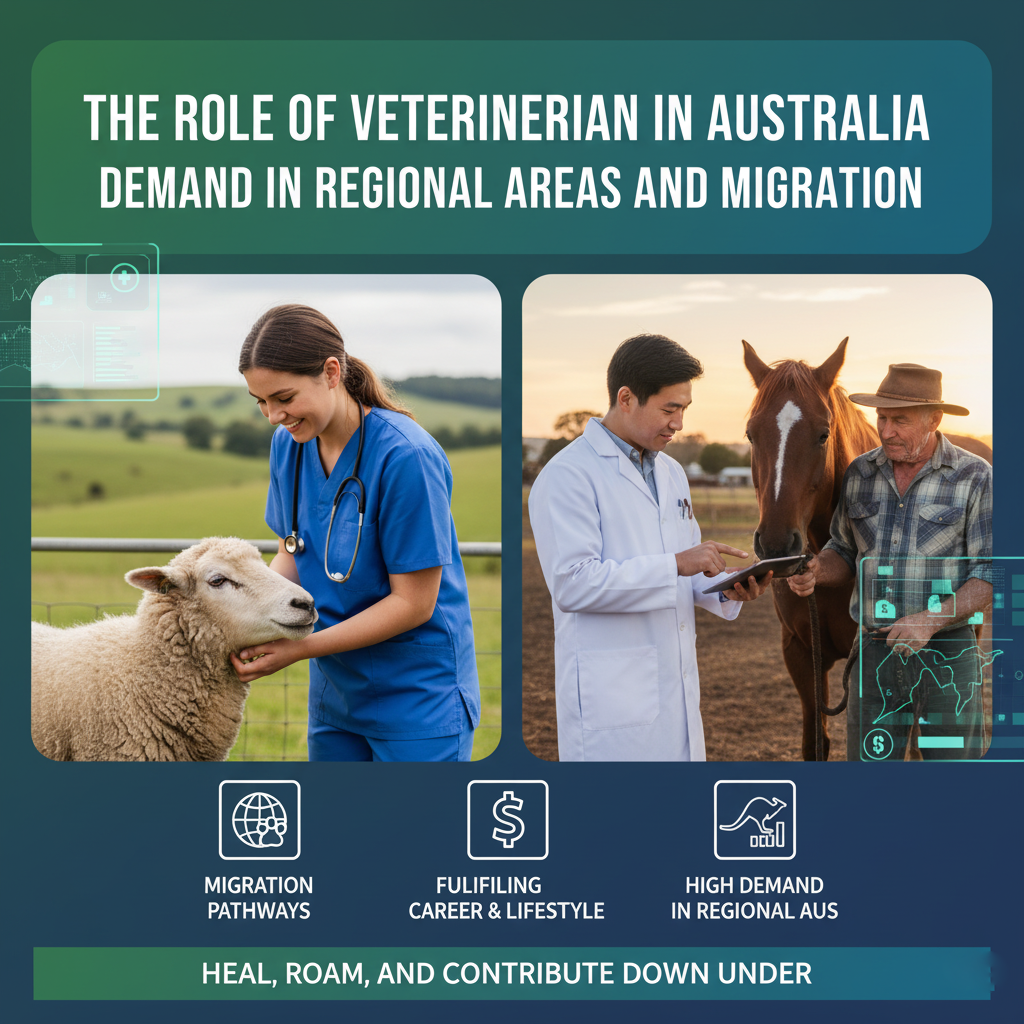
Explore the high demand for Veterinarian Jobs Australia, especially in regional areas. Learn about visa pathways, the AVBC Skills Assessment, and the path to Skilled Migration Veterinarian status. (Max 160 chars)
A significant Veterinarian Shortage Australia faces, particularly in rural and regional areas, has positioned the profession as a critically sought-after occupation for skilled migrants. The high demand is driven by a mix of factors: the vast size of Australia’s agricultural sector, an aging domestic workforce, and the general preference of Australian-trained vets to work in metropolitan centres. For an overseas-qualified vet, this challenge translates into a clear, incentivized pathway for Veterinarian Australia migration and the opportunity for a highly rewarding career in diverse settings.
The Critical Veterinarian Regional Australia Demand
The need for veterinary professionals across the country is pronounced, but the crisis point lies outside the major cities. The Australian government recognizes this shortfall by placing the Veterinarian role (ANZSCO code 234711) on major skilled occupation lists, including the Medium and Long-term Strategic Skills List (MLTSSL Veterinarian).
Why Regional Areas Need Vets:
- Agriculture and Livestock: Regional Australia is the backbone of the nation’s livestock, dairy, and agricultural industries. This sector requires constant care from Large Animal Vets Australia to maintain health standards, manage diseases, and support production.
- Rural Veterinary Practice: Many small towns and rural communities depend entirely on a single veterinary practice, which often services companion animals, wildlife, and livestock. When these practices struggle to fill Regional Vet Job Vacancies, animal welfare and local economies suffer.
- Equine Vet Jobs Australia: The large-scale horse racing and breeding industries, often located in regional zones, fuel a specific and high demand for Equine Vet Jobs Australia.
The scarcity often leads regional clinics to offer attractive benefits, such as above-award salaries, accommodation assistance, and significant Relocation Incentives for Vets Australia, making them excellent targets for new migrants.
The Visa Pathway: Skilled Migration Veterinarian Options
Moving to Australia as a skilled vet requires navigating the General Skilled Migration (GSM) visa program. Since Veterinarian (ANZSCO 234711) is consistently on the eligible skilled occupation list, there are several promising Skilled Visa for Veterinarian Australia options available.
- The Provisional Regional Route
The most accessible and prioritized visa is often the Skilled Work Regional (Provisional) visa (Subclass 491).
- Subclass 491 Visa Regional: This state-nominated or family-sponsored visa requires you to commit to living and working in a designated regional area for a minimum of three years. In return, the state or territory government provides nomination, which significantly boosts your points in the SkillSelect system.
- Pathway to PR: After meeting the residency and income requirements, this provisional visa offers a clear path to the Permanent Residence (Skilled Regional) visa (Subclass 191). Regional government policies (e.g., Veterinarian Jobs Tasmania, Vet Jobs Queensland Rural) are specifically tailored to attract candidates for this visa.
- General Skilled Migration Visas
For highly skilled or competitive applicants, the permanent General Skilled Migration (GSM) options remain viable:
- Skilled Nominated Visa (Subclass 190): This requires state or territory government nomination and grants Permanent Residency for Veterinarians Australia immediately upon visa grant. States typically nominate based on their specific needs and may prioritise certain specialties or regions, such as Veterinarian Jobs NSW Regional.
- Skilled Independent Visa (Subclass 189): This visa does not require state nomination.3 It is based purely on the points test and your Expression of Interest (EOI). As it is highly competitive, only those with very high point scores typically receive an invitation for the Subclass 189 Visa Veterinarian.
Essential Steps: AVBC Skills Assessment and Registration
Before you can apply for a Skilled Visa for Veterinarian Australia, you must satisfy the Australian government that your overseas qualifications and experience are equivalent to Australian standards.
Step 1: AVBC Skills Assessment
The Australian Veterinary Board Council (AVBC) is the designated assessing authority for the ANZSCO 234711 occupation.
- Purpose: The AVBC Skills Assessment confirms that your veterinary qualification is recognised for migration purposes.4 This is mandatory for all GSM visa applications.
- Pathways: The AVBC offers different assessment pathways, including the standard examination route, or a simpler process for graduates of AVBC-accredited veterinary schools (e.g., in the UK, USA, Canada, or New Zealand).
Step 2: Australian Veterinary Registration
A successful skills assessment is followed by the requirement for Australian Veterinary Registration with the relevant State or Territory Veterinary Board.
- Mandatory: You cannot practice as a vet in Australia without this state-specific registration.
- English Requirement: All applicants must demonstrate competent English language ability, typically through a recognized test such as the OET/IELTS for Vet Registration.
This two-step process—AVBC for migration, State Board for practice—ensures all overseas qualified veterinarians meet the high professional standards of Rural Veterinary Practice Australia.
Your Next Steps
The strong, sustained demand for Large Animal Vets Australia and general practitioners in regional areas creates a compelling opportunity. With ANZSCO 234711 securing a prime spot on Australia’s skilled occupation lists, and specialized visas like the Subclass 491 Visa Regional prioritizing regional employment, the path for Veterinarian Australia migration is clearer than ever. Start by confirming your eligibility for the AVBC Skills Assessment to seize this career advantage.