



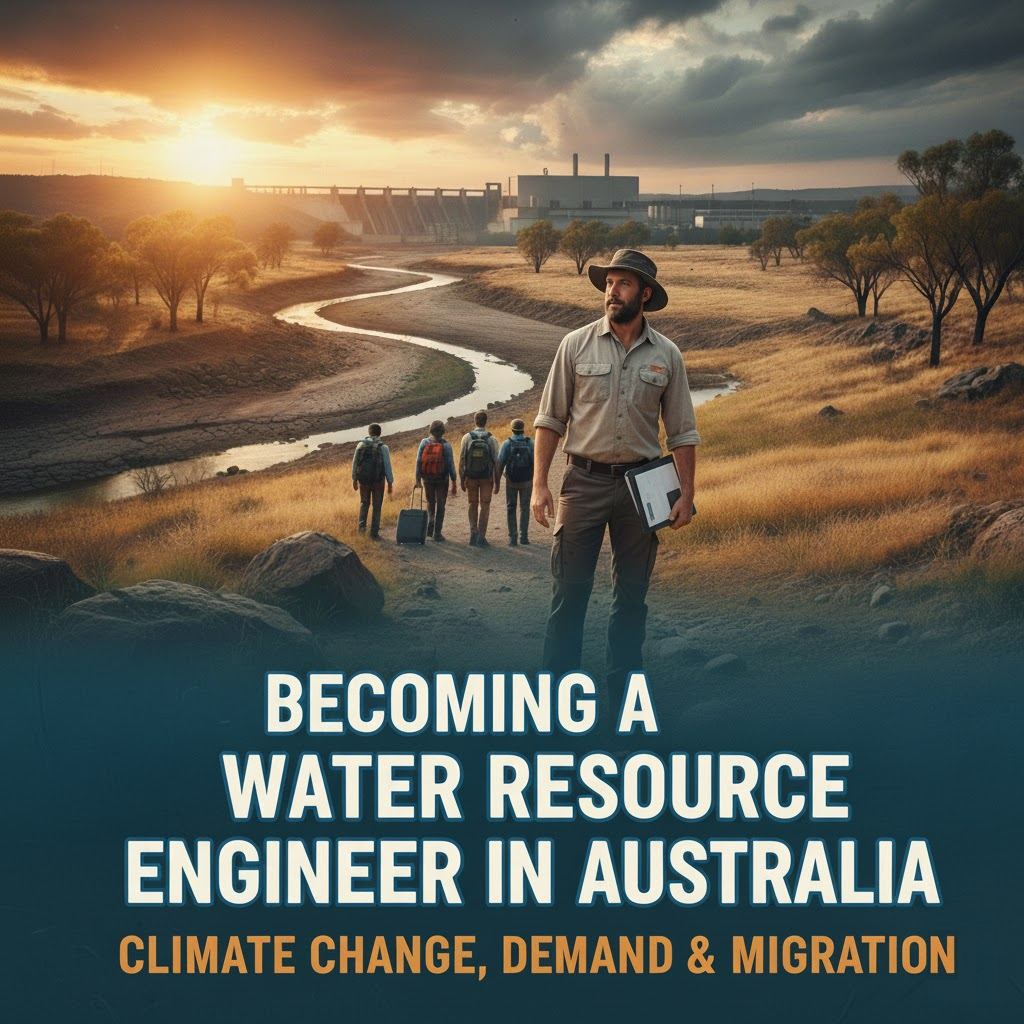
Discover pathways to water resources engineering careers in Australia. Learn how climate change, rising demand, and migration create urgent roles in hydrology, flood risk, and sustainable water management.
Introduction
Australia faces a 20% drop in average rainfall in southern regions since 1970, yet water demand climbs 1.5% yearly from population growth. Climate change intensifies droughts and floods, while interstate migration strains urban supplies. Engineers who master hydrology Australia-wide now secure vital roles. This guide shows how to launch a water resource engineer Australia career amid these pressures.
Why Australia Needs Water Resource Engineers Now
Climate change adaptation water strategies dominate national priorities. The Bureau of Meteorology predicts 30% more extreme weather events by 2050. Water security Australia depends on professionals who design climate-resilient water infrastructure.
Population growth water demand surges in cities like Melbourne and Perth. Sydney’s per capita water consumption Australia hit 300 litres daily in 2023. Migration impact water resources adds pressure—over 400,000 net migrants arrived in 2024, mostly to coastal hubs.
Drought management engineering and flood risk engineering fill critical gaps. The Murray-Darling Basin engineering alone requires 1,200 new specialists by 2030. Regional water planning battles interstate migration Australia water shortages in Queensland and NSW.
Engineers tackle bushfire impact water quality and sea level rise coastal water threats. Desalination projects Australia, like Sydney’s plant, demand hydraulic engineering jobs. Sustainable water management underpins every solution.
Pathways to Water Resources Engineering Careers
Earn a recognised qualification first. A bachelor’s in civil engineering water specialisation qualifies you for Engineers Australia assessment. Pursue a master water resources engineering Australia at UNSW or University of Melbourne for advanced GIS water resources Australia and remote sensing hydrology skills.
Gain practical experience. Graduate water engineer jobs at GHD or Aurecon expose you to surface water modeling and water demand forecasting models. Complete 75 days of professional development for water engineering accreditation Australia.
Join the Engineers Australia Water Panel. Network at events on National Water Initiative Australia reforms. Certifications in Australian Rainfall Runoff Guidelines boost employability.
Target high-demand niches. Water recycling engineer roles grow 15% annually. Irrigation engineering efficiency experts support agricultural water engineering. Groundwater management careers thrive in mining water management engineer positions.
Apply for skilled migration visas if overseas. ANZSCO code 233915 lists water resource engineer Australia on the Medium and Long-term Strategic Skills List.
Building a Future-Proof Career
Master emerging tools. Use Water Sensitive Urban Design (WSUD) for urban water systems Australia. Model stormwater management engineer scenarios with HEC-RAS software.
Address policy and community needs. Understand water allocation policies and water entitlements trading. Respect Indigenous water rights engineering in catchment management engineering.
Secure roles in river basin management Australia. Contribute to environmental flow requirements and extreme weather water engineering. Wastewater treatment careers offer stable paths in regional development water supply.
Stay updated. Follow updates to the National Water Initiative Australia. Adapt to population growth water demand shifts from migration.
Salaries start at AUD 85,000 for graduates and reach AUD 150,000 for seniors with desalination projects Australia experience. Demand outpaces supply—act now to enter this essential field.
Conclusion
Climate change, demand, and migration drive urgent needs for water resource engineers in Australia. Qualify, gain skills, and target high-impact roles in hydrology, infrastructure, and policy. Start your journey today—Australia’s water future needs you.