



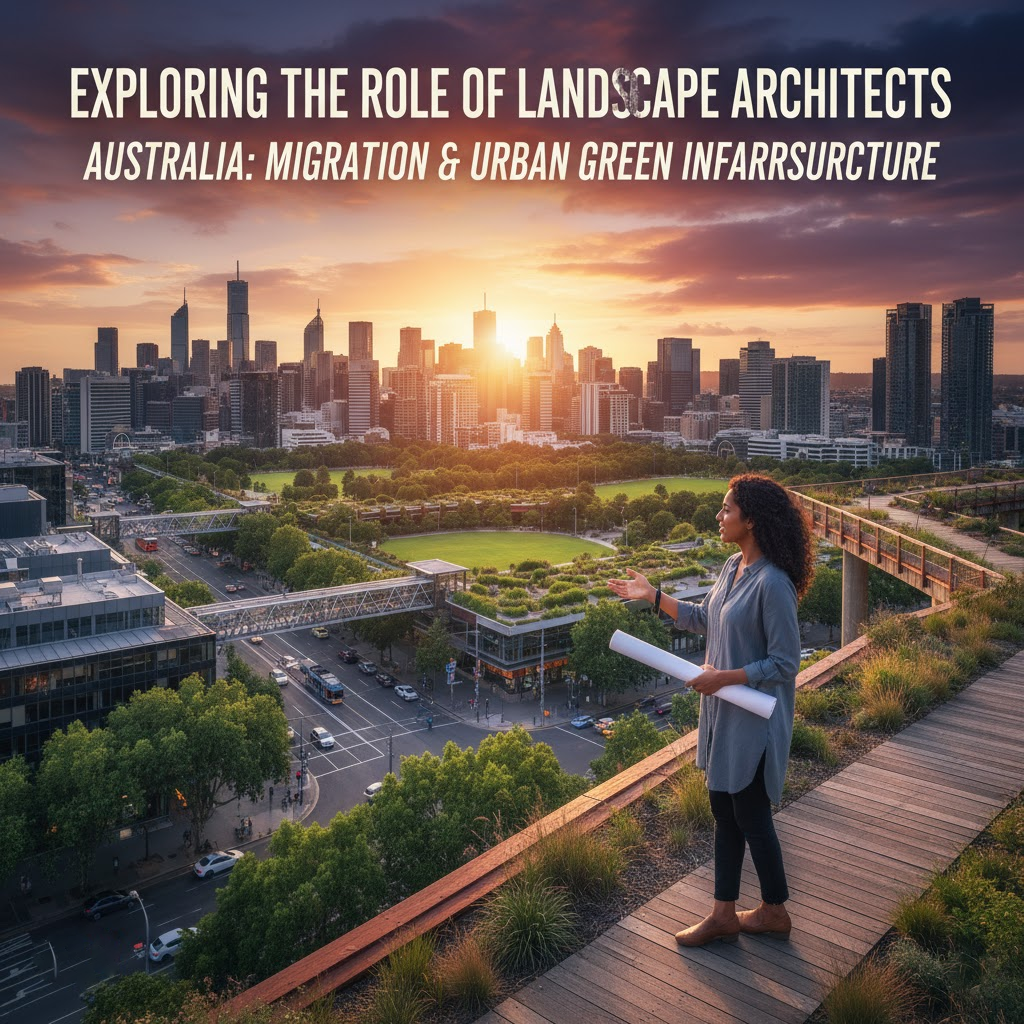
Explore the pivotal role of landscape architects in shaping Australia’s urban green infrastructure, from biodiversity enhancement to climate resilience. Learn migration pathways, including skilled visas, for professionals pursuing sustainable urban opportunities.
Introduction
Australia faces rapid urbanization, with over 90% of its population living in cities, intensifying demands on green spaces. Landscape architects address this by designing urban green infrastructure that boosts biodiversity and combats climate change. This article examines their contributions to sustainable urban planning and outlines migration options for international professionals. Through skilled migration visas, Australia attracts talent to build resilient landscapes, fostering ecological restoration and public space design.
The Role of Landscape Architects in Urban Green Infrastructure
Landscape architects lead the integration of natural elements into urban environments, creating green infrastructure networks that support city resilience. They design parks, wetlands, and green corridors to manage stormwater, reduce urban heat, and enhance air quality. In Australia, these professionals collaborate with planners to implement climate-resilient landscapes, such as tree canopies that mitigate extreme weather. For instance, they prioritize native plants to promote urban biodiversity, protecting threatened species amid habitat loss.
The Australian Institute of Landscape Architects (AILA) advocates for these practices, emphasizing sustainable urban planning. AILA’s Climate Positive Design initiative guides members to develop projects that sequester carbon and adapt to changing conditions. In major cities like Sydney and Melbourne, landscape architects restore ecosystems through ecological restoration projects, transforming degraded sites into vibrant public spaces. This work aligns with Australian urban policy, which increasingly mandates green urban design in infrastructure developments.
Beyond aesthetics, landscape architects ensure projects foster community health. They incorporate features like permeable surfaces and bio-swales to prevent flooding, while enhancing liveability through accessible green areas. As urbanization accelerates, their expertise in green infrastructure networks becomes essential, linking fragmented habitats and supporting wildlife corridors. This holistic approach not only addresses environmental challenges but also integrates social elements, promoting immigrant integration urbanism by creating inclusive spaces for diverse populations.
Migration Pathways for Landscape Architects to Australia
Australia welcomes landscape architects through skilled migration visas, recognizing their value in sustainable urban planning. The occupation, listed under ANZSCO code 232112, qualifies for visas like the Skilled Independent Visa (Subclass 189) and Skilled Nominated Visa (Subclass 190). Applicants need a bachelor’s degree or higher in landscape architecture, plus at least one year of relevant experience, assessed by VETASSESS or equivalent authorities.
The process begins with a skills assessment, confirming qualifications match Australian standards. Candidates then submit an Expression of Interest (EOI) via SkillSelect, scoring points for age, English proficiency, work experience, and qualifications. In 2025, invitations often require around 70 points, especially with state nomination, due to high demand in sectors like urban green infrastructure.
State and territory governments prioritize landscape architects for regional development, offering pathways through the Skilled Work Regional Visa (Subclass 491), which leads to permanent residency after three years. Demand remains strong, driven by infrastructure projects and sustainability goals, with employment growth projected in architecture and landscape fields. Professionals must meet health and character requirements, and English tests like IELTS are mandatory unless exempt.
Once in Australia, migrants register with AILA for professional recognition, gaining access to networks that support career advancement in public space design and ecological restoration. This migration pathway not only fills skill gaps but also enriches Australian urban policy with global perspectives on green urban design.
Advancing Sustainable Urban Planning Through Landscape Architecture
Sustainable urban planning in Australia relies on landscape architects to build climate-resilient landscapes amid rising temperatures and biodiversity threats. They develop strategies for urban biodiversity, such as planting diverse species to create resilient ecosystems that withstand droughts and floods. Initiatives like urban forests enhance carbon storage and provide habitat, aligning with national goals for nature-based solutions.
Australian landscape architects collaborate on large-scale projects, integrating green infrastructure into transport and housing developments. For example, they design public spaces that promote active lifestyles while restoring natural waterways for ecological balance. AILA’s advocacy influences policy, pushing for benchmarks that increase urban greenery and support threatened species.
Immigrant landscape architects bring innovative approaches to immigrant integration urbanism, designing inclusive environments that reflect cultural diversity. This fosters community cohesion in multicultural cities. As Australia updates its urban policies, these professionals drive progress toward greener, more equitable landscapes, addressing challenges like habitat fragmentation through connected green networks. Their work ensures long-term sustainability, blending design expertise with environmental stewardship.
Conclusion
Landscape architects shape Australia’s future by advancing urban green infrastructure and sustainable planning. Migration pathways offer skilled professionals a route to contribute meaningfully. Consider assessing your eligibility for a skilled migration visa to join this dynamic field—consult a registered agent for personalized guidance.