




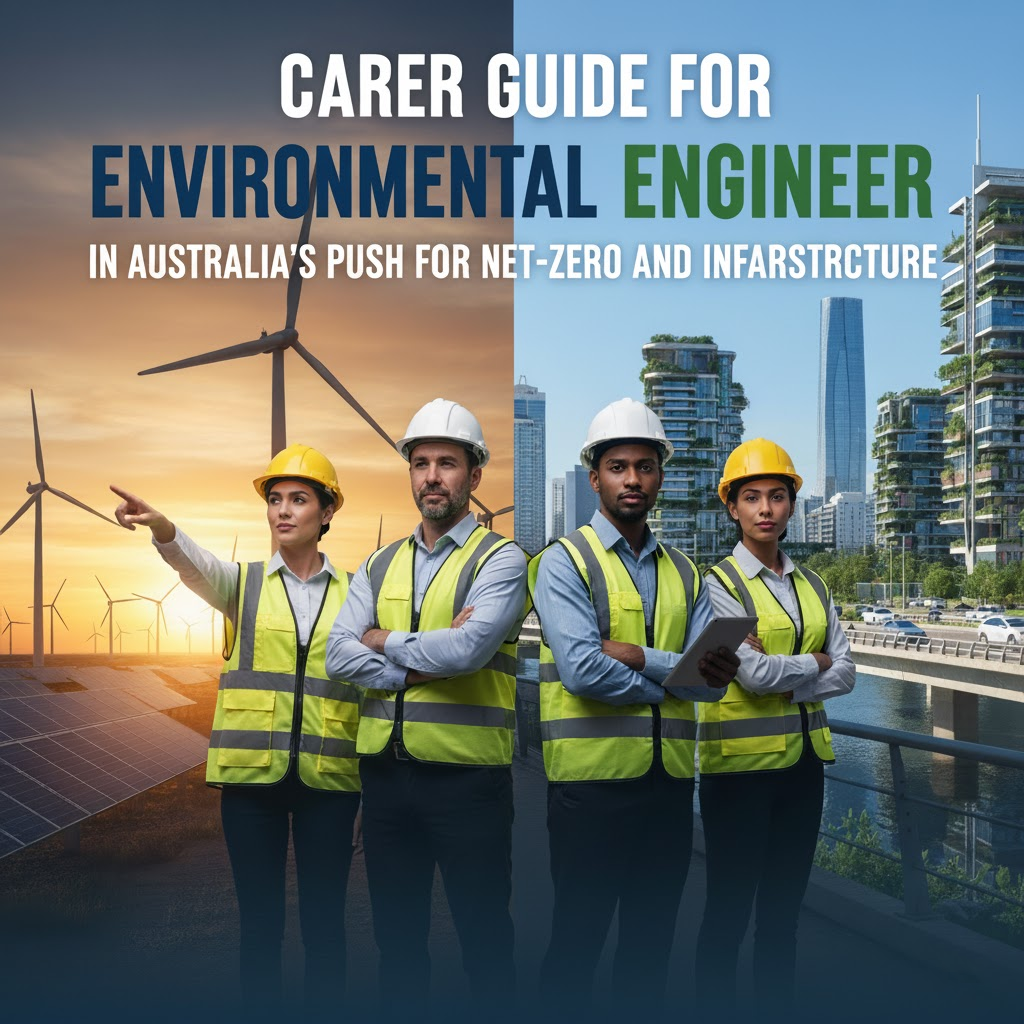
This guide outlines career paths for environmental engineers in Australia’s drive toward net-zero emissions and infrastructure development. Discover qualifications, job opportunities, visas, and skills to thrive in clean energy sectors.
Introduction
Australia’s commitment to net-zero emissions by 2050 demands rapid infrastructure upgrades, creating over 30,000 new jobs in renewable energy and sustainability fields. Environmental engineers play a central role in this transition, designing systems that reduce greenhouse gas emissions and integrate renewable energy. This career guide provides essential insights for professionals, including immigrants, seeking opportunities in Australia’s built environment. It covers qualifications, skills development, job prospects, and migration pathways amid the nation’s decarbonisation strategies and green infrastructure initiatives.
Understanding Australia’s Net-Zero Ambitions and Role of Environmental Engineers
Australia has legislated a target to achieve net-zero emissions by 2050, with an interim goal of 43% reduction below 2005 levels by 2030. The government collaborates with industry to transform transport, energy, and infrastructure sectors through the Transport and Infrastructure Net Zero Roadmap. Environmental engineers contribute by developing decarbonisation strategies, such as optimizing water and waste management to minimize carbon footprints.
These professionals apply sustainable design principles to projects like renewable energy integration in urban developments and emissions reductions in mining operations. For instance, they assess environmental impacts of infrastructure, ensuring compliance with climate change mitigation standards. The push for green infrastructure, including energy-efficient buildings and clean transport systems, amplifies demand for expertise in greenhouse gas reduction.
Infrastructure Australia’s report highlights workforce needs, projecting growth in roles for engineers focused on net-zero infrastructure. Engineers tackle challenges like adapting existing systems to low-emission technologies, fostering innovation in the built environment. This alignment with the Australian Net Zero Plan positions environmental engineering as a high-impact field, blending technical skills with sustainability practices to drive national progress.
Essential Qualifications and Skills Development for Success
To enter environmental engineering in Australia, obtain a bachelor’s degree in environmental engineering or civil engineering with an environmental major, accredited by Engineers Australia. Postgraduate studies enhance specialization in areas like renewable energy integration or carbon footprint management. Professional certifications, such as Chartered Professional Engineer status from Engineers Australia, validate expertise and are often required for senior roles.
Skills development focuses on workforce capabilities for clean energy careers. Programs like the Clean Energy Skills National Centre of Excellence offer training in sustainable design and decarbonisation strategies. Key competencies include proficiency in emissions reductions modeling, water and waste management, and climate change mitigation techniques. Hands-on experience through internships builds practical knowledge in infrastructure development.
Government initiatives, such as the New Energy Apprenticeships Program, support upskilling in renewable sectors. For immigrants, aligning qualifications with Australian standards via migration skills assessments ensures competitiveness. Continuous learning adapts to evolving demands, like integrating AI in sustainability practices, preparing engineers for long-term contributions to Australia’s net-zero goals.
Job Opportunities and Migration Pathways for Environmental Engineers
Australia offers abundant job opportunities for environmental engineers, with over 50 positions listed on SEEK in fields like infrastructure projects and clean energy. Roles span consulting on green infrastructure, managing emissions in transport, and designing renewable systems, with salaries ranging from $90,000 to $110,000 annually. Demand surges in states like New South Wales and Victoria, driven by net-zero infrastructure investments.
For immigrants, the ANZSCO code 233915 classifies environmental engineers on the Skilled Occupation List, enabling visas like the Skilled Independent Visa (189) or Skilled Nominated Visa (190). Secure a positive migration skills assessment from Engineers Australia before applying. Points-tested visas require at least 65 points, factoring in age, experience, and English proficiency.
Sponsorship options, such as the Temporary Skill Shortage Visa, facilitate entry-level roles, though exemptions may apply for extended stays. Recent invitation rounds show minimum scores around 85-90 for related occupations. Leverage platforms like Careers for Net Zero to explore pathways, combining professional certifications with targeted job searches for seamless integration into Australia’s sustainability workforce.
Conclusion
Environmental engineers are vital to Australia’s net-zero emissions journey and infrastructure development. Pursue relevant qualifications, skills development, and migration options to capitalize on growing opportunities. Assess your eligibility through Engineers Australia and apply for suitable visas to build a rewarding career in this dynamic field.