




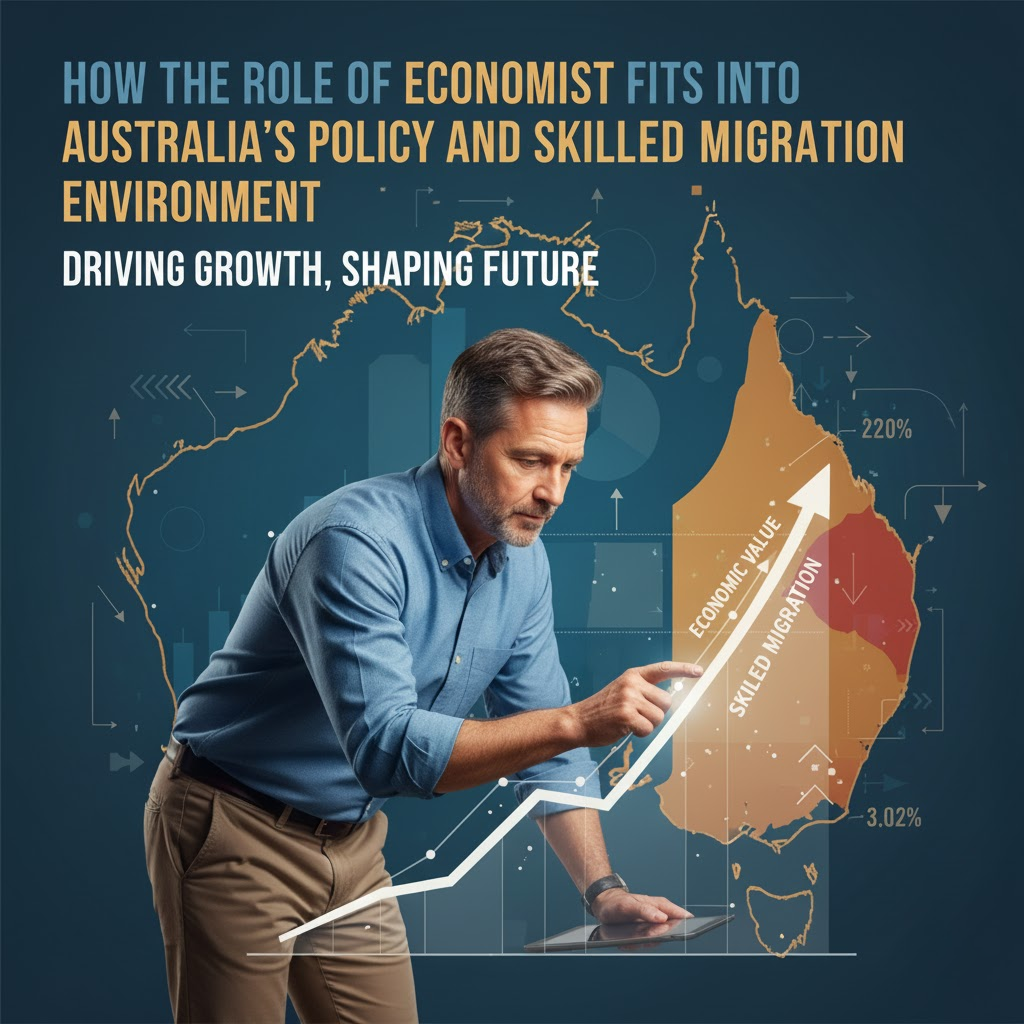
Explore how economists fit into Australia’s policy and skilled migration system, including visa pathways, occupation lists, and opportunities for global talent. Gain insights on points-tested visas and more.
Introduction
Australia faces a persistent demand for skilled economists to drive evidence-based policy and economic growth. With over 1,500 economist positions advertised annually on government job boards, the role aligns closely with national priorities. This article examines how the role of economist fits into Australia’s policy and skilled migration environment, highlighting key visa options, occupation classifications, and strategic pathways for qualified professionals seeking to contribute to the nation’s economic framework.
The Economist Role in Australia’s Policy Landscape
Economists play a pivotal role in shaping Australia’s public and private sectors. They analyze data, forecast trends, and advise on fiscal strategies within government bodies like the Treasury. Treasury economist positions require expertise in macroeconomic modeling and policy evaluation, directly influencing budget decisions and regulatory reforms.
The occupation falls under ANZSCO 2241 Economist, a classification that ensures recognition in skilled migration assessments. Professionals in economic policy advisory roles support departments such as the Reserve Bank of Australia and Productivity Commission. These positions demand advanced qualifications, typically a master’s or PhD in economics, combined with strong analytical skills.
Australia’s policy environment prioritizes economists to address challenges like inflation control and sustainable development. Government initiatives integrate economic insights into climate policy and trade agreements. Skilled economists enhance decision-making processes, ensuring policies remain robust amid global uncertainties. This integration underscores the occupation’s strategic importance in national governance.
Navigating Skilled Migration Pathways for Economists
Australia’s skilled migration system offers targeted avenues for economists. The Skilled Occupation List Australia includes ANZSCO 2241 Economist on the Core Skills Occupation List, signaling ongoing demand. This placement facilitates access to points-tested visa subclasses, such as Subclass 189 (Skilled Independent) and Subclass 190 (Skilled Nominated).
Points-tested visas evaluate applicants on age, English proficiency, work experience, and qualifications. Economists often score highly due to their specialized skills. State nomination economist programs, available in states like New South Wales and Victoria, provide additional points and priority processing for those willing to commit to regional areas.
The Temporary Skill Shortage visa economist option (Subclass 482) allows employers to sponsor overseas talent when labour market testing economists reveals local shortages. This pathway serves as a stepping stone to permanent residency. Regional migration incentives further encourage settlement outside major cities, offering visa concessions and faster pathways.
The Global Talent Visa economics stream targets high-caliber professionals with proven track records in priority sectors. It bypasses traditional points tests for expedited processing. The Priority Migration Skilled Occupation List occasionally elevates economists during economic recoveries, reflecting real-time labor needs.
Migration agents economist assessment ensures applications meet stringent criteria, including skills verification by bodies like the Vocational Education and Training Assessment Services. The Job-ready program economics supports recent graduates in gaining Australian work experience, strengthening future visa claims.
Practical Considerations and Employer Sponsorship
Employers actively seek economists through sponsored visas. Labour market testing economists mandates proof that no suitable Australian worker is available, typically via job advertisements on designated platforms. Successful testing paves the way for Temporary Skill Shortage visas.
Public sector roles, including Treasury economist positions, often prioritize candidates with migration eligibility. Private firms in finance and consulting also sponsor, valuing international perspectives on global markets. Understanding these dynamics helps applicants align their profiles with employer needs.
Conclusion
Economists integrate seamlessly into Australia’s policy and migration frameworks, offering pathways to contribute meaningfully while securing residency. Leverage occupation lists and visa options to advance your career. Consult a registered migration agent to evaluate your eligibility and initiate the process promptly.