




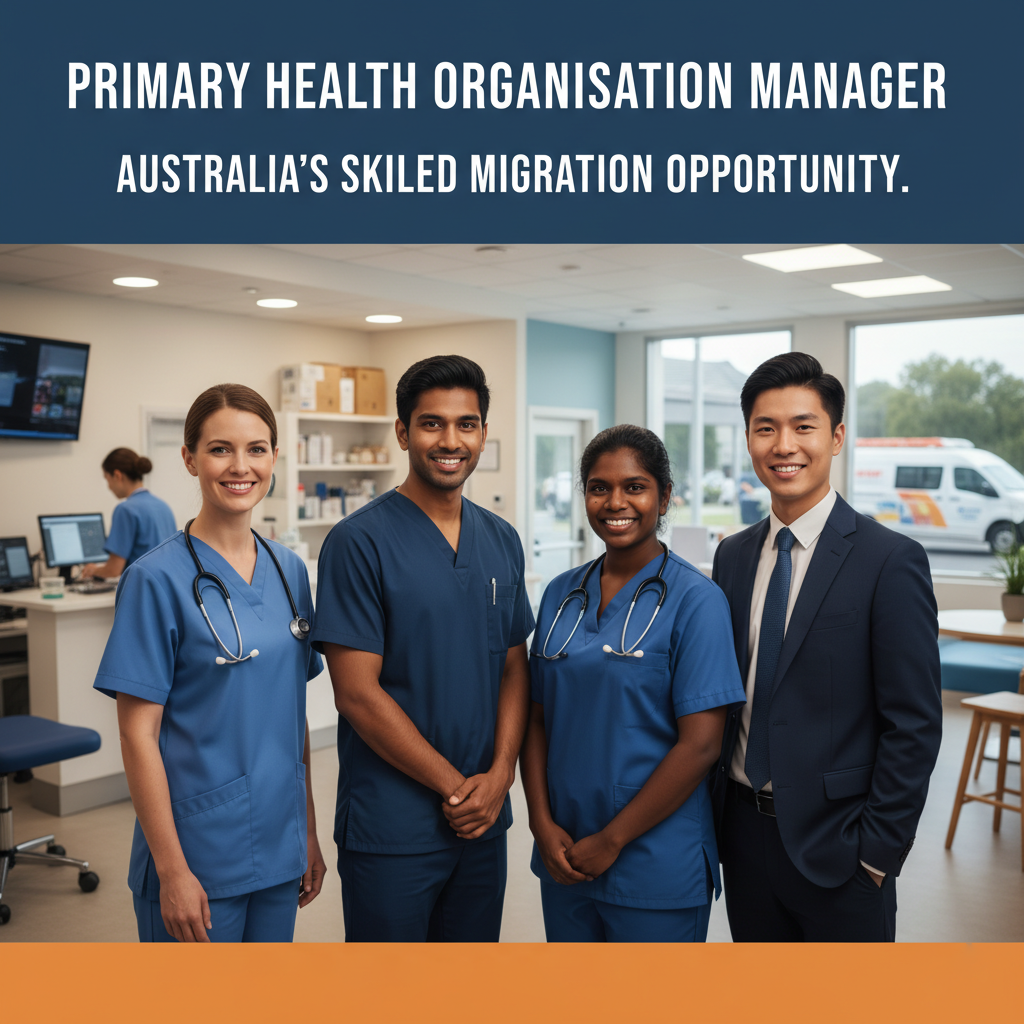
Explore the high demand for a Primary Health Organisation Manager (ANZSCO 134213) in Australia. Learn about job outlook, salary, required skills assessment (VETASSESS), and key skilled visa pathways.
Australia’s healthcare landscape is rapidly evolving, driven by an aging population and a strategic shift toward preventative, out-of-hospital health services management. This critical transformation has created a sustained and growing Primary Health Organisation Manager demand Australia, making it an attractive pathway for skilled migrants.
The role of a Primary Health Organisation Manager (ANZSCO 134213) is central to coordinating and administering essential community healthcare. For management professionals seeking permanent residency, this occupation is a beacon of opportunity. It’s featured on the MLTSSL Primary Health Organisation Manager list, confirming its national strategic importance and direct path to General Skilled Migration visas. Understanding the specific market dynamics and migration requirements is the first step toward a rewarding career down under.
The Strategic Importance of the Primary Health Organisation Manager Role
The core function of a Primary Health Organisation Manager is to plan, organise, direct, control, and coordinate a primary health organisation that provides a broad range of out-of-hospital health services. This is a Health and Welfare Services Managers (1342) unit group position, highlighting its senior administrative and operational scope within the sector.
Driving the Community Health Model
Australia’s Primary Health Networks (PHNs) and other community health organisations are focused on improving local health outcomes and ensuring integrated patient care. Managers in this field are crucial to:
- Coordinating health programs and clinical services across multiple disciplines.
- Developing, implementing, and monitoring policies and standards for medical, nursing, allied health, and administrative staff.
- Liaising with funding bodies, government agencies, and other health providers to ensure service cooperation and continuity.
- Controlling administrative operations, including budget planning, financial management, and resource allocation.
This comprehensive remit means the Primary Health Organisation Manager job outlook is Very Strong, reflecting a systemic need for skilled professionals who can manage complex healthcare delivery outside the traditional hospital setting. The high demand translates directly into opportunities for migrants under the skilled program.
Visa Pathways and Skills Assessment: Your Migration Blueprint
Being listed on the Medium and Long-term Strategic Skills List (MLTSSL Primary Health Organisation Manager) is the most significant advantage for aspiring migrants. This inclusion opens up key permanent visa pathways, but each step—from skills assessment to visa application—requires precision.
The VETASSESS Skills Assessment
The mandatory first step is securing a positive skills assessment from the designated assessing authority, VETASSESS Primary Health Organisation Manager.
VETASSESS requires applicants to demonstrate a high skill level commensurate with a Bachelor’s degree or higher qualification in a highly relevant field, such as Health Administration, Health Services Management, or a related discipline. A crucial part of this assessment involves proving at least one year of highly relevant, post-qualification employment at the appropriate skill level within the last five years. Applicants must provide detailed employment evidence, including an organisational chart, to prove their managerial responsibilities align with the ANZSCO 134213 description.
General Skilled Migration Visas
The MLTSSL status qualifies the Primary Health Organisation Manager for the most desirable General Skilled Migration (GSM) visas:
- Skilled Independent Visa (Subclass 189): This is a permanent visa that requires no state or employer sponsorship. However, invitations are highly competitive, often requiring an Expression of Interest (EOI) with very high points (95+ in recent rounds).
- Skilled Nominated Visa (Subclass 190): This is a permanent visa requiring Primary Health Organisation Manager state nomination. States and territories like South Australia, Western Australia, and the ACT frequently list this occupation, offering 5 extra points to the applicant’s EOI. This is often the more realistic pathway for many applicants.
- Skilled Work Regional (Provisional) Visa (Subclass 491): This provisional visa offers 15 points and provides a pathway to permanent residency after three years. It is highly sought after through Primary Health Organisation Manager state nomination in regional areas, which often have lower EOI point requirements.
Migrants should also consider Employer Nomination Scheme (Subclass 186) and Temporary Skill Shortage (Subclass 482) visas, particularly in regional areas via the Designated Area Migration Agreement (DAMA), where local employers are actively seeking to fill this management gap.
Salary and Regional Opportunities: The Financial and Geographic Landscape
Securing a visa is only half the journey; understanding the earning potential and where the job opportunities lie is essential for a successful transition. The Primary Health Organisation Manager salary Australia reflects the seniority and high skill level of the position.
Expected Earnings
While salaries vary by experience, organisation type (PHN, non-profit, government), and location, the median weekly earnings for a Primary Health Organisation Manager are strong, often exceeding $2,000 AUD per week, which translates to an attractive six-figure annual salary. This competitive compensation ensures the position remains highly attractive to experienced international professionals.
State and Territory Nomination Trends
While the demand is national, the greatest opportunities often arise through the Primary Health Organisation Manager state nomination programs, particularly in regional centres. State governments actively seek to fill critical roles in regional areas to support local communities.
- Regional Opportunities: States like Queensland, South Australia, and Tasmania often prioritise occupations on their skilled occupation lists for their regional nomination streams (Subclass 491 and 190). Targeting these areas can significantly increase the chances of receiving an invitation to apply for a visa.
- Metropolitan Hubs: Major cities also maintain strong demand, particularly for specialist Health Services Manager Australia roles within larger, complex Primary Health Network Manager structures. However, competition for metropolitan-based 190 nominations is typically much higher.
Prospective migrants must regularly check the specific skilled occupation lists for each state and territory, as eligibility criteria and demand indicators can change with each migration program year.
A Clear Path to Australian Healthcare Leadership
The Australian job market for Primary Health Organisation Manager under skilled migration is robust and structurally supported by long-term demographic and governmental healthcare strategies. The consistent inclusion of the Primary Health Organisation Manager ANZSCO 134213 on the MLTSSL confirms its status as a highly sought-after profession. Success hinges on meticulous preparation—a solid VETASSESS Primary Health Organisation Manager outcome, strong English language skills, and a targeted strategy focusing on the most viable skilled migration visa 189 190 491 pathway. For experienced Health and Welfare Services Managers (1342), Australia offers a challenging, well-compensated, and secure professional future.
Ready to take the next step in your career migration journey? Consult with an immigration specialist to align your qualifications and experience with current state nomination requirements.