




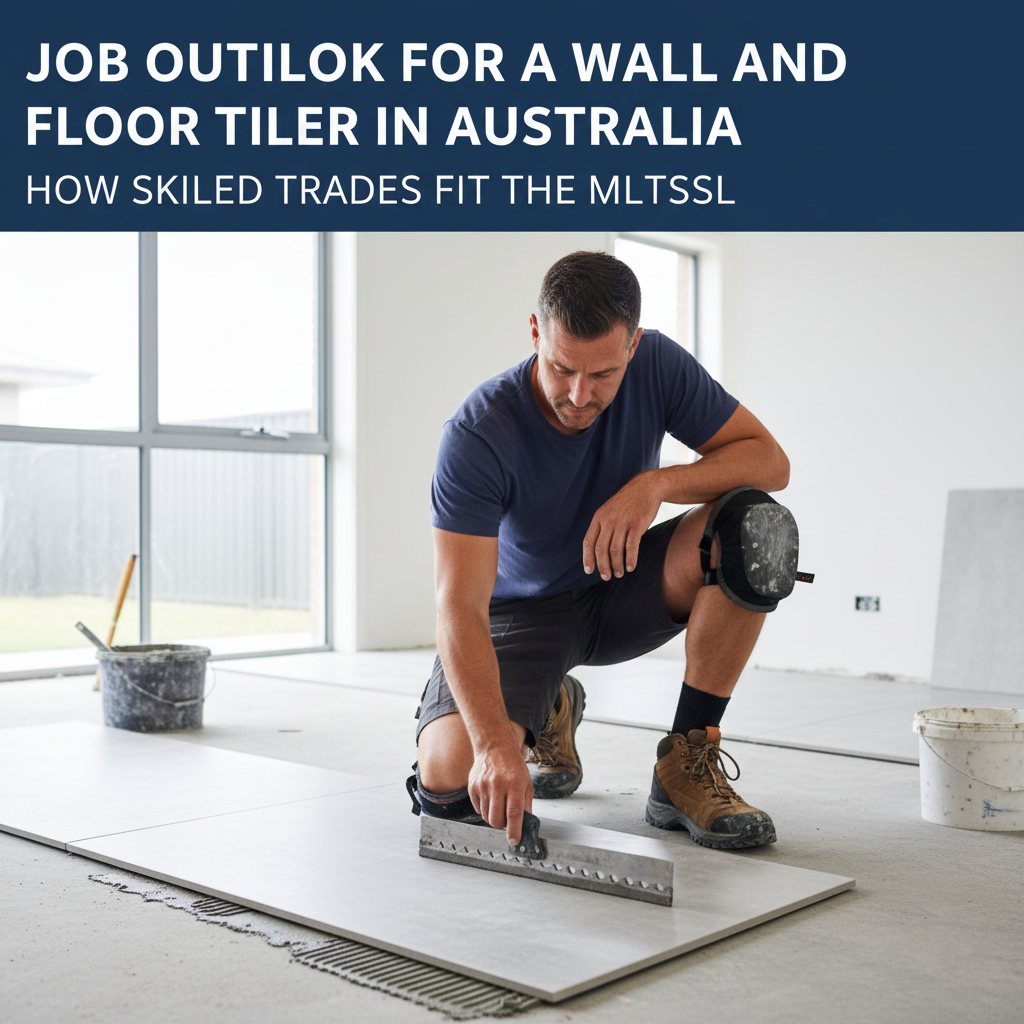
Meta Description: Explore the strong job outlook for a Wall and Floor Tiler in Australia, salary potential, and the Permanent Residency Pathway through the MLTSSL skilled migration list.
Introduction
Australia’s vibrant Construction Industry continues to drive significant demand for expert Skilled Trades. If you are a qualified tradesperson, especially a Wall and Floor Tiler (ANZSCO 333411), you are in a prime position. This occupation is strategically listed on the Medium and Long-term Strategic Skills List (MLTSSL), signaling a critical need and offering a direct route to Skilled Migration Australia and potentially, Permanent Residency Pathway. This article details the robust Job Outlook Wall and Floor Tiler professionals face and the clear steps to secure your future down under.
The Critical Demand: Australia’s Construction Skills Shortage
The Australian market presents a high-opportunity environment for Trowel Trades. The country is undergoing a sustained period of infrastructure development, coupled with a national Renovation Boom and consistent Residential Construction.
The numbers speak for themselves. The Australian Construction Industry is forecast to add nearly 100,000 jobs over the next five years, making the Tiler Demand Australia exceptionally strong. This demand is fueled by a recognized Construction Skills Shortage, where the supply of locally trained Wall and Floor Tiler professionals cannot meet the pace of housing, commercial, and public works projects. This shortage translates directly into better job security, competitive wages, and numerous Regional Job Opportunities for qualified migrants.
The work is varied, ranging from complex Commercial Fit-outs to high-end Ceramic Tile Installation in private homes. Furthermore, specialized skills like Waterproofing Certification are highly requested in job advertisements, significantly boosting a candidate’s earning potential and marketability. The average Tiler Salary Australia sits competitively within the skilled trades sector, often reaching the $75,000 to $95,000 range annually, particularly for experienced full-time workers.
The Strategic Advantage: Tiler on the MLTSSL
The single most significant advantage for an aspiring Tiler migrating to Australia is the occupation’s placement on the MLTSSL. This is not simply a list of occupations in demand; it is an official government declaration that this trade is essential for Australia’s long-term economic strategy.
Placement on the MLTSSL unlocks access to several General Skilled Migration (GSM) visas that offer a clear Permanent Residency Pathway:
- Subclass 189 Visa (Skilled Independent): This visa is points-tested and does not require a state or employer sponsor, granting immediate Permanent Residency.
- Subclass 190 Visa (Skilled Nominated): This points-tested visa requires nomination from a State or Territory government, offering an additional 5 points and a direct Permanent Residency outcome.
- Subclass 491 Visa (Skilled Work Regional): This provisional visa requires regional state nomination or family sponsorship, grants 15 extra points, and provides a clear path to PR after three years of living and working in a designated regional area.
The Skilled Occupation List (SOL) status confirms that the government is actively seeking to fill this gap, providing candidates with the best available migration options compared to occupations on shorter-term lists.
Your Migration Blueprint: Skills Assessment and Points Test
Securing a visa requires meticulous preparation, centering on two key immigration components: your skills assessment and your score on the Points Test.
The Skills Assessment via Trade Recognition Australia (TRA)
Before applying for any GSM visa, you must achieve a positive Skills Assessment for the Wall and Floor Tiler ANZSCO 333411 occupation. This is handled by Trade Recognition Australia (TRA).
The general requirement for an experienced overseas tradesperson is to demonstrate:
- Formal Training: Possession of a qualification equivalent to an Australian CertificateIII in Wall and Floor Tiling.
- Work Experience: A minimum number of years of work experience as a Tiler, which is often three years if you have formal qualifications, including at least 12 months in the three years immediately before applying. For those without formal qualifications, the experience requirement is significantly longer (often six years).
The TRA process assesses your qualifications, employment evidence (payslips, references), and knowledge to confirm your competence is up to the Australian standard.
Mastering the Points Test
The GSM visas (Subclass 189, 190, 491) operate on a Points Test system. You must score a minimum of 65 points in your Expression of Interest (EOI) to be eligible to apply. Points are awarded based on factors like:
- Age: Highest points awarded for ages 25-32.
- English Language: Proficient or Superior English language skills add significant points.
- Education: Recognised qualifications, such as your Trade Qualification and the Australian equivalent, add points.
- Experience: Skilled employment experience, especially in Australia, accrues points.
- Nomination: State/Territory nomination (Subclass 190) or Regional nomination (Subclass 491) provides guaranteed bonus points.
A positive TRA Skills Assessment is the foundational step that validates your experience and qualification, allowing you to correctly claim the necessary points on the test.
Conclusion
The convergence of a high Skilled Trade Shortages in the Australian Construction Industry and the Wall and Floor Tiler being listed on the MLTSSL creates a strategic migration opportunity. By successfully completing the Trade Recognition Australia Skills Assessment and meeting the minimum score for the Points Test, skilled Tilers have a viable and in-demand path to Permanent Residency Pathway through visas like the Subclass 189 Visa or Subclass 190 Visa. Take action now to begin your qualification assessment and capitalize on this robust Job Outlook in Australia.