




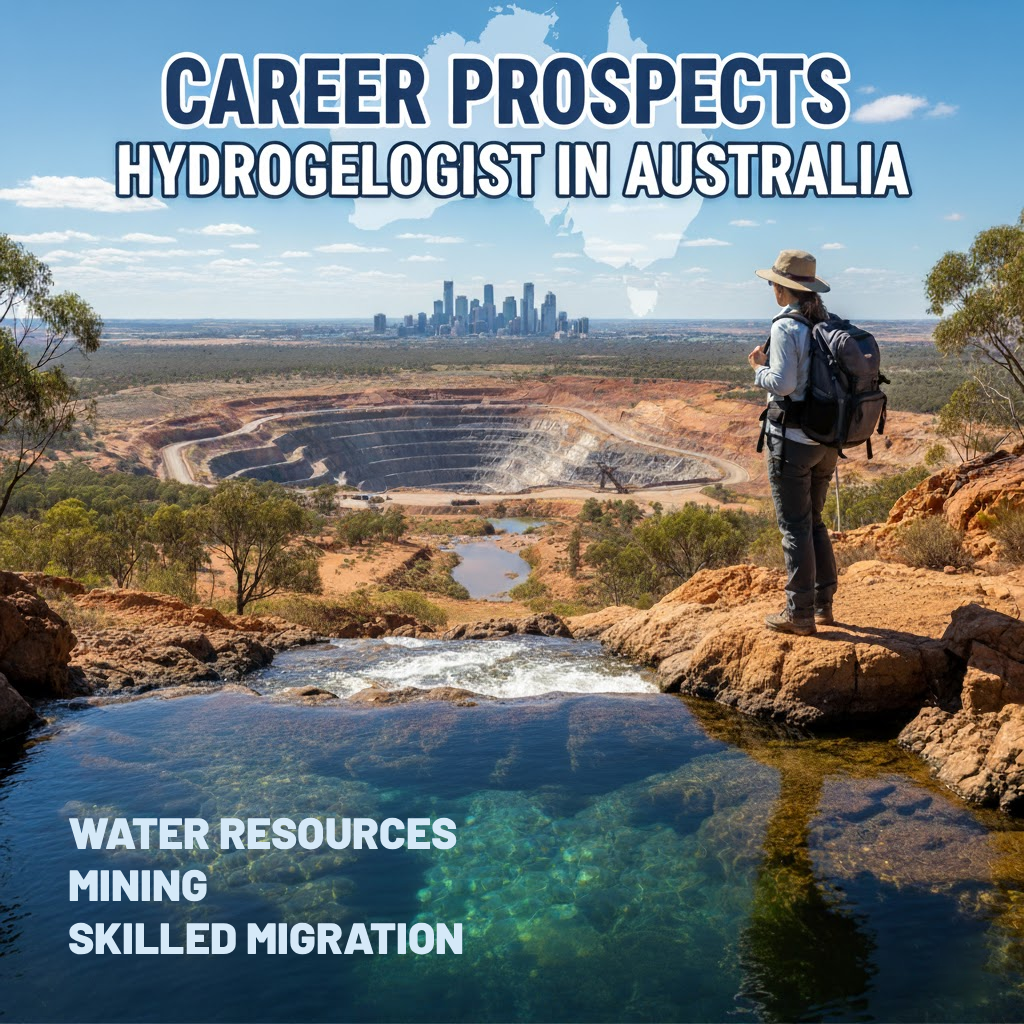
Discover strong career prospects for hydrogeologists in Australia. High-demand roles in mining hydrogeology, water resources management, and skilled migration pathways (190/491 visas). Salaries, locations and visa options explained.
Introduction
Australia faces acute water scarcity and booming mining activity. The country needs qualified hydrogeologists more than ever. Demand for groundwater specialists has surged in the mining sector (especially Western Australia and Queensland) and in environmental water management across the Murray-Darling Basin and Great Artesian Basin. ANZSCO 234413 Hydrogeologist remains on the Medium and Long-term Strategic Skills List (MLTSSL), making skilled migration straightforward for experienced professionals. This article examines current job opportunities, salary expectations, key industries, and migration pathways in 2025.
Demand Drivers: Why Australia Needs Hydrogeologists Now
Three major forces drive hydrogeology jobs in Australia:
1. Mining boom – Iron ore, lithium, copper, and critical minerals projects require mine dewatering, groundwater modelling (MODFLOW, FEFLOW), and tailings storage facility seepage control. Western Australia alone hosts hundreds of active projects.
2. Water security – Climate change and population growth intensify pressure on aquifers. State governments and the National Water Initiative demand robust water allocation planning and groundwater impact assessments.
3. Environmental regulation – Stricter rules on contaminated land hydrogeology and coal seam gas (CSG) water management create permanent roles in consulting and government.
The result: consistent nationwide vacancies for graduate, senior, and principal hydrogeologists.
Key Industries and Hotspot Locations
Mining hydrogeology dominates employment. Companies in Perth, Kalgoorlie, and Pilbara seek experts in mine dewatering and aquifer management. Lithium brine hydrogeology has exploded with new projects in Western Australia.
Water resources management offers stable positions in capital cities and regional centres:
– Brisbane and Queensland – coal mine groundwater and CSG water management
– Melbourne – contaminated sites and urban groundwater
– Adelaide – Great Artesian Basin and water resources in South Australia
– Sydney/Canberra – environmental consultant hydrogeologist roles with federal agencies
Regional Australia (Mount Isa, Broken Hill, Northern Territory) provides extra migration points through the 491 visa and Designated Area Migration Agreements (DAMA).
Salary Expectations in 2025
Experienced hydrogeologists earn strong incomes:
– Graduate/Junior: AUD 85,000 – 110,000
– Mid-level (5–10 years): AUD 120,000 – 160,000
– Senior/Principal: AUD 170,000 – 230,000+ (plus bonuses in mining)
Perth hydrogeology jobs and regional roles often include higher packages, relocation assistance, and 482/494 visa sponsorship.
Skilled Migration Pathways for Hydrogeologists
Hydrogeologist (ANZSCO 234413) qualifies for the following visas without state nomination hurdles:
– Skilled Independent visa (subclass 189) – points-tested, permanent residency
– Skilled Nominated visa (subclass 190) – adds 5 points with state nomination
– Skilled Work Regional visa (subclass 491) – 15 extra points, pathway to 191 PR after three years
Many states list hydrogeologist on their priority lists in 2025. South Australia, Northern Territory, and Western Australia frequently nominate via DAMA agreements. Positive skills assessments through the International Association of Hydrogeologists (IAH) Australian Chapter or Vetassess remain fast (4–8 weeks for qualified applicants).
### Education and Professional Recognition
Top Australian programmes include the Master of Hydrogeology at UWA, Flinders University, and UNSW. Overseas qualifications gain recognition quickly if the degree covers groundwater modelling, borehole drilling and testing, and field methods. Membership of the Australian Hydrographers Association or IAH strengthens job and visa applications.
Conclusion
Hydrogeologists enjoy outstanding career prospects in Australia in 2025. Strong demand from mining and water resources, competitive salaries, and clear skilled migration pathways make this one of the most attractive professions for overseas groundwater specialists. Start your skills assessment and Expression of Interest today to secure your future Down Under.