




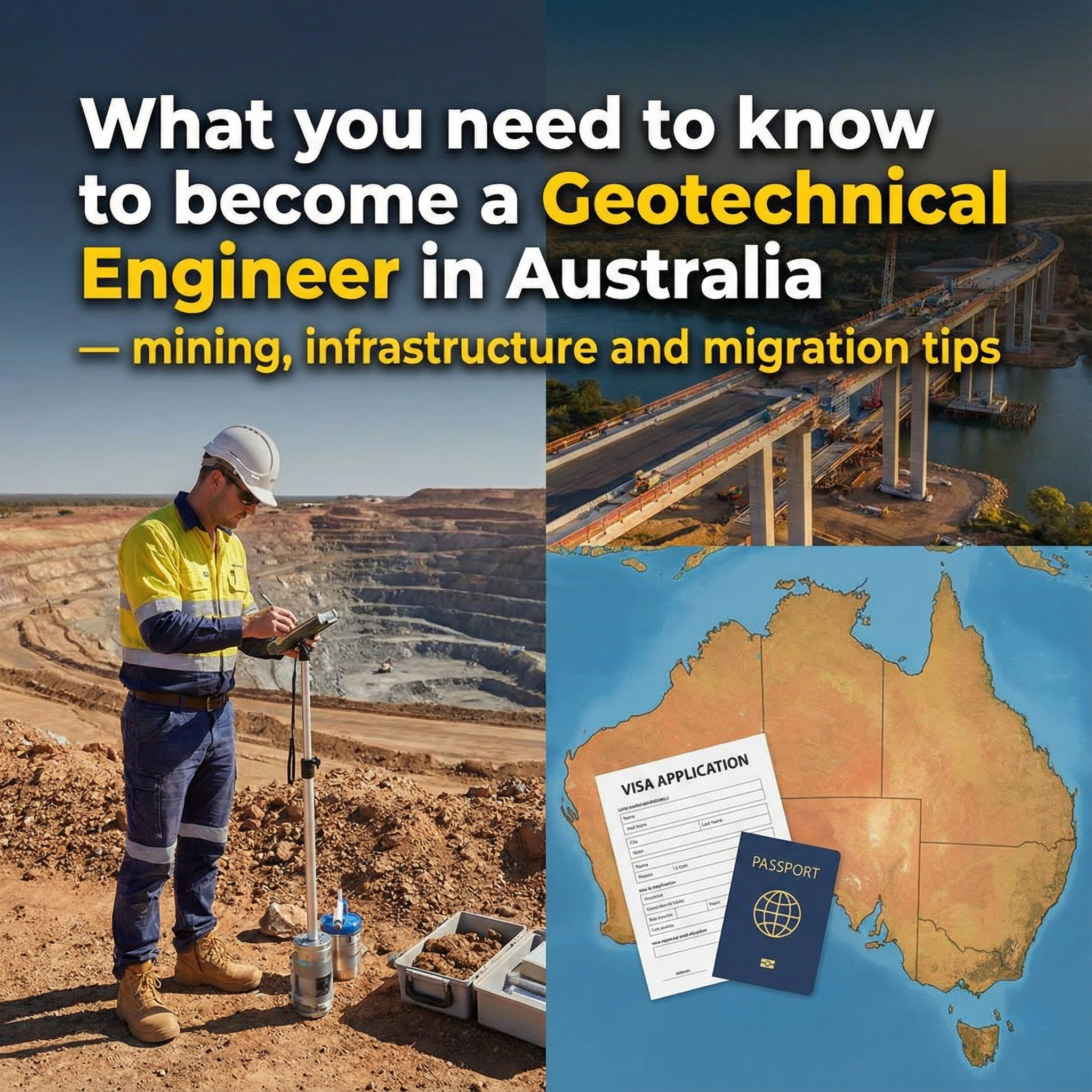
Australia needs geotechnical engineers for mining (Pilbara FIFO), metro rail, and critical minerals projects. Master PLAXIS, Rocscience, AS 1726 and secure PR fast — full salary, software, CDR and visa guide.
Introduction
Western Australia alone will require 1,200+ new geotechnical engineers by 2030 for lithium, rare earths and iron ore expansion. Simultaneously, Sydney Metro West, Melbourne Suburban Rail Loop, Inland Rail and Snowy 2.0 create hundreds of civil geotechnical roles. Geotechnical Engineer (ANZSCO 233912) sits on the Core Skills Occupation List with priority processing and state nomination available nationwide. Salaries now range from AUD 130,000 (graduate) to AUD 250,000+ (senior FIFO). This guide delivers the exact technical skills, software, standards and migration pathway you need right now.
Mining vs Infrastructure: Choose Your Path Early
Two distinct careers exist under the same title.
Mining geotechnical engineers (WA & QLD) focus on slope stability, pit wall design, tailings dams and seismic analysis in high-stress rock. FIFO rosters dominate — typically 8/6 or 2/1. Senior open-pit or underground roles regularly exceed AUD 220,000–300,000 with bonuses.
Infrastructure geotechnical engineers (Sydney, Melbourne, Brisbane) design deep foundations, retaining walls, ground improvement and temporary works for tunnels and high-rise. Office-based or 5/2 site roles pay AUD 140,000–190,000 with easier family lifestyle.
Pick your specialisation before writing your CDR — Engineers Australia assesses mining and civil streams differently.
Software and Standards Australian Employers Demand
Shortlisting happens in seconds if your resume shows these tools:
- PLAXIS 2D/3D (most used for deep excavations and embankments)
- Rocscience suite (Slide, RS2, Dips, RSPile) — mandatory for mining
- GeoStudio (Slope/W, Seep/W) — common in both streams
- WALLAP and gINT for reporting
Key standards you must reference in interviews and CDRs:
- AS 1726:2017 Geotechnical site investigations
- AS 4678 Earth-retaining structures
- Australian Geomechanics Society Landslide Risk Management Guidelines
- ANCOLD guidelines for tailings dams
Mining candidates who understand probabilistic slope design and the Hoek-Brown failure criterion receive instant offers.
The Proven Migration Route That Works in 2025
Geotechnical engineers enjoy some of the fastest processing times.
- Engineers Australia Skills Assessment (CDR pathway) Write three career episodes that explicitly reference AS 1726, AGS guidelines or ANCOLD even on overseas projects. Fast-track outcome in 15–20 days.
- Expression of Interest and State Nomination Current 189 invitations sit at 90–95 points, but nomination slashes the requirement:
- Western Australia 190/491: regular offshore invitations at 70–75 points
- South Australia 190: mining and civil both priority
- Tasmania 491 regional: fastest onshore to PR conversion
- Job Offer and Permanent Residency Mining companies (BHP, Rio Tinto, Fortescue, Newmont) and consultants (Golder/WSP, SRK, ATC Williams) sponsor 482 visas and support 186 direct PR. Civil contractors on metro projects (Acciona, CPB, John Holland) do the same.
Salary and Location Breakdown (2025 data)
- Perth/Pilbara FIFO (mining): AUD 180,000–300,000+
- Sydney (infrastructure): AUD 145,000–195,000
- Melbourne (SRL, level crossings): AUD 140,000–185,000
- Brisbane (Inland Rail, Cross River Rail): AUD 135,000–180,000
- Graduate nationwide: AUD 95,000–130,000
Western Australia currently pays 20–40% above eastern states for the same experience level.
Conclusion
Master PLAXIS or Rocscience, understand AS 1726 and AGS guidelines, then target Western Australia or major rail projects with a strong CDR. Geotechnical engineers who align their experience with Australian standards secure visas and six-figure roles within months. The demand has never been higher — start preparing your portfolio today.