




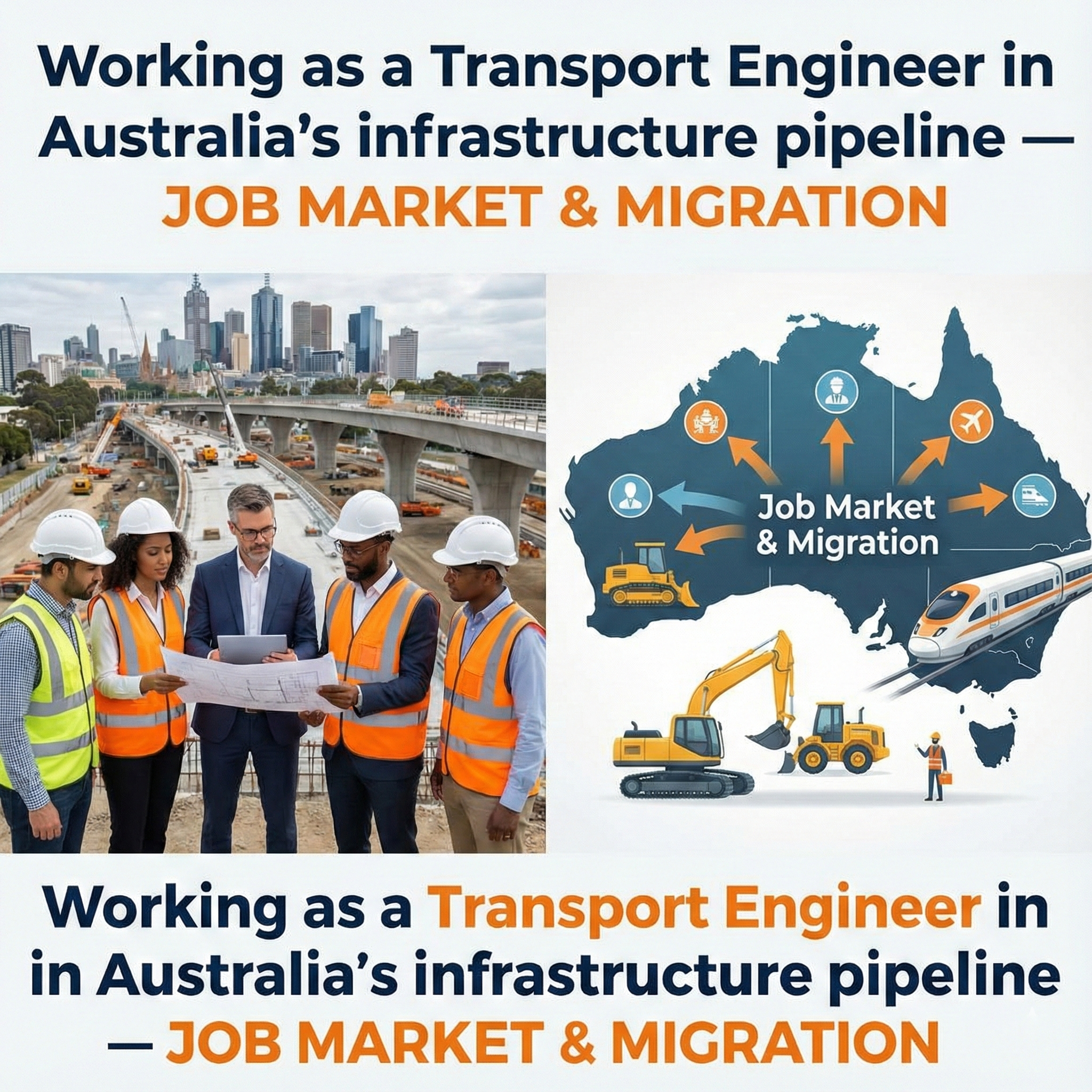
Australia’s $300+ billion infrastructure boom needs transport engineers now. Discover current salaries, in-demand skills (SIDRA, VISSIM), major projects, and the fastest visa pathways to permanent residency in 2025–2026.
Introduction
Australia will spend more than AUD 300 billion on transport infrastructure over the next decade. Projects like Sydney Metro West, Melbourne Suburban Rail Loop, Brisbane Cross River Rail, and Perth METRONET have created thousands of transport engineering roles. Transport Engineer (ANZSCO 233215) sits on every state’s priority occupation list, pushing invitation scores lower and processing times faster. This guide covers the exact skills employers want, live salary data, and the proven migration strategy that works right now.
The Australian Transport Engineering Job Market in 2025
Demand has never been higher. Transport for NSW, Department of Transport Victoria, Main Roads WA, and Queensland TMR all report critical shortages in traffic modelling, road design, and transport planning.
Major active projects hiring right now:
- Sydney Metro West and Sydney Metro – Western Sydney Airport (hundreds of traffic and transport modeller roles)
- Melbourne Suburban Rail Loop (SRL East already advertising 2026 start dates)
- Cross River Rail and Brisbane Metro
- Inland Rail (Albury to Brisbane)
- Perth METRONET and Level Crossing Removal programs in Victoria
Graduate transport engineers start at AUD 80,000–95,000. With three to five years’ experience and local project exposure, salaries jump to AUD 130,000–165,000. Senior transport modellers on Sydney Metro or SRL regularly earn AUD 180,000–220,000 plus overtime.
Skills and Software That Get You Hired Immediately
Australian employers shortlist candidates who already know local tools and guidelines.
Must-have software:
- SIDRA Intersection (used on 90% of intersection designs)
- VISSIM or AIMSUN for micro-simulation
- PTV Visum or EMME for strategic modelling
Familiarity with Austroads Guide to Road Design and Austroads Guide to Traffic Management is non-negotiable. State supplements (Transport for NSW, VicRoads, Main Roads WA) change details — learn the differences early.
Traffic engineers who can demonstrate SIDRA and VISSIM on Australian-style roundabouts and signalised intersections receive multiple offers within weeks.
The Fastest Migration Pathway for Transport Engineers
Transport Engineer enjoys priority processing across all skilled visas.
Step 1 — Engineers Australia Skills Assessment Most applicants use the CDR pathway. Write three career episodes that reference Austroads guidelines and Australian-style projects (even if completed overseas). Processing time: 4–8 weeks standard, 15–20 days fast-track.
Step 2 — Expression of Interest and State Nomination Current 189 invitation scores hover around 90–95 points, but state nomination drops the threshold dramatically:
- Victoria 190 nomination: 75–80 points, invitations within weeks
- South Australia 190/491: offshore invitations at 70–75 points
- Tasmania 491: fastest regional pathway, onshore conversion to PR after two years
Step 3 — Job Offer and Permanent Residency Most candidates secure roles before or within months of arrival. Large contractors (Acciona, CPB, John Holland, Laing O’Rourke) and consultancies (Arup, AECOM, GHD, SMEC) actively sponsor 482 visas and support 186 direct PR applications.
Salary Comparison Across States (2025 data)
- Sydney: AUD 135,000–185,000 (highest cost of living offset by highest pay)
- Melbourne: AUD 125,000–170,000 (Suburban Rail Loop driving demand)
- Brisbane: AUD 130,000–175,000 (Cross River Rail and Brisbane Metro)
- Perth: AUD 135,000–190,000 (METRONET and mining-related transport corridors)
- Regional roles (491 visa): often 5–10% lower base but large uplifts and allowances
Conclusion
Transport engineers who understand SIDRA, VISSIM, and Austroads guidelines walk into multiple job offers in Australia’s infrastructure boom. Combine those skills with a strong CDR and state nomination and you can secure permanent residency in under 12 months. Start aligning your experience with Australian standards today — the projects are funded and the roles are open now.