




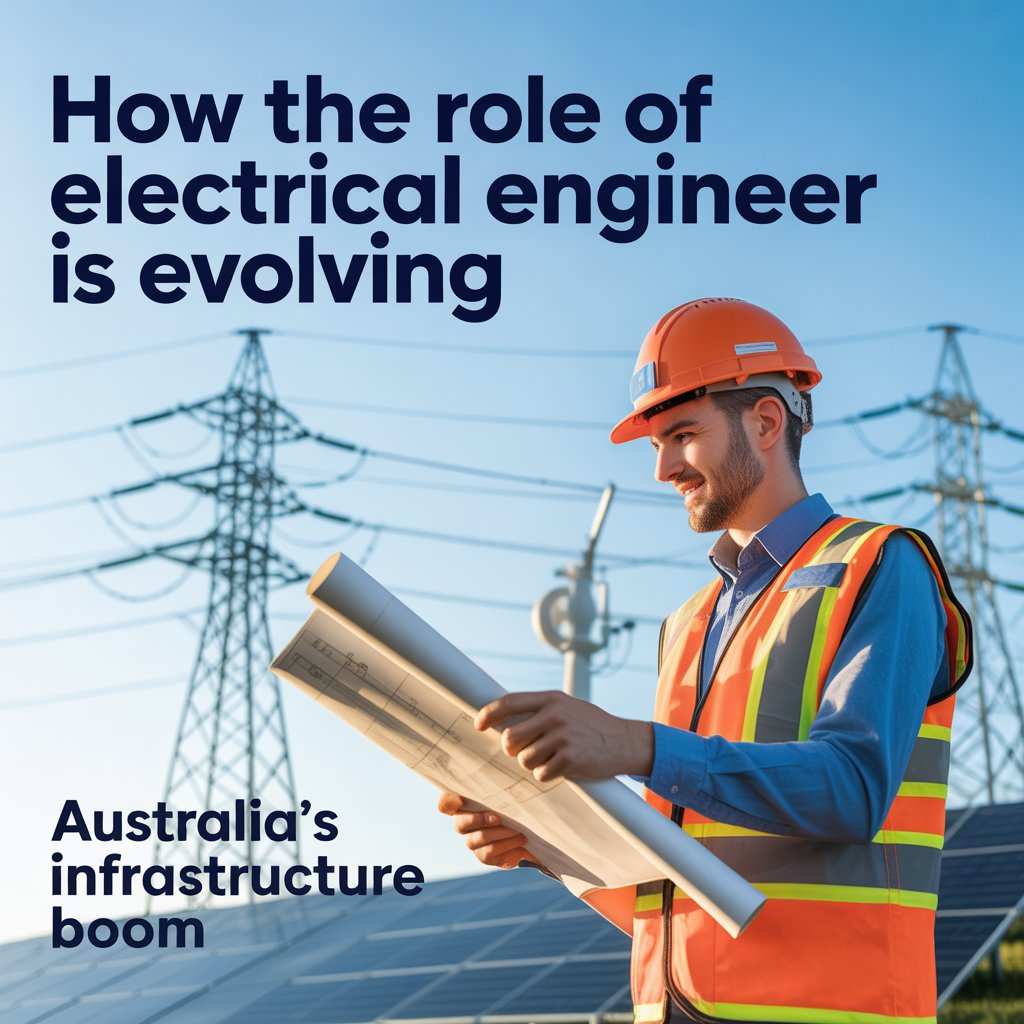
Discover how electrical engineers are driving Australia’s energy transition and infrastructure boom. Explore evolving roles, high-demand skills, major projects, and immigration advantages in renewable energy and grid modernisation.
Introduction
Australia is spending more than $300 billion on energy and transport infrastructure this decade. The Australian energy transition now demands thousands of skilled electrical engineers every year. From Renewable Energy Zones in Queensland to massive transmission projects like Humelink and VNI West, the role of the electrical engineer has shifted dramatically. Traditional power station design has given way to renewable integration, grid stability solutions, and digital substations. Engineers who understand grid-forming inverters, PSCAD modelling, and IEC 61850 now sit at the centre of the country’s Net Zero 2050 pathway.
Australia’s Infrastructure Boom Reshapes Electrical Engineering
The Integrated System Plan (ISP) released by AEMO maps out a complete rebuild of the National Electricity Market (NEM). By 2030, Australia will add 10 GW of new dispatchable capacity and replace ageing coal infrastructure. Projects such as Snowy 2.0, Marinus Link, CopperString 2032, and multiple REZ transmission developments create an unprecedented pipeline of work.
Power systems engineers, high voltage engineers, and substation engineers lead the design and delivery of these assets. Battery Energy Storage Systems (BESS) and pumped hydro now require expertise in synchronous condensers and frequency control ancillary services (FCAS). Engineers who once focused only on generation now solve complex grid stability challenges caused by high renewable penetration.
New Specialisations That Define the Modern Electrical Engineer
The fastest-growing roles include smart grid engineers and renewable energy engineers. Employers actively seek professionals with hands-on experience in:
– Grid-forming inverters and virtual power plants (VPP)
– Distributed Energy Resources (DER) integration and EV charging infrastructure
– Digital substations using IEC 61850 and real-time automation
– PSCAD and PSSE modelling for dynamic system studies
Transmission & distribution engineers working on projects for Transgrid, Ausgrid, Powerlink Queensland, and AusNet now earn premium salaries because of the national skills shortage in electrical engineers. Major consultancies (Aurecon, GHD, Jacobs, WSP) and contractors compete fiercely for talent who can deliver Rewiring the Nation initiatives on time.
Why Australia Offers Exceptional Career and Migration Opportunities
Engineers Australia regularly lists electrical engineering occupations on the Medium and Long-term Strategic Skills List (MLTSSL) and state priority lists. Subclasses 189, 190, and 491 visas remain open to power systems engineers, renewable energy engineers, and transmission engineers.
Regional projects in Queensland (CopperString), New South Wales (Central-West Orana REZ), and Victoria offer additional state nomination points and lower competition. Many employers provide visa sponsorship and relocation packages because the local supply cannot meet demand for critical infrastructure Australia projects.
Conclusion
The role of the electrical engineer in Australia has evolved from traditional plant maintenance to becoming the backbone of one of the world’s most ambitious energy transitions. Professionals with renewable integration and high-voltage transmission experience find unmatched career growth, competitive salaries, and straightforward permanent residency pathways. Act now — the infrastructure boom needs you.