



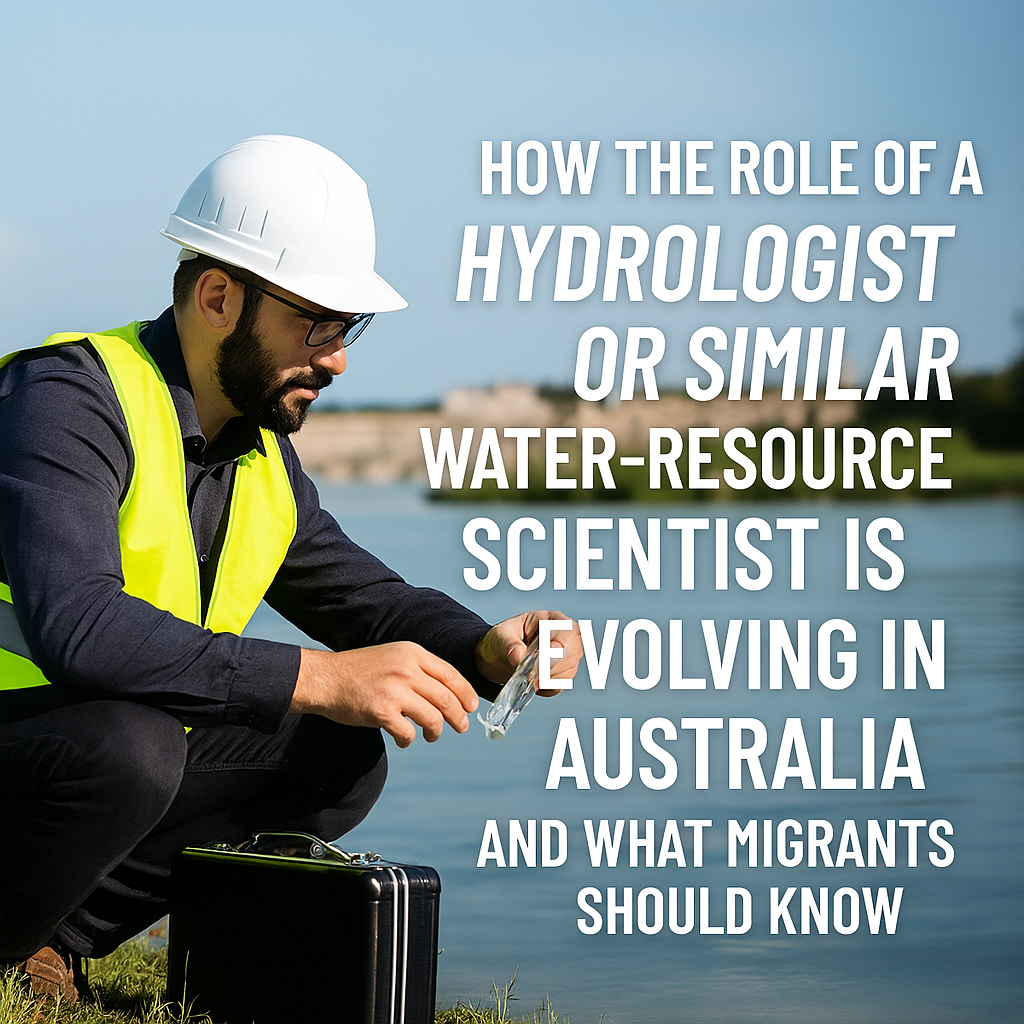
Discover how hydrologist and water-resource scientist roles are changing in Australia due to climate change and policy reform. Learn visa pathways, skills in demand, salaries, and what migrants must know to succeed.
Introduction
Australia faces escalating water challenges. Prolonged droughts, intense floods, and groundwater depletion demand new expertise. The role of hydrologists, hydrogeologists, and water resources engineers in Australia has shifted from traditional monitoring to climate-resilient planning, advanced modelling, and policy implementation. For skilled migrants, this creates strong opportunities. Jobs in the water sector appear on multiple skilled occupation lists, regional DAMA agreements, and state nomination programs. This guide explains the evolving role and exactly what migrants need to know in 2025.
The New Face of Hydrology and Water Science in Australia
Climate change drives the transformation. The Bureau of Meteorology now predicts more extreme dry and wet periods. Hydrologists no longer just measure streamflow — they build climate change adaptation water strategies. Tools such as eWater Source, SWAT, and machine-learning flood modelling have become daily essentials.
Groundwater management Australia has gained urgency, especially in the Great Artesian Basin and areas affected by coal seam gas water issues or PFAS contamination. Meanwhile, the Murray-Darling Basin Plan and National Water Initiative push professionals toward water accounting Australia, environmental flows, and water trading systems. Roles increasingly combine science with Indigenous water rights consultation and nature-based solutions water Australia.
Emerging Specialisations and Skills Employers Want
Demand grows fastest in these areas:
– Flood modelling Australia and real-time forecasting (especially Queensland and NSW)
– Mine water management and rehabilitation (Western Australia, Queensland)
– Water Sensitive Urban Design (WSUD) and urban water management Australia (Victoria, South Australia)
– Water recycling Australia and desalination plant optimisation
– GIS in hydrology Australia and remote sensing water resources
Organisations such as CSIRO water research divisions, state water departments (WaterNSW, DELWP Victoria, DNRME Queensland), and consultancies actively recruit for Integrated Water Resource Management (IWRM) expertise. Soft skills matter too: stakeholder engagement, policy translation, and cross-disciplinary collaboration now appear in most job ads.
Migration Pathways for Hydrologists and Water Scientists
Water-related occupations enjoy multiple visa options:
– Skilled Independent visa (189) – Hydrogeologist (ANZSCO 234413) sits on the Medium and Long-term Strategic Skills List (MLTSSL).
– Skilled Nominated visa (190) and Skilled Work Regional (491) – several states prioritise water resources engineer Australia and similar roles.
– Temporary Skill Shortage visa (482) – common for experienced hydrologists.
– Designated Area Migration Agreements (DAMA) – South Australia DAMA and Western Australia DAMA explicitly list water occupations with age and English concessions.
A skills shortage hydrology Australia persists, especially outside capital cities, which strengthens 491 visa water scientist applications and employer sponsorship chances.
Salary Expectations and Professional Recognition
Australian hydrologist salary ranges from AUD 95,000 for early-career roles to AUD 160,000+ for senior or principal positions in mining, government, or consultancy. Remote or regional postings often add 15–25% loading.
Gain professional recognition quickly through:
– Engineers Australia (for water resources engineers)
– Australian Water Association (AWA) membership
– Certified Practising Hydrologist (CPHyd) certification via the Australian Institute of Hydrology
– International Association of Hydrogeologists Australian Chapter (IAH)
These boost points claims and employer confidence.
Conclusion
Australia’s water sector offers migrant hydrologists and water scientists stable, well-paid careers at the forefront of climate adaptation. Update your skills in modelling, groundwater, and policy, target regional roles for faster visas, and connect with AWA and state water departments early. Act now — the combination of skills shortages and ongoing reform makes 2025–2027 an ideal window.