




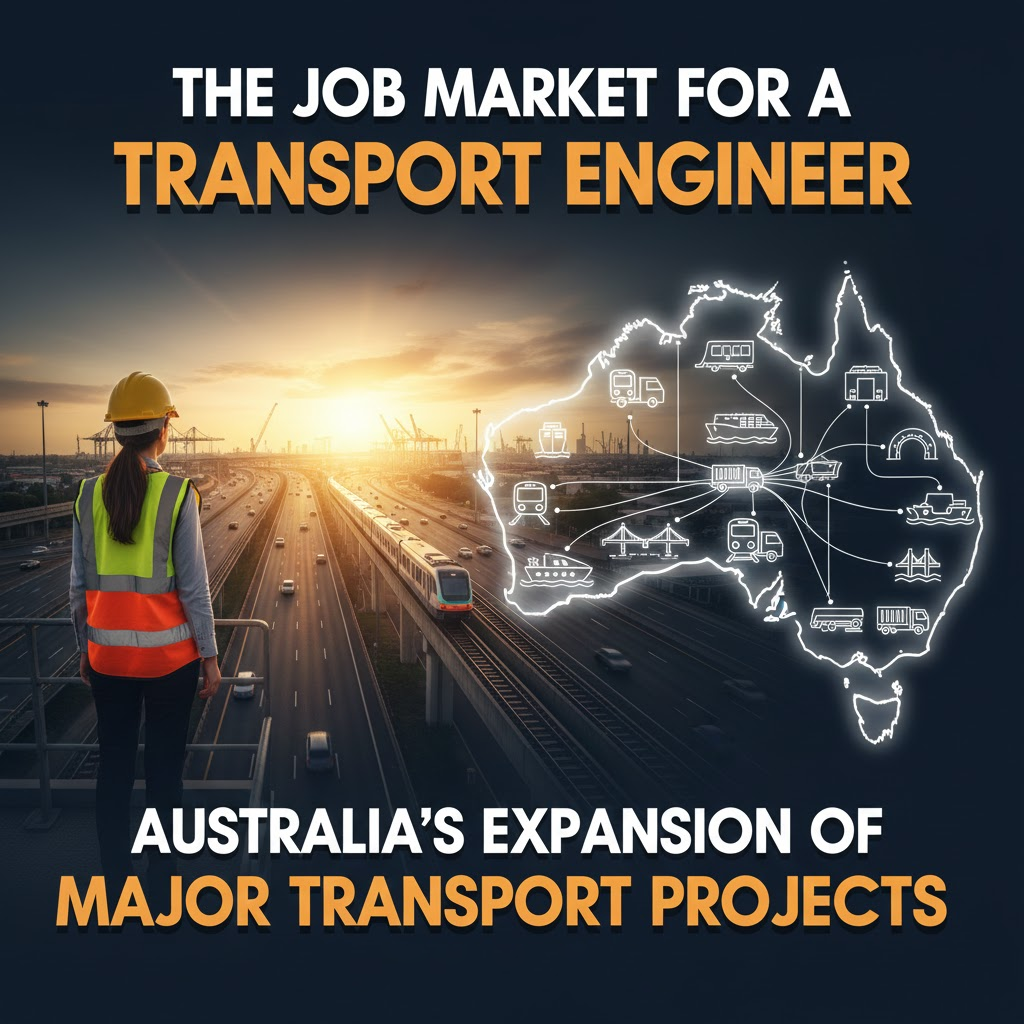
Explore the thriving job market for transport engineers amid Australia’s major infrastructure expansions. Discover key projects, demand trends, and immigration pathways for skilled professionals seeking opportunities in 2025.
Introduction
Australia’s infrastructure sector surges forward with investments exceeding $200 billion in transport projects over the next decade. This growth creates high demand for transport engineers who design efficient systems for roads, rails, and public transit. Skilled professionals find ample opportunities in transportation infrastructure construction, driven by urban expansion and sustainability goals. Transport engineer jobs in Australia offer competitive salaries and pathways to permanent residency for qualified migrants. This article examines the market landscape, key projects, and steps for international engineers to enter this dynamic field.
Overview of Australia’s Major Transport Projects
Australia commits substantial resources to enhance its transport networks, addressing population growth and economic needs. Major transport projects in Australia include the Suburban Rail Loop in Melbourne, a $50 billion initiative connecting suburbs with new underground lines to reduce congestion and boost connectivity. Similarly, the Sydney Metro West expands rapid transit between the city center and Parramatta, aiming to cut travel times by half and support 250,000 jobs during construction.
In Western Australia, the Metronet Expansion Project transforms Perth’s public transport with new rail lines, stations, and integrated bus services. This multibillion-dollar effort focuses on rail and road infrastructure projects, including extensions to Ellenbrook and Thornlie-Cockburn links, which require expertise in transport systems efficiency. Queensland advances the Cross River Rail, a vital underground line easing Brisbane’s bottlenecks, while Tasmania’s New Bridgewater Bridge upgrades freight and passenger routes.
These initiatives stem from the 2025 Infrastructure Market Capacity Report, which highlights a $77 billion rise in building and transport investments. Transport engineers play central roles in planning, from traffic modeling to sustainable design. For instance, Victoria’s Big Build encompasses the Metro Tunnel and North East Link, removing level crossings and adding freeways to improve flow. Such projects demand skills in transportation systems development, ensuring safe and cost-effective movement of people and goods.
International engineers benefit from this expansion, as Australia seeks global talent to fill gaps. Projects like the Bruce Highway Upgrade in Queensland enhance regional access, creating roles in geotechnical and structural engineering. Overall, these efforts underscore Australia’s push for modern infrastructure, offering stable careers in public transport engineering.
Demand and Opportunities in the Transport Engineering Job Market
The job market for transport engineers in Australia remains robust in 2025, fueled by ongoing infrastructure demands. Civil engineers demand in 2025 projects a need for over 60,000 additional professionals by 2035 to support key sectors. Transport engineers, specializing in systems for roads, rails, and transit, face high vacancies, with platforms like Indeed listing over 485 positions nationwide.
Key areas include traffic and transport engineering vacancies in major cities. Sydney and Melbourne lead with roles in metro expansions, while Perth’s engineering projects focus on Metronet. Salaries average $120,000 to $150,000 annually, depending on experience, with senior positions exceeding $180,000 in high-demand regions. Employers value expertise in software like AutoCAD and traffic simulation tools, alongside knowledge of sustainability standards.
The civil engineering labour market tightens due to skills shortages, with 112 occupations in national deficit. Engineering workforce challenges in Australia include underutilization of migrants and low domestic graduate numbers, prompting reliance on international talent. States like New South Wales, Victoria, and Queensland report the strongest demand, tied to urban growth.
Public transport engineering careers thrive in government agencies and private firms like AECOM or Arup, which handle design and project management. Opportunities extend to regional areas, where incentives like relocation support attract professionals. For migrants, this market aligns with visa priorities, as transport roles appear on skilled occupation lists. Networking through Engineers Australia events aids job placement, emphasizing practical experience in infrastructure delivery.
Immigration Pathways for Transport Engineers to Australia
Skilled migration offers clear routes for transport engineers eyeing Australia’s market. Engineers Australia conducts skills assessments, essential for visas, evaluating qualifications against standards like the Washington Accord. Successful assessments open doors to the Skilled Independent Visa (Subclass 189), a points-tested option for independent professionals with at least 65 points based on age, English proficiency, and experience.
Employer-sponsored visas, such as Subclass 482 (Temporary Skill Shortage), allow quick entry for roles in major transport projects. These often transition to permanent residency via Subclass 186 (Employer Nomination Scheme). For transport engineers, occupations like ANZSCO 233215 qualify, focusing on systems planning and efficiency.
Regional visas, including Subclass 491 (Skilled Work Regional), suit projects in Perth or Brisbane, requiring state nomination and a commitment to live regionally for three years. Points boost for regional work, with 100 points often securing invitations. Costs for assessments range from $500 to $1,000, plus visa fees.
Preparation involves submitting CDR (Competency Demonstration Report) for non-accredited qualifications, demonstrating skills in transport design. Migrants overcome barriers like recognition delays by joining professional networks. With persistent shortages, Australia prioritizes engineers, enabling faster processing for critical roles in transportation infrastructure construction.
Conclusion
Australia’s expansion of major transport projects drives strong demand for transport engineers, offering rewarding careers and immigration opportunities. Skilled professionals contribute to efficient systems while securing pathways to residency. Consult Engineers Australia for skills assessment and explore visa options to start your journey.