




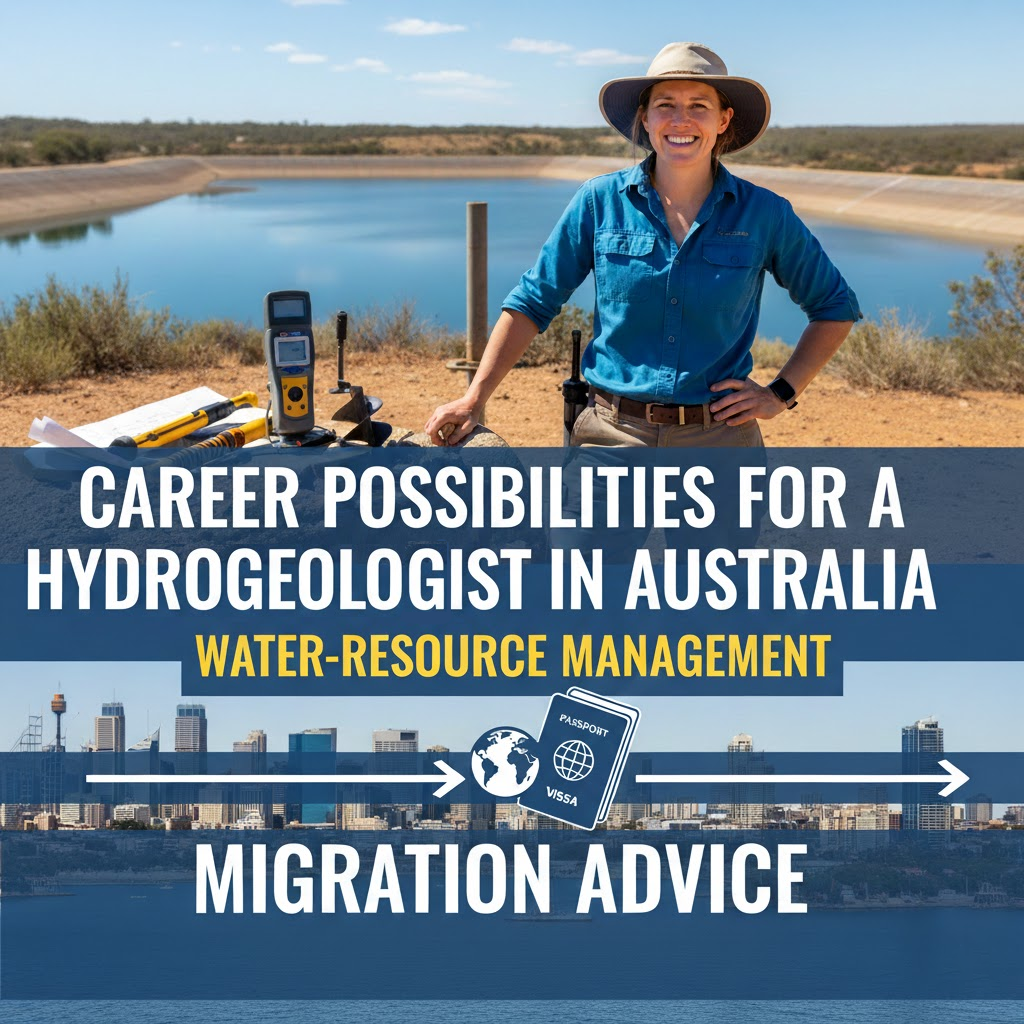
Discover career opportunities for hydrogeologists in Australia, focusing on water resource management. Gain insights into hydrogeologist jobs, key sectors, and skilled migration pathways, including visa advice and occupation lists to support professional migration.
Introduction
Australia grapples with increasing water scarcity, with groundwater supplying over 30% of the nation’s water needs. This challenge creates strong demand for experts in hydrogeology. Hydrogeologists play a vital role in managing these resources sustainably. This article explores career possibilities for hydrogeologists in Australia, emphasizing water resource management and migration advice. It covers job opportunities in diverse sectors and outlines pathways for skilled professionals seeking to relocate. Readers will find practical guidance on Australian careers, from environmental roles to government positions, alongside steps for professional migration.
Career Opportunities for Hydrogeologists in Australia
Hydrogeologists in Australia find diverse employment across multiple industries. The field centers on groundwater management and aquifer studies, addressing critical issues like water sustainability. Professionals monitor, analyze, and describe underground water resources, ensuring efficient use amid climate pressures.
Key sectors include environmental consulting, where hydrogeologists assess impacts of development projects on water systems. Firms like Jacobs hire specialists to deliver solutions for natural resource management. Mining hydrogeology offers another avenue, with companies requiring expertise to manage water in extraction processes. Roles involve modeling groundwater flow to minimize environmental risks.
Government water agencies, such as the Water Corporation, employ hydrogeologists for source planning and quality control. These positions focus on public infrastructure, including wastewater management. Hydrology employment extends to academia and research bodies like CSIRO, where scientists conduct aquifer studies to inform policy.
Job prospects remain robust. As of 2025, platforms like SEEK list over 600 hydrogeologist jobs nationwide, with new vacancies added daily. LinkedIn reports around 70 active roles, highlighting demand in states like Western Australia and South Australia, rich in mining and agriculture. Entry-level positions suit graduates, while experienced professionals advance to senior roles in project leadership.
Salaries reflect the field’s value. Average earnings range from $98,000 to $123,000 annually, depending on experience and location. Senior hydrogeologists often exceed $120,000, especially in mining hubs. Benefits include flexible work arrangements and opportunities for fieldwork. Professionals build skills in data analysis, modeling software, and regulatory compliance, enhancing career mobility. Transitions between sectors occur smoothly, as expertise in water resource management applies broadly. Aspiring hydrogeologists pursue degrees in geoscience or related fields, often gaining certifications from bodies like the International Association of Hydrogeologists.
Key Sectors in Water Resource Management
Water resource management drives many hydrogeologist jobs in Australia. Professionals tackle challenges like drought and contamination through targeted strategies. Groundwater management forms the core, involving assessment of aquifers to support agriculture and urban supply.
In environmental consulting, hydrogeologists conduct site investigations and develop remediation plans. They use tools like geophysical surveys to map water flows, ensuring projects comply with environmental laws. This sector grows as regulations tighten on water usage.
Mining hydrogeology integrates water management into resource extraction. Specialists design dewatering systems and predict impacts on local ecosystems. Australia’s mining industry, a major exporter, relies on these experts to maintain operations sustainably. Roles often involve collaboration with engineers and environmental scientists.
Government water agencies provide stable careers. Hydrogeologists contribute to national strategies on water sustainability, such as the Murray-Darling Basin Plan. They analyze data from monitoring networks to guide policy decisions. Positions in state departments focus on regional issues, like salinity in Western Australia.
Aquifer studies underpin these efforts. Hydrogeologists employ modeling techniques to forecast resource availability, aiding in climate adaptation. Emerging trends include integrating renewable energy with water systems, such as geothermal projects.
Employment in hydrology extends to private utilities and NGOs. Organizations prioritize water efficiency, creating roles in auditing and conservation. Professionals often travel for field work, collecting samples and installing monitoring equipment. Career advancement requires ongoing education, with workshops on advanced modeling software.
Demand surges in water-stressed regions. South Australia’s occupation list includes hydrogeology-related roles, signaling priority for skilled workers. This alignment supports broader goals of water security. Hydrogeologists influence positive change, balancing human needs with environmental protection.
Skilled Migration Pathways for Hydrogeologists
Skilled migration Australia offers viable routes for hydrogeologists seeking professional opportunities. The occupation falls under ANZSCO code 234413, qualifying for several visa categories. VETASSESS serves as the assessing authority, evaluating qualifications and experience.
Occupation lists include hydrogeologist on the Skilled Occupation List, enabling points-tested visas. The Skilled Independent Visa (Subclass 189) suits those with high points from age, English proficiency, and skills. No sponsorship is needed, allowing permanent residency upon approval.
State-nominated options, like Subclass 190, require nomination from a state or territory. South Australia and Western Australia often prioritize hydrogeology due to regional needs. The Skilled Work Regional Visa (Subclass 491) targets provisional residency in regional areas, leading to permanence after three years.
Visa advice emphasizes preparation. Applicants undergo skills assessment, proving a bachelor’s degree or equivalent in hydrogeology. At least one year of relevant experience strengthens applications. English tests like IELTS or PTE are mandatory, with minimum scores varying by visa.
The points system rewards factors like work experience and qualifications. As of 2025, invitation rounds occur regularly, with recent rounds issuing thousands of invites. The Migration Program allocates 185,000 places annually, maintaining focus on skilled workers.
Professional migration involves gathering documents, including employment references and academic transcripts. Consultants assist with Expression of Interest submissions via SkillSelect. Processing times range from months to a year, depending on demand.
Successful migrants integrate quickly, leveraging Australian careers in water resource management. Networking through associations like IAH Australia aids job searches. This pathway not only advances careers but also contributes to Australia’s water sustainability efforts.
Conclusion
Hydrogeologists enjoy promising careers in Australia, with roles in groundwater management, environmental consulting, and government agencies driving water sustainability. Skilled migration pathways, including visas like 189 and 190, facilitate relocation for qualified professionals. Consult an immigration expert to assess eligibility and begin your application process today.