



Explore key aspects of working as an environmental consultant in Australia, from qualifications and skills to visa options and job opportunities amid the nation’s sustainability drive toward net-zero emissions by 2050.
Introduction
Australia’s commitment to achieving net-zero emissions by 2050 has spurred significant growth in the green economy, with renewable energy projects and sustainability initiatives creating over 100,000 jobs in related sectors. This push addresses climate change mitigation and biodiversity conservation through robust environmental regulations. For professionals eyeing roles in environmental consulting, understanding the landscape is essential. This article outlines the role, required qualifications, immigration pathways, and practical steps to enter this field, helping you navigate opportunities in Australia’s evolving sustainable development careers.
The Role of Environmental Consultants in Australia’s Green Economy
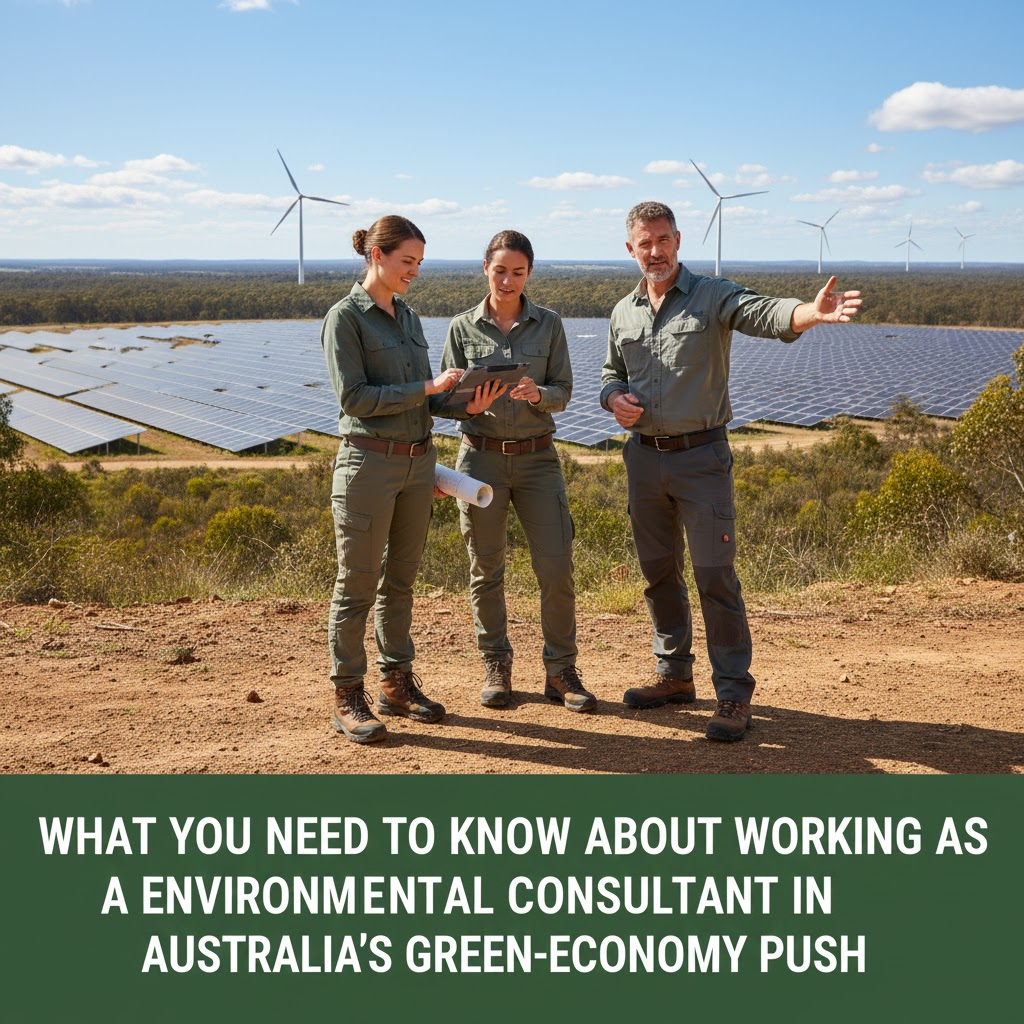
Environmental consultants play a pivotal role in guiding businesses and governments toward eco-friendly projects. They analyze environmental impacts, develop strategies for carbon footprint reduction, and ensure compliance with Australia’s environmental regulations. In the context of the green economy, consultants often conduct environmental impact assessments for renewable energy jobs, such as solar and wind installations, which align with national green policy initiatives.
These professionals advise on ESG consulting, helping organizations integrate environmental, social, and governance factors into operations. For instance, they might assess biodiversity conservation in mining or infrastructure projects, ensuring minimal ecological disruption. Consultants also support net-zero emissions goals by recommending sustainable practices, like waste reduction and energy efficiency measures.
Demand stems from Australia’s sustainability focus, including the 82% renewable electricity target by 2030. Consultants work across industries, from urban development to agriculture, providing expertise on climate change mitigation. Firms like EY and Deloitte offer ESG services, emphasizing the need for consultants who can bridge policy and implementation. This role requires fieldwork, data analysis, and stakeholder engagement, making it dynamic and impactful in advancing Australia’s environmental compliance standards.
Qualifications and Skills Required
To succeed as an environmental consultant in Australia, a bachelor’s degree in environmental science, natural resource management, or a related field forms the foundation. Many employers prefer candidates with postgraduate qualifications, such as a Master’s in Environmental Science or Engineering, to handle complex assessments.
Key skills include strong analytical abilities to interpret data from environmental impact assessments and model carbon footprint reductions. Proficiency in tools like GIS software and knowledge of Australian environmental regulations are essential. Consultants must excel in project management, communication, and problem-solving to advise on green policy initiatives and sustainable development careers.
Relevant experience, often gained through internships or entry-level roles, strengthens applications. Certifications in ESG consulting or biodiversity conservation add value, particularly for roles in renewable energy jobs. The Australian government recognizes these qualifications under the ANZSCO code 234312 for skilled migration. Employers seek adaptable professionals who can navigate eco-friendly projects amid evolving regulations.
Practical training, such as on-the-job experience in environmental compliance, is often required alongside formal education. Networking through organizations like the Environment Institute of Australia and New Zealand can provide insights and opportunities.
Immigration Pathways and Visa Options
Australia welcomes skilled environmental consultants through its immigration system, particularly via points-tested visas. The Skilled Independent Visa (Subclass 189) allows permanent residency for those scoring at least 65 points based on age, English proficiency, qualifications, and work experience. Environmental consultants fall under ANZSCO 234312, requiring a positive skills assessment from VETASSESS.
Applicants need at least one year of relevant skilled employment. For those with Australian qualifications or experience, the Temporary Graduate Visa offers a pathway to gain local work history. State-nominated visas, like Subclass 190, provide additional points if sponsored by a state prioritizing green economy roles, such as in Western Australia or Queensland.
The Employer Nomination Scheme (Subclass 186) suits those with job offers from Australian firms in environmental consulting. Processing involves submitting an Expression of Interest via SkillSelect, where invitations depend on occupation demand and points. Recent updates emphasize sustainability skills, aligning with Australia’s green policy initiatives.
Preparation includes gathering evidence of qualifications and experience. Consulting a registered migration agent ensures compliance with requirements, accelerating the process toward working in Australia’s vibrant green sector.
Job Market, Salary, and Outlook
The job market for environmental consultants in Australia remains strong, driven by the green economy push. Over 300 positions are advertised on platforms like SEEK and LinkedIn, with roles in consulting firms, government agencies, and private sectors focusing on renewable energy jobs and climate change mitigation. Major cities like Sydney, Melbourne, and Brisbane host the majority, but opportunities exist in regional areas for biodiversity conservation projects.
Average salaries range from AUD 85,000 to 105,000 annually, with entry-level positions starting at AUD 55,000-75,000 and senior roles exceeding AUD 120,000. Factors like experience, location, and specialization in ESG consulting influence earnings. The outlook is moderate, with demand tied to environmental regulations and net-zero emissions targets.
Job growth aligns with Australia’s sustainability goals, including the Climate Change Act and renewable targets. Consultants benefit from flexible work arrangements, often involving fieldwork in eco-friendly projects. Networking via ethical job boards and industry events enhances prospects in this competitive field.
Conclusion
Working as an environmental consultant in Australia’s green economy offers rewarding opportunities to contribute to sustainability and climate goals. Key elements include obtaining relevant qualifications, securing appropriate visas, and leveraging the growing job market. Pursue a skills assessment and explore migration options to start your journey. Consult a migration expert for personalized guidance.