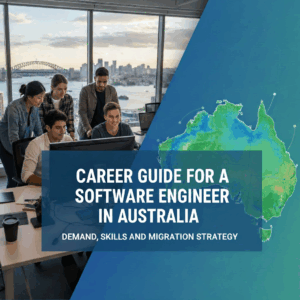





Explore becoming a data engineer in Australia’s thriving data economy. Learn essential skills, job market trends, salaries, and PR pathways like skilled migration visas to secure your future Down Under.
Introduction
Australia’s GDP grew 1.8% in 2025, fueled by rapid advancements in data analytics and AI, creating high demand for tech professionals. Data engineers play a pivotal role in this shift, building robust data pipelines that power business decisions across industries. This article covers what you need to know about thriving as a data engineer in Australia’s data-driven economy, including key skills, job opportunities, and permanent residency options through skilled migration. Whether you’re eyeing a career move or immigration, these insights will guide your path forward.
Australia’s Data-Driven Economy and Tech Job Market
Australia’s economy increasingly relies on data to drive innovation, with sectors like finance, healthcare, and mining adopting big data technologies for efficiency. The data analytics growth has surged, supported by government initiatives and private investments, projecting thousands of new roles in tech by 2025. Data engineers stand at the forefront, managing vast datasets to enable AI and machine learning applications.
Key Australian tech hubs include Sydney, which hosts major firms and startups, and Melbourne, known for its vibrant innovation ecosystem. Brisbane emerges as a growing center for data engineering, while Perth leverages mining data needs, and Adelaide focuses on defense and space tech. These locations offer diverse opportunities, with companies seeking experts in cloud platforms like AWS and Azure tailored to Australia’s infrastructure.
The tech job market remains competitive yet welcoming to skilled migrants. Demand for data engineers exceeds supply in shortage lists, leading to attractive salaries averaging $130,000 annually, higher in hubs like Sydney at $155,000. Employers value professionals who can optimize ETL processes and integrate with local systems, making this field ideal for career growth.
Essential Data Engineering Skills and Technologies
Success as a data engineer in Australia requires a blend of technical expertise and practical application. Core skills include proficiency in SQL for querying databases, Python for scripting, and tools like Hadoop for handling big data. These enable the design of efficient data pipelines that process and transform large volumes of information.
Familiarity with ETL processes is crucial, as engineers extract, transform, and load data to support analytics. Cloud platforms in Australia, such as AWS and Google Cloud, dominate due to their scalability for enterprise needs. Integrating AI and machine learning adds value, allowing engineers to build systems that predict trends or automate decisions.
Beyond tools, soft skills like problem-solving and collaboration matter in team environments. Australian employers prioritize software engineering best practices, including clean code and version control. Gaining certifications from bodies like ACS can boost employability, aligning with immigration requirements for skilled roles.
PR Pathways and Immigration Requirements for Data Engineers
Australia offers several PR pathways for data engineers, starting with skills assessments from the Australian Computer Society (ACS) for occupations like ICT professionals or data scientists. Check the Core Skills Occupation List, where tech roles often appear in shortage categories, qualifying for visas.
Points-tested visas, such as the Skilled Independent Visa ( subclass 189), reward qualifications, experience, and English proficiency, with data engineering skills earning high points. The Skilled Nominated Visa (190) involves state nomination, ideal if you target hubs like New South Wales. Employer-sponsored visas, like subclass 186, provide direct PR if a company hires you, bypassing points tests.
Immigration requirements include a positive skills assessment, at least competent English (e.g., IELTS 6.0), and under 45 years old for some streams. Permanent residency options expand with work experience in Australia, leading to citizenship after four years. Consult the Department of Home Affairs for updates, as lists evolve annually.
Conclusion
Becoming a data engineer in Australia’s data-driven economy offers rewarding opportunities, from high salaries to innovative projects in tech hubs. Master key skills like data pipelines and cloud technologies, and explore PR pathways through skilled migration visas to build a stable future. Take the first step by assessing your eligibility today—contact an immigration expert to turn insights into action.