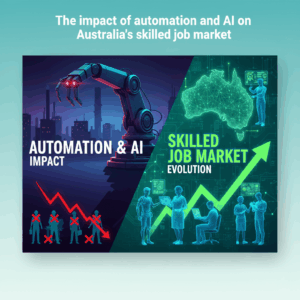





Explore Australia wage growth 2020-2025 for skilled professionals. Compare IT, healthcare, engineering, and mining salaries with ABS wage data and 2025 forecasts for informed career decisions.
Introduction
Skilled professionals in Australia faced sharp disruptions in 2020 as the pandemic triggered wage freezes and job losses across key sectors. Yet, by 2025, annual salary increases for skilled workers in Australia have stabilized at around 3.4%, outpacing inflation and signaling robust post-pandemic recovery. This Wage Price Index Australia 2020 to 2025 trend reflects a shift from survival mode to strategic growth, driven by demand for high-demand skills in tech, health, and resources. Professionals who adapted—upskilling in digital tools or relocating to high-growth regions—saw faster pay rises. This comparison unpacks sector-specific trends, benchmarks, and forecasts to guide your next move in a market rewarding expertise.
Post-Pandemic Recovery: Wage Trends from 2020 to 2025
The COVID-19 crisis hit skilled wages hard in 2020, with annual growth dipping to just 1.3% as lockdowns stalled hiring in professional services and engineering. By mid-2021, recovery accelerated, fueled by government stimulus and pent-up demand. ABS wage data for skilled sectors shows quarterly rises averaging 0.8-0.9% from 2022 onward, leading to cumulative growth of over 12% by September 2025.
Private sector wages, dominant for skilled roles, rebounded from a 2020 low of 1.5% annual growth to 3.3% in 2025, while public sector pay climbed to 3.7% amid enterprise agreements. Post-pandemic salary recovery for Australia professionals gained momentum in 2022-2023, as hybrid work models and digital transformation boosted productivity. Inflation peaked at 7.8% in late 2022, eroding real wages temporarily, but by 2025, nominal gains of 3.4% translated to 0.5-1% real growth.
Key drivers included labor shortages—Australia needed 286,000 more tech workers by 2025 alone—and policy shifts like minimum wage hikes to 3.5%. Regional disparities emerged: Western Australia and Queensland saw 4-5% annual increases in mining-heavy areas, versus 2.5-3% in urban professional services. Overall, skilled wages grew 18-22% cumulatively from 2020 lows, outstripping the national average of 15%, but unevenly—tech and health led, while finance lagged. This sets the stage for 2025 forecasts, where sustained demand promises steady, if moderated, progress.
Sector Spotlights: IT, Healthcare, Engineering, and Mining Benchmarks
Skilled professional salaries Australia trends vary sharply by industry, with high-demand skills commanding premium pay rises. In IT, salary trends Australia 2025 project 4-6% growth, building on 11.4% year-on-year jumps in software development roles. Entry-level developers earn $100,000-$120,000, while senior cloud engineers hit $150,000-$180,000, driven by AI and cybersecurity needs. Digital transformation salary impact in Australia amplified this, with 73% of firms prioritizing AI skills, pushing median IT pay to $138,000.
Healthcare wage growth Australia post-2020 outpaced others at 3.8-3.9% annually, fueled by an aging population and telehealth expansion. Nurses and specialists saw 15-20% cumulative rises since 2020, with averages now at $95,000-$130,000; aged care roles benefited from 2025 reforms adding 3.5% via awards. Employment in health care grew 13.3% of total jobs by 2025, spilling demand into adjacent sectors.
Engineering salary benchmarks Australia 2025 hold steady at $106,000 median, with 3-4% annual increases since 2021. Civil and mechanical engineers average $82,000-$124,000, but mining variants soar to $153,000 amid commodity booms. FIFO roles add 20-30% premiums, reflecting industry-specific wage inflation Australia trends.
Mining professional earnings Australia comparison reveal the sector’s dominance, with medians at $137,000-$163,000 in 2025—up 25% from 2020 lows. Engineers and managers earn $188,000-$250,000, bolstered by lithium and green mineral demand; WA roles lead at 10-15% above national averages. These sectors highlight how high-demand skills pay rise Australia 2020-2025 favored adaptability, with tech and resources gaining most.
2025 Forecasts: Opportunities and Strategies for Skilled Workers
Professional services salary forecasts 2025 predict 3-4% growth, aligning with national trends but lagging mining’s 4.5%. Consultants and analysts average $117,500, with bonuses pushing totals to $170,000 in high-mobility firms. 2025 Australia salary guides emphasize hybrid skills—AI ethics for engineers, data analytics for health pros—as key to 5-7% premiums.
To capitalize, target regional hubs: Perth offers 10% mining uplifts, while Sydney boosts IT by 15%. Negotiate beyond base pay—superannuation at 12% from July 2025 adds value, alongside flexible work. Upskill via certifications; 63% of employers prioritize learning for promotions. Risks include softening demand if inflation eases faster, but skilled sectors remain resilient.
Conclusion
From 2020’s stagnation to 2025’s 3.4% steady climb, salary growth trends for skilled professionals in Australia underscore resilience and opportunity. Sectors like IT and mining lead with 4-6% forecasts, rewarding digital and resource expertise. Professionals who align skills with demand will secure not just higher pay, but sustainable careers. Review your benchmarks today—explore 2025 Australia salary guides and upskill to negotiate your next raise confidently.