




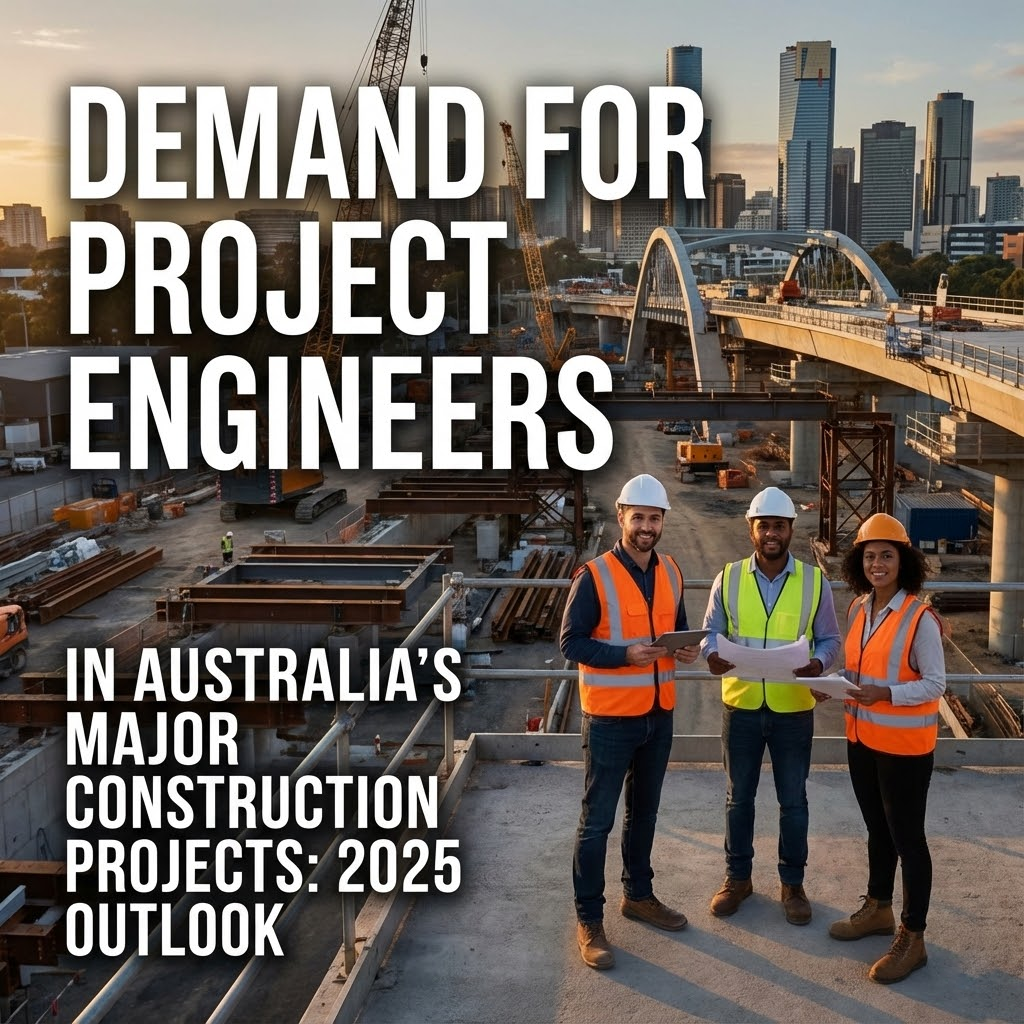
Discover why demand for Project Engineers in Australia will surge in 2025. Explore major infrastructure projects, salary expectations, skills shortages, and skilled migration pathways for civil, mechanical, and electrical engineers.
Introduction
Australia’s construction sector faces a defining moment. The Australian Constructors Association forecasts $140–$160 billion in major project work for 2025–26, yet the industry already lacks 70,000 skilled workers. Project engineers sit at the heart of this challenge—and opportunity. From rail megaprojects to renewable energy farms, the pipeline of work guarantees strong demand for civil, mechanical, and electrical project engineers throughout 2025 and beyond.
Australia’s 2025–2030 Mega-Project Pipeline
The federal and state governments have committed more than $500 billion to infrastructure over the next decade. Key projects driving demand for project engineers include:
– Sydney Metro West and Sydney Metro – Western Sydney Airport
– Melbourne Suburban Rail Loop (Stages 1 and 2)
– Brisbane Cross River Rail and 2032 Olympics venues
– Perth METRONET expansion
– Inland Rail (Melbourne to Brisbane freight corridor)
– Snowy 2.0 pumped hydro
– Western Sydney International Airport
– Offshore wind farms in Gippsland, Hunter, and Illawarra regions
– Large-scale solar and hydrogen projects in Queensland, WA, and South Australia
These initiatives span transport, energy, water, and defence. Tier-1 contractors such as CPB Contractors, John Holland, Lendlease, Acciona, and BMD are scaling teams rapidly. Most contracts run 4–8 years, creating stable, long-term roles for project engineers.
Skills Shortage: Why Project Engineers Remain in High Demand
Master Builders Australia and the Australian Industry Group report that 9 out of 10 construction businesses struggle to fill engineering vacancies. Experienced project engineers are the most sought-after profession in 2025.
Several factors fuel this shortage:
– Retiring baby-boomer engineers
– Fewer domestic graduates entering construction
– Competing demand from mining and defence sectors (especially AUKUS submarine projects)
– Strict licensing and local experience requirements
Employers now offer sign-on bonuses, retention payments, and relocation packages to secure talent. FIFO and DIDO project engineer roles in Western Australia’s mining construction and Queensland’s renewable projects pay the highest premiums.
Salary Expectations for Project Engineers in 2025
Project engineer salaries have risen sharply. Current ranges (November 2025 data from Seek, Hays, and Randstad):
– Civil Project Engineer: $130,000 – $190,000 base + super
– Mechanical Project Engineer (construction/energy): $140,000 – $210,000
– Electrical Project Engineer (infrastructure): $135,000 – $195,000
– FIFO/DIDO roles in WA or QLD: $180,000 – $260,000 total package
Senior project engineers and project controls engineers on mega-projects often exceed $220,000–$300,000 with uplifts and bonuses.
Skilled Migration Pathways for Overseas Project Engineers
Australia prioritises engineers on the Core Skills Occupation List (CSOL). Popular visa options in 2025:
– Subclass 482 TSS (Medium-term) – up to 4 years, pathway to PR
– Subclass 494 Employer-Sponsored Regional – 5 years with direct PR pathway after 3
– Subclass 186 Employer Nomination Scheme (Direct Entry)
– Subclass 190/491 State-Nominated visas (points-tested)
Engineers with 5+ years of relevant experience, IELTS 7.0+ (or equivalent), and a positive skills assessment from Engineers Australia typically score 85–100 points—well above most state minimums.
Conclusion
The 2025 outlook for project engineers in Australia is exceptionally strong. Mega-projects, chronic skills shortages, and competitive salaries create ideal conditions for both local and overseas engineers. If you hold civil, mechanical, or electrical qualifications and relevant experience, now is the time to explore opportunities in Australia’s infrastructure boom.