




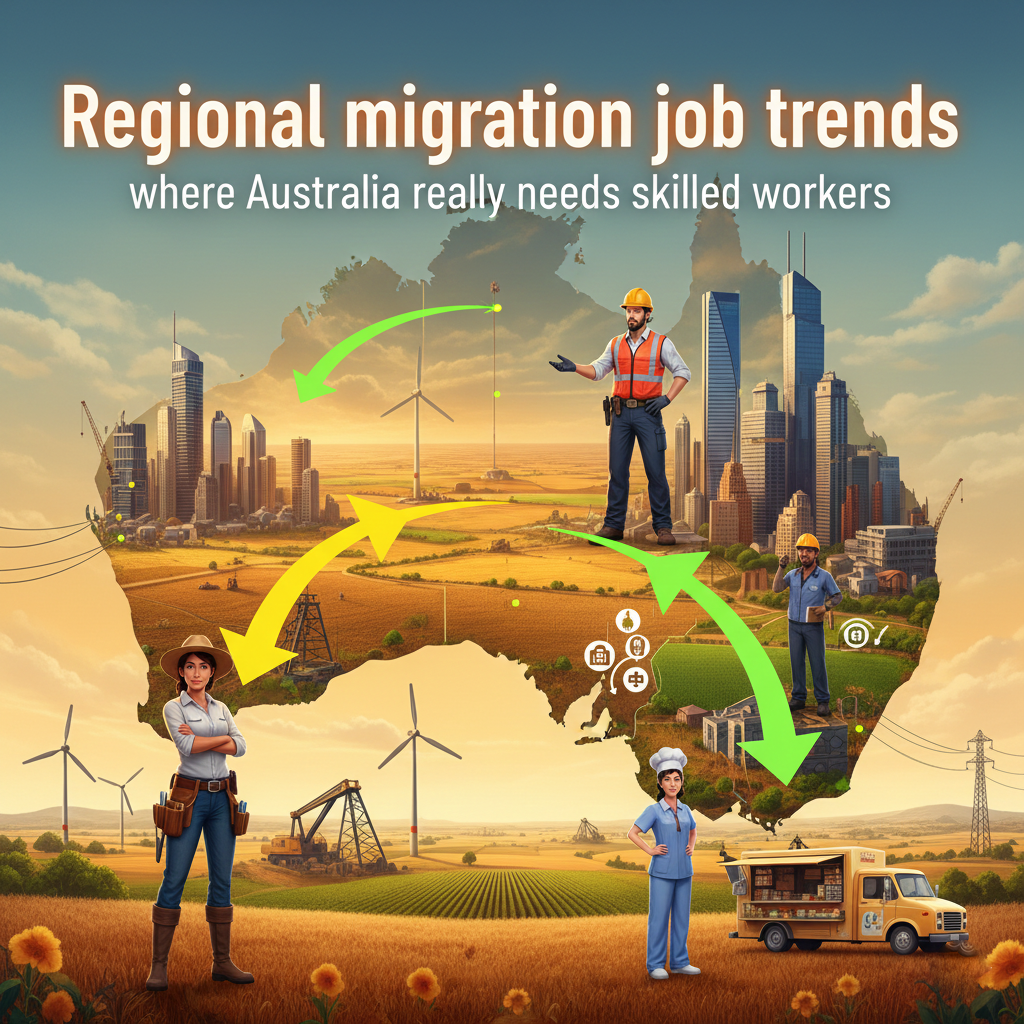
The Great Australian Skill Search
Australia faces a persistent and significant challenge: attracting and retaining skilled workers outside its major capital cities. While global attention often focuses on Sydney and Melbourne, the heartbeat of the Australian economy—its vast network of regional centres and rural communities—requires a constant supply of specialist expertise. A national skills assessment confirms that shortages are heavily concentrated among Technicians and Trades Workers and Professionals, creating unique opportunities for prospective migrants. The strategic use of Regional Migration Australia programs is now central to bridging this gap and ensuring economic growth across all states. This article explores the current regional job trends 2025 and pinpoints the sectors most in need of international talent.
Critical Demand: Healthcare Regional Australia
The most acute and persistent shortages in Designated Regional Areas (DRA) are found within the healthcare sector. Providing essential services to dispersed populations is a national priority, making roles in medicine, nursing, and allied health highly sought after. Skilled migrants who commit to Incentives for Regional Practice often find accelerated pathways to permanent residency (PR).
High-Priority Regional Occupations in Healthcare:
- Registered Nurses (RNs): RNs, particularly those specialising in Aged Care and Critical Care, are in critical national shortage. The demand for Rural Registered Nurses ensures that this occupation remains a top priority on almost every Regional Occupation List.
- General Practitioners (GPs) and Specialist Doctors: Rural medical practices struggle to maintain adequate staffing levels. Doctors willing to work in regional and remote areas are afforded exceptional support and priority processing under specific State Nomination Requirements.
- Allied Health Professionals: Occupations such as Physiotherapists, Occupational Therapists, and Social Workers are vital. These roles support disability services, mental health, and community welfare, sectors experiencing massive projected growth.
Healthcare professionals not only meet an urgent community need but also often gain access to the most favourable Visa Pathways to PR Regional, including the Subclass 491 Visa (Skilled Work Regional) and direct Subclass 190 nominations.
The Backbone: Trades and Construction Shortages
Australia’s ongoing infrastructure boom, coupled with a national push for new housing construction, has created a significant void in Skilled trades across the country. In regional areas, this shortage is particularly acute, with many towns facing long waits for essential services and maintenance. The Jobs and Skills Australia analysis consistently highlights that skill shortages are most common for Technicians and Trades Workers.
Trades in Regional Australia Facing High-Demand:
- Electricians: From domestic wiring to large-scale industrial projects, Regional Electricians are consistently in high demand. This demand spans new energy projects and the maintenance of essential regional utilities.
- Plumbers and Gasfitters: As indispensable tradespeople, Plumbers are critical for housing and civil projects. Shortages are especially noticeable in fast-growing Designated Regional Areas.
- Motor Mechanics (General and Diesel): With greater reliance on long-distance road transport and farm machinery in rural areas, automotive and diesel mechanics are essential to regional supply chains.
- Carpenters and Metal Fabricators: The residential construction sector is heavily reliant on these skills to deliver new homes and commercial buildings.
These High-Priority Regional Occupations typically have a skills assessment conducted by Trades Recognition Australia (TRA) and are consistently listed on state-specific occupation lists due to the sheer volume of vacancies outside major cities.
Tech and Education: Filling Professional Gaps
While tech demand is often associated with capital cities, Regional Skill Shortages also exist in professional sectors critical to supporting modern regional economies.
In-Demand Professional Roles:
- Education and Training: There is a nationwide scarcity of teachers, particularly Early Childhood (Pre-primary School) Teachers and Secondary School Teachers. Regional schools often offer additional Regional Point Incentives for teachers willing to relocate.
- Engineering Professionals: Civil Engineers, Electrical Engineers, and Mining Engineers are crucial to the resource and infrastructure sectors, especially in regions of Western Australia Regional Jobs and Queensland Regional Occupation List.
- ICT Specialists: Roles like Software Engineers, Data Analysts, and Cybersecurity Specialists are increasingly needed to support regional businesses transitioning through digital transformation.
State-by-State Priorities: A Geographic Focus
The specific needs of Skilled Workers Australia Regional vary by state, reflecting each region’s core economic activities and demographic profile. Migrants must check the specific State Occupation Lists to align their skills with the most immediate needs.
- Tasmania Skilled Migration: Tasmania is highly proactive in attracting skilled migrants, particularly in health, education, and hospitality, offering fast-track pathways for candidates working in their TSE Priority Occupation List.
- South Australia Regional Skilled Migration: South Australia has a high demand for trades, health, and engineering roles, often streamlining applications for those who have a demonstrable commitment to the state.
- NSW Regional Migration and Victoria Regional Visa: While these states are home to major cities, their vast regional areas have critical needs in agriculture, manufacturing, and general trades.
Visa Pathways: The Strategic Regional Advantage
The Australian government strategically uses its skilled migration program to prioritise regional settlement. The Skilled Work Regional Visa (491) provides a key entry point, offering five years of temporary residence and a clear, points-tested pathway to permanent residency via the Skilled Regional visa (subclass 191). This visa offers an additional 15 points in the points test, significantly boosting a candidate’s chance of being invited to apply.
The competitive edge of seeking regional migration is clear: fewer applicants are competing for high-demand roles, and Regional Point Incentives increase the likelihood of receiving an Invitation to Apply (ITA). Migrants must ensure their application clearly demonstrates a genuine commitment to living and working in a Designated Regional Area.
Your Next Step to Regional Australia
Australia’s ongoing need for skilled workers in its regions presents a compelling and strategic opportunity for international migrants. The Regional Job Trends 2025 confirm that healthcare, skilled trades, engineering, and education are the sectors where your qualifications are most valued. By targeting a high-demand occupation on a Regional Occupation List and pursuing a regional-focused visa pathway like the Subclass 491 Visa, you can secure your future in Australia while helping to build vibrant regional communities.