




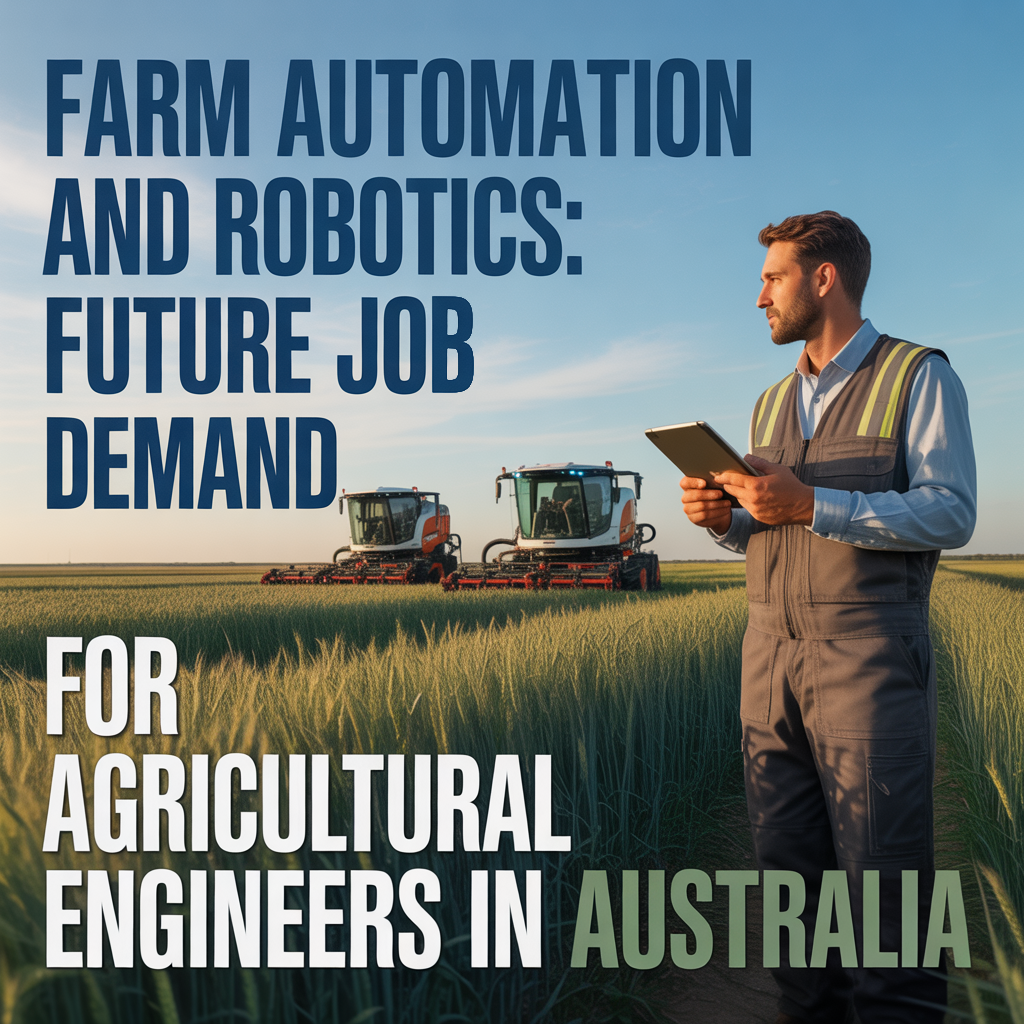
Australia faces a severe labour shortage in agriculture. Farm automation and robotics are creating strong demand for agricultural engineers. Discover job outlook, salaries, regional hotspots, and visa pathways in 2025.
Introduction
Australian farms produce over $80 billion worth of food and fibre each year, yet the rural workforce is shrinking fast. By 2030 the National Farmers’ Federation predicts a shortfall of 70,000–100,000 workers. The solution? Rapid adoption of farm automation and robotics. Autonomous tractors, robotic harvesting systems, drone agriculture, and AI-driven precision agriculture are no longer experiments — they are mainstream. This technological shift is driving explosive demand for qualified agricultural engineers across regional Australia right now.
The Rise of Farm Automation and Robotics in Australia
Australian farmers have embraced AgTech faster than most countries. The 2024 AgriFutures report shows that 40 % of broadacre farms already use autonomous machinery guidance and 25 % have invested in robotic systems. Dairy farm automation leads the way — robotic milking systems now operate on more than 30 % of large dairy farms. In horticulture, robotic harvesting trials for strawberries, apples, and vineyard pruning are moving to commercial scale.
CSIRO and universities such as the University of Sydney and Queensland University of Technology are world leaders in agri-robotics research. Companies like SwarmFarm Robotics, Agerris, and the John Deere autonomous tractor program are all Australian-based or have major operations here. This ecosystem needs engineers who can design, install, maintain, and improve these systems.
Future Job Demand and Skills Shortage for Agricultural Engineers
Agricultural Engineer (ANZSCO 233912) sits on the current Medium and Long-term Strategic Skills List (MLTSSL) and on multiple state and regional occupation lists. Jobs and Skills Australia forecasts strong growth through 2030, with particular demand in precision agriculture, agricultural robotics, and digital agriculture systems.
Average advertised salaries now range from AUD 110,000–150,000 for experienced engineers, and up to AUD 180,000+ in mining-adjacent broadacre automation roles in Western Australia and Queensland. Regional employers frequently offer relocation packages, housing assistance, and 482 visa sponsorship because local graduates cannot fill the gap.
Top Regional Areas Hiring Agricultural Engineers Right Now
– Riverina and Sunraysia (NSW/VIC) – horticulture robotics and vineyard robotics
– Darling Downs and Granite Belt (QLD) – cotton picking robots and broadacre farming automation
– Southwest and Great Southern (WA) – grain handling and autonomous tractor fleets
– Gippsland and Northern Victoria – dairy farm automation leaders
– Riverland (SA) – almond and citrus harvesting robotics
These regions qualify for the Skilled Work Regional (Provisional) visa (subclass 491) and many offer Designated Area Migration Agreements (DAMA) that fast-track 482 and 494 visas for agricultural engineers.
Visa Pathways and Migration Opportunities
Agricultural Engineer is a priority occupation for:
– Subclass 482 TSS visa (medium-term stream with path to 186 permanent residency)
– Subclass 494 Skilled Employer Sponsored Regional visa (5-year visa → 191 PR)
– Subclass 491 and 190 state-nominated visas (extra points for regional study or work)
Many regional employers are already approved Standard Business Sponsors and actively recruit overseas engineers with skills in farm robots, IoT farming, sensor technology, or machine learning in agriculture.
Conclusion
Farm automation and robotics are transforming Australian agriculture from labour-intensive to technology-driven. This creates secure, high-paying careers for agricultural engineers willing to work in regional areas. With ongoing labour shortages and billions invested in smart farming, the next five years represent a golden window for skilled professionals to migrate, gain permanent residency, and build a future in one of the world’s most advanced agricultural nations.