



As we settle into 2025, the “great Australian migration” has shifted gears. While thousands flocked north to Queensland in recent years, narrowing the price gap between the states, distinct differences in living costs remain. Whether you are planning a relocation or just trying to budget better, understanding the financial landscape of New South Wales (NSW), Victoria (VIC), and Queensland (QLD) is critical.
In this guide, we break down the real-world costs of housing, transport, and daily essentials across Sydney, Melbourne, and Brisbane to answer the burning question: Which state actually saves you money in 2025?
Housing & Rent: The “Sunshine Tax” vs. Sydney Premiums
Housing is usually the biggest differentiator between these states, and in 2025, the gap is both widening and narrowing in unexpected ways.
Sydney (NSW) retains its title as the most expensive city in Australia. The median house price hovers around $1.4 million, and renters in the inner city face a punishing median of $800–$900+ per week for a standard one-bedroom apartment. If you are looking for cheapest rentals NSW has to offer, you will likely need to look significantly west of Parramatta or into regional hubs like Newcastle, though even those markets are tightening.
Melbourne (VIC) offers a “balanced middle ground.” While property taxes (like the recent land tax changes) have impacted investors, they have slightly cooled the rental market compared to Sydney. You can expect to pay approximately $500–$600 per week for a decent inner-city apartment. The median house price sits near $950,000, making the “Australian Dream” of owning a home strictly more attainable here than in the Harbour City.
Brisbane (QLD) is no longer the bargain bin of Australian real estate. The “Brisbane rental crisis” is a trending topic for a reason; rents have surged due to high interstate migration. However, it remains cheaper than Sydney. A similar inner-city apartment costs roughly $550–$600 per week. While buying is becoming more expensive (median house price ~$790,000), you still get more land for your money compared to the southern capitals.
Key Takeaway: Sydney is significantly more expensive for housing. Brisbane and Melbourne are now surprisingly close in rental costs, but Melbourne offers slightly better value for money in terms of available stock and public amenities.
Transport Costs: The 50-Cent Game Changer
When analyzing Cost of living Australia 2025, transport policies have become a major battleground for state governments trying to win over voters.
Queensland is currently leading the pack with its aggressive 50-cent public transport fares. This initiative has revolutionized commuting budgets in the Sunshine State. A daily return trip from the outer suburbs to Brisbane CBD—which might have cost $10–$15 previously—is now pocket change. For a full-time commuter, this puts over $2,000 per year back into the household budget compared to other states.
New South Wales and Victoria rely on weekly caps, which are significantly higher.
- Sydney (Opal): You are looking at a weekly cap of approximately $50, meaning a regular commuter pays ~$2,600 annually.
- Melbourne (Myki): A full fare daily cap is over $10, resulting in a similar annual expense to Sydney.
If you drive, fuel price trends 2025 are relatively consistent nationally (~$2.00/litre average), but toll road costs Sydney vs Melbourne show a stark difference. Sydney’s extensive toll network is the most expensive in the world for regular users, whereas Brisbane and Melbourne have fewer, albeit still pricey, toll roads.
Utilities & Groceries: The Daily Grind
While rent and transport are fixed costs, variable expenses like food and energy are where inflation bites the hardest.
Energy Bills
The Energy Bill Relief Fund has been extended into the 2025–26 financial year, offering up to $150 in rebates for eligible households across all states. However, base prices differ:
- VIC: generally has the lowest electricity rates due to a competitive retail market and high renewable penetration.
- NSW & QLD: face slightly higher kilowatt-hour rates. However, QLD residents often benefit from state-specific “Cost of Living” lump-sum payments that have historically been more generous than NSW’s rebates.
The Grocery Basket
According to 2025 data, food inflation rate Australia has stabilized, but prices remain high. Interestingly, recent data suggests Victoria is currently the most “frugal” state for groceries, with average weekly spends slightly lower than the national average. Queensland has seen sharper rises in grocery costs, partly due to supply chain distances for regional areas.
Coffee Price Index 2025: If you measure life in caffeine, prepare to pay. A flat white in a Sydney CBD cafe now averages $6.50, while Melbourne and Brisbane sit slightly lower at $6.00.
Verdict: Salary Needed to Live Comfortably
To truly compare affordability, we must look at income. How much do you need to earn to feel “comfortable” (i.e., paying bills without stress and having savings left over)?
- Sydney: You likely need a salary of $100,000+ as a single person to live centrally and comfortably.
- Melbourne: A salary of $85,000+ can provide a similar lifestyle, thanks to lower housing costs.
- Brisbane: You need approximately $80,000–$90,000. While housing is cheaper than Sydney, it is catching up to Melbourne, but the transport savings (thanks to 50c fares) help lower the required threshold.
Conclusion
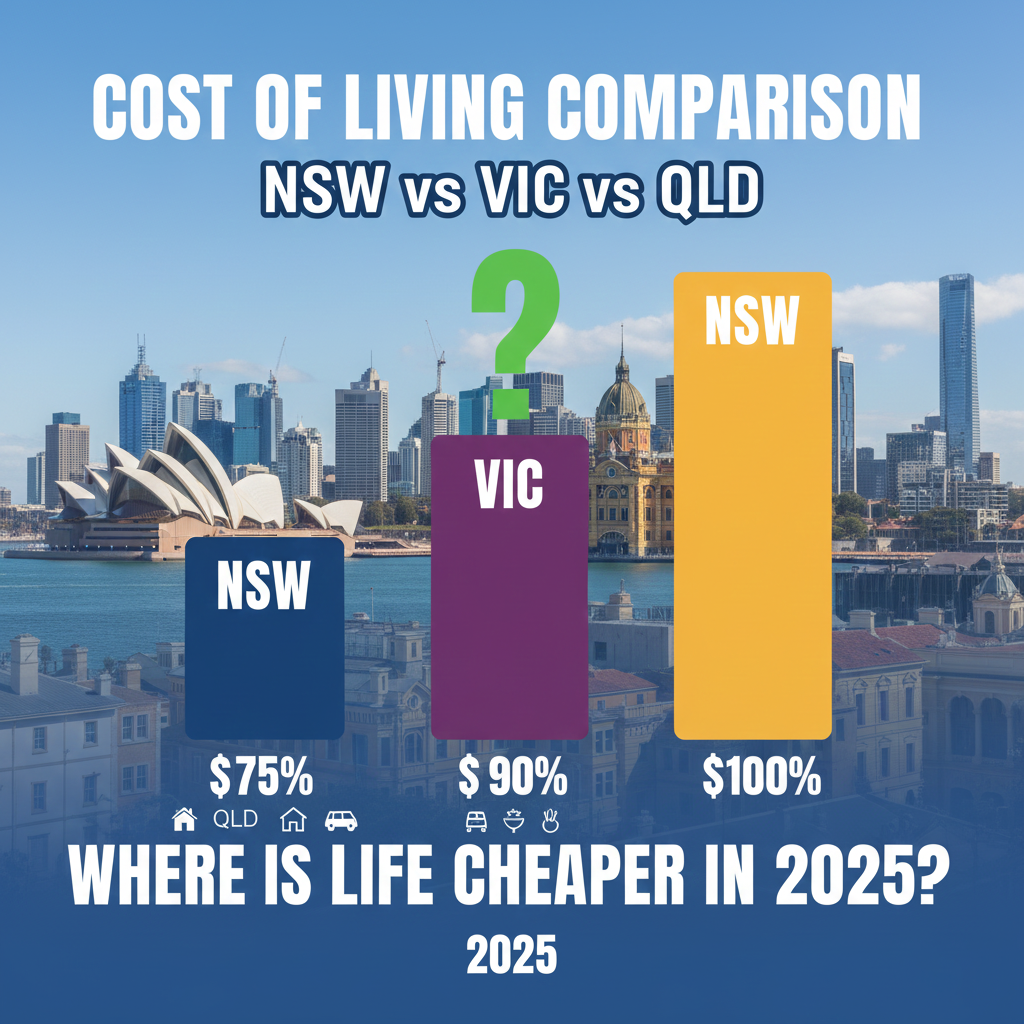
So, where is life cheaper in 2025?
If you rent and commute using public transport, Brisbane (QLD) remains the most affordable option, largely due to massive transport savings and slightly lower property prices. However, Melbourne (VIC) is a strong contender; it offers a sophisticated lifestyle for significantly less than Sydney, and its rental market is currently less volatile than Brisbane’s. Sydney (NSW) remains the premium option—unmatched for career opportunities but demanding a heavy financial premium for the privilege of living there.