



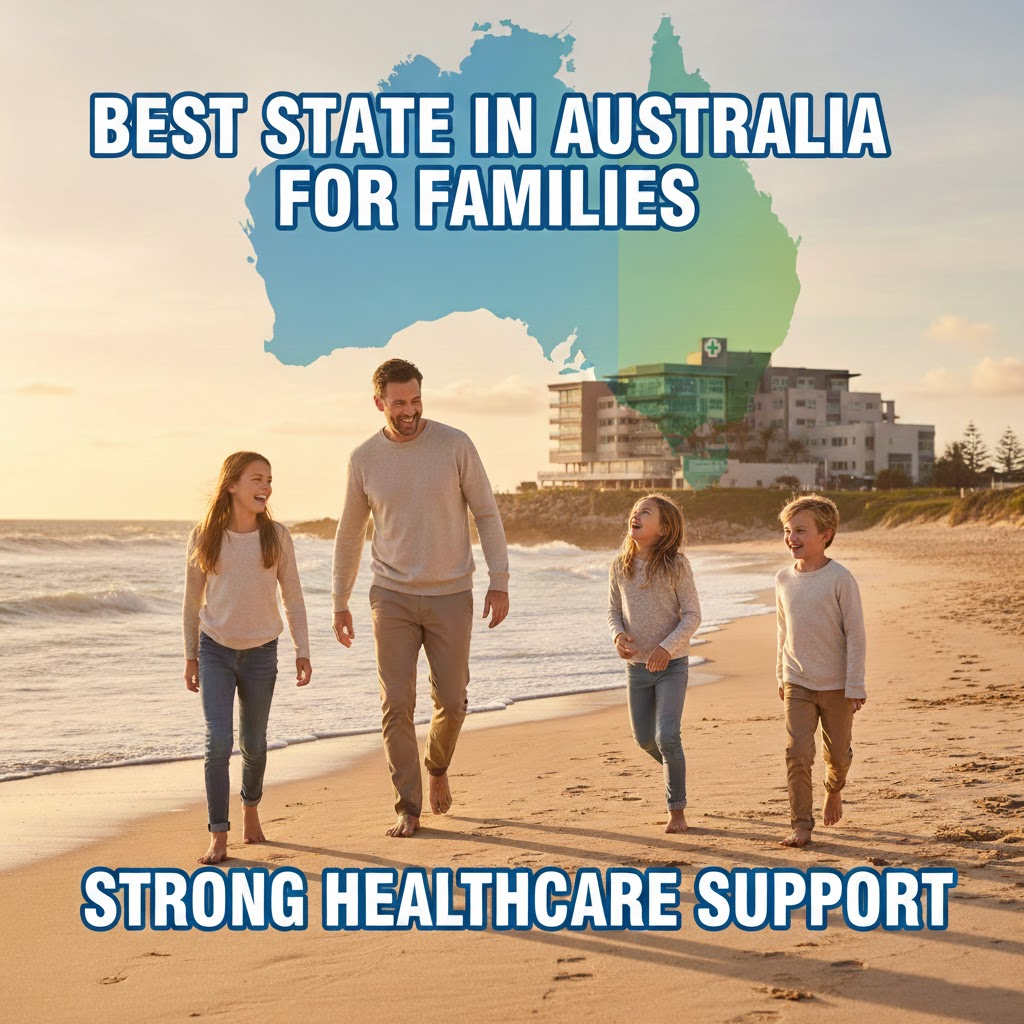
Find the best state in Australia for families needing reliable healthcare. Compare hospital waiting times, NDIS support, bulk-billing GPs, and in-demand jobs to make the right move for medical or disability needs.
Introduction
One in five Australian children lives with a chronic condition or disability. For families managing ongoing medical care, the difference between states can mean months on waiting lists or quick access to specialists. Medicare covers everyone, but hospital performance, bulk-billing rates, and NDIS delivery vary widely. This guide ranks the states based on real 2024–2025 data so you can choose the strongest healthcare state in Australia for your family’s needs—whether you’re relocating domestically or migrating with medical conditions.
Why Healthcare Quality Varies So Much Between States
Australia spends over $220 billion a year on health, yet performance differs dramatically by location. Emergency department times, elective surgery waits, GP affordability, and specialist access all depend on where you live.
Queensland and Victoria consistently record the shortest public hospital waiting times in Australia. Queensland achieves a median of 40 days for elective surgery and sees 90% of emergency patients within 91 minutes. Victoria follows closely with 33-day surgery medians and strong pediatric services. In contrast, New South Wales faces 65-day surgery waits and longer outpatient delays despite high bulk-billing rates.
Bulk-billing GP availability also shapes daily costs. New South Wales leads with 34.5% of clinics fully bulk-billing new adult patients, followed by Queensland at 28%. Tasmania offers virtually no bulk-billing clinics, pushing average out-of-pocket fees above $50 per visit.
For families with disabilities or chronic illnesses, the National Disability Insurance Scheme (NDIS) operates nationally, but state-based partners influence speed and regional support. Queensland and Victoria process plans fastest and invest heavily in community therapies.
State-by-State Comparison for Families
QueensAADland currently ranks as the best state in Australia for families needing strong healthcare support. Its $25.8 billion hospital expansion program adds thousands of beds and specialist units, while emergency and surgery waits remain among the lowest nationwide. Regional Queensland also delivers excellent NDIS services, making it ideal for families outside capital cities.
Victoria offers the shortest elective surgery waits (33 days) and world-class children’s hospitals in Melbourne. Mental health funding is generous, and pediatric healthcare ranks among Australia’s best. Urban families with complex needs often choose Victoria for its concentration of specialists.
New South Wales provides the highest bulk-billing rate and the largest volume of outpatient services (15 million visits yearly), but longer surgery waits and specialist shortages frustrate families with chronic conditions. Sydney’s private system helps those who can afford gap fees.
Western Australia and South Australia sit in the middle—moderate waits, growing allied health demand, and strong cancer treatment networks, but fewer bulk-billing GPs.
Tasmania struggles with accessibility and zero bulk-billing in many areas, though telehealth bridges some gaps for remote families.
The Australian Capital Territory excels in specialist-to-population ratio yet faces rising surgery waits. The Northern Territory prioritizes Indigenous and remote healthcare but has limited options for non-Indigenous families seeking routine pediatric or chronic illness support.
In-Demand Healthcare Jobs and Migration Opportunities
Healthcare dominates Australia’s skilled migration program in 2025. Registered nurses, general practitioners, aged care workers, physiotherapists, occupational therapists, and speech pathologists all appear on the priority list.
Queensland aggressively recruits overseas nurses and allied health professionals with family-friendly contracts and regional sponsorship pathways. Salaries for registered nurses range from $79,000 to $106,000, while disability support workers in NDIS-funded roles often exceed $70,000 plus penalties.
These shortages create genuine opportunities for families migrating to Australia with medical conditions. A job offer in healthcare can secure permanent residency through subclass 189, 190, or 491 visas—and the sponsoring state usually offers the strongest support network for your own family’s health needs.
NDIS, Pediatric, and Chronic Illness Support
Queensland and Victoria again lead for families relying on the NDIS. Both states integrate disability services with public hospitals and community pediatric teams. New foundational supports launching in 2026 will further help children with milder needs who fall outside full NDIS criteria.
Cancer treatment access remains excellent nationwide, with South Australia and Victoria recording the lowest proportions of patients waiting longer than clinically recommended. Mental health services receive record funding everywhere, though community-based care feels strongest in Queensland and Victoria.
Conclusion
For most families needing reliable, timely, and affordable healthcare, Queensland stands out as the best state in Australia in 2025. Victoria runs a very close second, especially for urban families with complex pediatric or mental health requirements. Assess your priorities—shortest surgery waits, highest bulk-billing, strongest NDIS delivery, or job opportunities—and match them to the state data. Start researching specific hospitals and NDIS local area coordinators in your shortlisted state today. Your family’s health deserves the right postcode.