




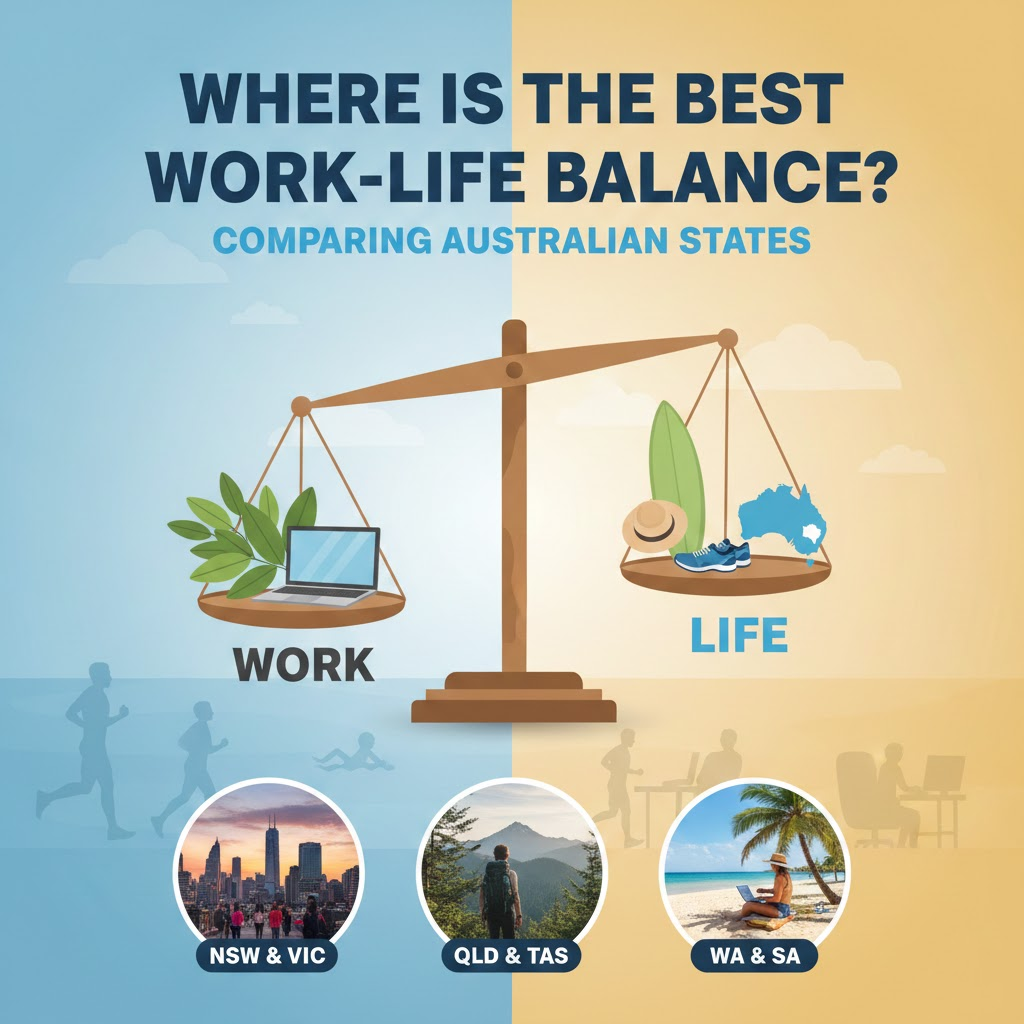
Discover which Australian states offer the best work-life balance in 2025. Compare hours worked, job satisfaction, in-demand jobs like nursing and IT, plus visa options (190 & 491) for skilled migrants seeking a healthier lifestyle.
Introduction
Australia averages just 32.3 hours of work per week in 2025 — one of the lowest figures among developed nations. Even so, the experience differs dramatically depending on where you live and work. Sydney professionals often battle long commutes and high housing costs, while Tasmanians finish early and head to the beach or mountains. For skilled workers exploring in-demand jobs Australia 2025, choosing the right state can make or break your quality of life. This guide ranks every Australian state and territory by real work-life balance metrics and shows how high-demand occupations align with the most balanced locations.
What Actually Drives Work-Life Balance in Australia
Work-life balance is not just about annual leave (everyone gets a minimum of four weeks plus 10–13 public holidays depending on the state). It comes down to average hours worked, overtime culture by state, commute times, cost of living vs salary Australia, and reported job satisfaction.
National laws guarantee strong protections: a high minimum wage, penalty rates on weekends, and widespread flexible working hours Australia-wide. Since the pandemic, remote work Australia has also become standard in many sectors, especially IT jobs Australia and public-sector roles in the ACT.
For migrants, these factors matter even more. The Australian skilled occupation list and state nomination programs reward people who settle where labour shortages are acute — often the same places that deliver the lowest working hours Australia and highest job satisfaction Australia.
State-by-State Comparison: Where Balance Is Best
Tasmania leads the country. Workers here average only 31.2 hours per week, enjoy 13 public holidays each year, and report 82% job satisfaction — the highest nationally. Short commutes, affordable housing, and a community-focused culture make Tasmania ideal for healthcare jobs Australia, teaching jobs Australia, and hospitality roles.
South Australia comes a close second with 32.1 average weekly hours and the same 13 public holidays. Adelaide combines city amenities with relaxed pace and lower living costs than Sydney or Melbourne. The state aggressively nominates nurses, engineers, and tradespeople for subclass 190 and 491 visas.
The Australian Capital Territory (ACT) offers 32.8 hours on average and excels in flexible, family-friendly workplaces Australia. Public servants and IT professionals benefit from strong remote work policies and some of the shortest commutes in the country.
Queensland strikes a lifestyle sweet spot at 33.5 hours per week. The Gold Coast and Sunshine Coast attract teachers, nurses, and construction workers with warm weather and outdoor-focused living. Regional migration Australia pathways are strong here.
Victoria averages 33.2 hours, but Melbourne’s density and traffic push satisfaction lower (76%). Regional Victoria, however, scores much higher and welcomes engineers and healthcare workers through state nomination.
New South Wales records 34.1 hours weekly, dragged higher by Sydney’s finance and tech sectors. Salaries are the nation’s highest, yet long commutes and housing costs erode gains for many residents.
Western Australia has the longest average week at 35.2 hours, driven by mining and resources. Fly-in-fly-out rosters, however, give workers extended blocks of time off, which boosts satisfaction despite the raw hours.
The Northern Territory sits at 34.5 hours with unique adventure perks, but limited holidays and remote locations make it less balanced for most families.
In-Demand Jobs That Match the Best Balance Locations
Nursing shortages Australia remain critical — registered nurses appear on every state’s priority list and easily secure 190 or 491 visa sponsorship. Salaries start around AUD 75,000 and climb quickly in regional areas where balance is strongest.
IT jobs Australia (software engineers, developers, cyber security) dominate the Core Skills Occupation List in 2025. Tasmania, South Australia, and the ACT all nominate IT professionals aggressively and encourage remote or hybrid arrangements.
Engineering jobs Australia and construction jobs Australia boom in Queensland, South Australia, and regional Victoria — exactly the states offering shorter hours and lower stress.
Teaching jobs Australia, especially secondary and special education, fill fast in regional Queensland, Tasmania, and South Australia, with generous leave and shorter school terms adding to the balance advantage.
Why Regional Migration Often Delivers the Ultimate Balance
Regional Australia jobs consistently show higher satisfaction than capital cities. Lower housing costs stretch salaries further, commutes rarely exceed 20 minutes, and communities prioritize family time.
The subclass 491 visa gives migrants 15 extra points and a clear path to permanent residency after three years. Subclass 190 state-nominated visas offer immediate permanence and are readily available in Tasmania, South Australia, and the ACT for nurses, teachers, and IT specialists.
Many regional employers also offer visa sponsorship jobs Australia plus relocation packages, making the move financially painless.
Conclusion
In 2025, Tasmania and South Australia stand out as the clear winners for work-life balance Australia, followed closely by the ACT and regional Queensland. These same locations face acute Australian labour shortages and actively nominate skilled workers for 190 and 491 visas. Align your occupation — nursing, IT, engineering, teaching, or trades — with the states that need you most, and you can secure both a rewarding career and genuine time to enjoy life. Start checking your eligibility on the official Home Affairs skillselect portal or speak with a registered migration agent today.