




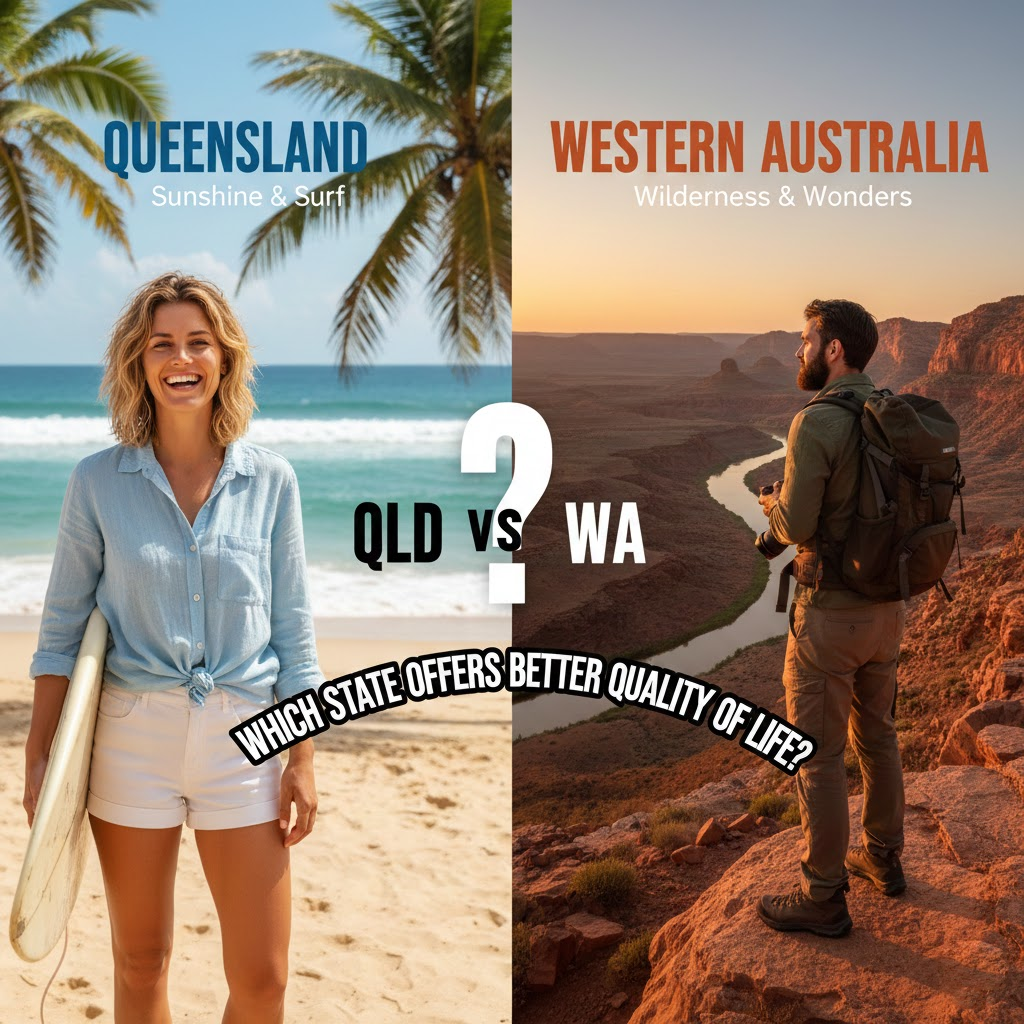
Compare Queensland vs Western Australia lifestyle for outdoor lovers. Discover in-demand jobs, beaches, hiking, work-life balance, cost of living and which state offers the best quality of life in 2025.
Introduction
Australia attracts thousands of skilled workers who dream of sunshine, beaches, and adventure after work. Two states dominate the conversation: Queensland (QLD) and Western Australia (WA). Both promise an enviable outdoor lifestyle, high-paying jobs, and regional migration pathways. But which one truly delivers the best quality of life when you balance career opportunities, nature access, affordability, and family-friendly living? This comparison examines in-demand occupations, climate, outdoor recreation, and real-life factors to help you decide between relocating to Queensland or moving to Western Australia.
Queensland vs Western Australia: The Outdoor Lifestyle Showdown
Queensland markets itself as the Sunshine State with good reason. The state averages over 300 days of sunshine yearly along the coast. From the Great Barrier Reef to the Gold Coast’s famous surf breaks, outdoor activities start at your doorstep. Cairns offers a tropical lifestyle with easy access to scuba diving jobs and eco-tourism roles, while the Whitsundays combine tourism jobs with island living. Brisbane delivers a sub-tropical climate, green city parks, and weekend escapes to national parks in QLD like Lamington and Daintree.
Western Australia counters with vast, untouched wilderness. Perth enjoys a Mediterranean climate—mild winters and long, dry summers perfect for the famous Perth beaches lifestyle. Rottnest Island, Margaret River wineries, and Cottesloe Beach sit minutes from the city centre. Head north to the Kimberley or Ningaloo Reef for world-class hiking in Western Australia and 4WD adventures that feel worlds away from anywhere else.
In-Demand Jobs and Work-Life Balance: Where Careers Meet Lifestyle
Career opportunities often decide the QLD vs WA debate.
Western Australia still leads in mining salary levels. FIFO jobs in Western Australia regularly pay $120,000–$200,000+ for trades, engineers, and operators. High-demand occupations in Western Australia include drillers, heavy diesel fitters, and geologists, especially in the Pilbara and Goldfields. Remote work in Western Australia has grown, but many roles still follow roster systems (2 weeks on, 1 week off) that give workers long stretches at home—or on the beach.
Queensland spreads its opportunities more evenly. Healthcare jobs in QLD, especially nursing and allied health, remain critically short along the coast and in regional centres. Construction jobs in Brisbane fuel the southeast corner boom, while Queensland tourism jobs dominate from Cairns to the Gold Coast. Teacher jobs in regional QLD attract state-specific visa nomination and bonuses. Salaries generally sit 5–15% lower than equivalent WA mining roles, but employees usually work standard weeks, delivering superior day-to-day work-life balance in Queensland.
Cost of Living and Housing: The Reality Check
Housing affordability heavily influences quality of life rankings in Australia.
Perth currently offers better value than Brisbane. Median house prices in Perth hover around $720,000 versus $900,000+ in Brisbane (2025 figures). Renters feel the difference too—Perth’s median weekly rent sits approximately $150 lower than Brisbane’s. Groceries and fuel cost slightly more in WA due to distance, but overall cost of living Brisbane vs Perth still favours Western Australia by 8–12% according to recent indices.
Queensland fights back with shorter commutes and lower transport costs in most regional areas. Towns like Townsville, Rockhampton, and Bundaberg provide affordable housing and fast regional migration pathways for skilled workers willing to live outside capital cities.
Climate and Seasonal Challenges
Queensland’s summer humidity and cyclone season (November–April) catch many newcomers off guard. Temperatures regularly exceed 35°C with 80–90% humidity in the north. Air-conditioning becomes essential, and outdoor activities shift to early mornings or evenings.
Perth faces intense summer heat—days above 40°C occur multiple times each summer—but low humidity makes it more bearable for most people. Winter brings cool, wet days ideal for hiking Western Australia’s trails without the crowds.
Family Life and Long-Term Happiness
Both states rank highly in happiest states Australia surveys, but for different reasons.
Queensland wins for young families. More schools, universities, and suburban amenities spread along the coast. Theme parks, wildlife sanctuaries, and calm Gold Coast beaches create a family-friendly environment. Raising kids Queensland vs WA usually feels easier when grandparents can visit without crossing the continent.
Western Australia appeals to adventure-focused families. The vast space, cleaner air in regional areas, and outdoor education emphasis suit parents who prioritise camping culture and 4WD lifestyle over convenience.
Conclusion
Neither Queensland nor Western Australia claims a clear victory—your priorities decide the winner. Choose Queensland for consistent work weeks, vibrant coastal cities, and family-friendly infrastructure. Choose Western Australia for higher earning potential, dramatic wilderness, and a laid-back Perth beaches lifestyle. Both deliver an outdoor lifestyle most countries only dream about. Assess your career stage, family needs, and tolerance for heat—then pick the state that matches the life you actually want to live.