




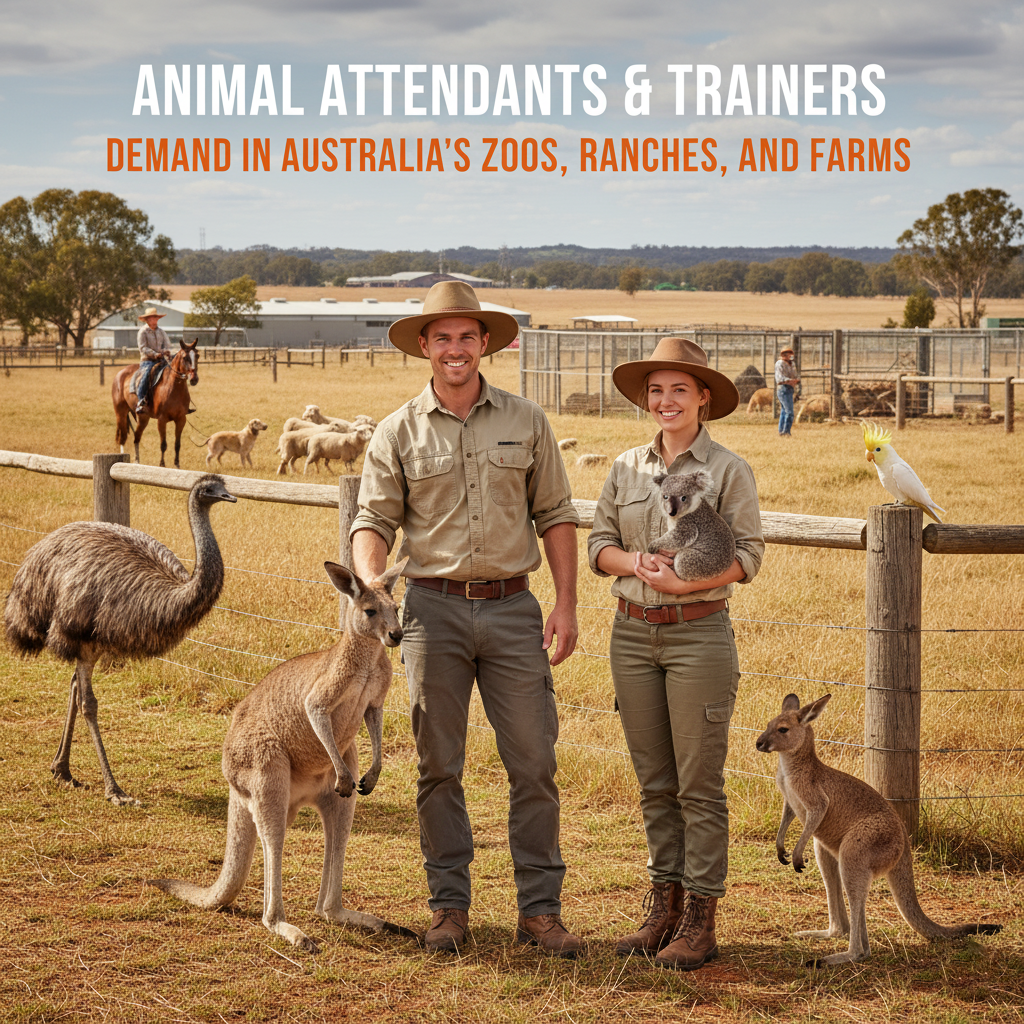
Discover the growing demand for animal attendants and trainers in Australia’s zoos, ranches, and farms. Explore career opportunities, skills needed, and immigration pathways.
Introduction
Australia’s diverse ecosystems and thriving agricultural sector create a strong demand for skilled animal attendants and trainers. From the iconic wildlife of its zoos to the vast ranches and farms dotting its countryside, the nation offers abundant opportunities for professionals in animal care. According to a 2024 report by Jobs and Skills Australia, animal-related occupations are projected to grow by 4.2% annually through 2030, driven by expanding zoos and agricultural needs. This article explores the demand for animal attendants and trainers, the skills required, and how these roles support Australia’s zoos, ranches, and farms.
The Growing Demand for Animal Attendants in Australia
Animal attendants play a critical role in Australia’s zoos, ranches, and farms, ensuring the well-being of diverse species. In zoos, zookeeper roles involve feeding, monitoring health, and maintaining habitats for native and exotic animals. Australia’s zoos, such as Taronga Zoo and Australia Zoo, are renowned for their wildlife conservation jobs, attracting professionals passionate about animal welfare. These facilities require skilled attendants to handle tasks like animal husbandry and habitat enrichment.
On farms and ranches, livestock attendants and farm hands care for animals like cattle, sheep, and horses. Australia’s agricultural sector, a cornerstone of its economy, relies on these workers to manage feeding, breeding, and health programs. The rise in sustainable farming practices has further increased demand for farm animal care specialists who understand modern animal husbandry techniques.
This demand extends to rural areas, where rural animal jobs are vital for maintaining agricultural output. Whether in zoos or on farms, animal attendants contribute to Australia’s reputation as a leader in animal welfare and conservation, making these roles both rewarding and essential.
The Role of Animal Trainers in Specialized Settings
Animal trainers bring expertise in animal behavior training to zoos, ranches, and farms, enhancing animal welfare and productivity. In zoos, trainers work with exotic animals, teaching behaviors that aid in veterinary care or public demonstrations. For example, wildlife training at facilities like Melbourne Zoo ensures animals are comfortable with human interaction, supporting conservation efforts.
On ranches, equine trainers are in high demand due to Australia’s strong equestrian culture. These professionals train horses for racing, farming, or recreational purposes, requiring skills in animal handling and behavior modification. Similarly, farm training programs focus on livestock, teaching animals to respond to commands for efficient herding or milking processes.
The role of trainers is evolving with advancements in animal welfare standards. Trainers must stay updated on ethical practices and often pursue veterinary assistant training to complement their skills. These specialized roles not only improve animal outcomes but also create career pathways for individuals seeking Australian zoo careers or rural farm positions.
Skills and Qualifications for Animal Care Careers
Entering the field of animal care in Australia requires a mix of practical experience and formal qualifications. For animal attendants, a Certificate III in Animal Care or Captive Animals is a common entry point, offered by institutions like TAFE Australia. These programs cover animal handling, nutrition, and basic veterinary care, preparing workers for zoo jobs or farm hand positions.
Animal trainers often need advanced qualifications, such as a Certificate IV in Animal Behaviour and Training or specialized courses in wildlife training. Equine trainers may pursue certifications through Equestrian Australia, focusing on horse behavior and safety. Knowledge of animal husbandry in Australia is crucial, especially for farm-based roles, where workers manage breeding and health programs.
Experience is equally important. Many employers value hands-on work, such as volunteering at zoos or interning on farms. For immigrants, these roles are accessible through Australia’s skilled migration pathways, as animal-related occupations are often listed on the Medium and Long-term Strategic Skills List (MLTSSL). Gaining local certifications and experience can significantly boost employability in this growing sector.
Immigration Pathways for Animal Care Professionals
Australia’s demand for animal attendants and trainers makes it an attractive destination for skilled immigrants. Occupations like zookeepers, livestock attendants, and equine trainers are recognized under Australia’s skilled migration program, particularly through visas like the Subclass 482 (Temporary Skill Shortage) or Subclass 186 (Employer Nomination Scheme). These pathways prioritize workers with expertise in animal welfare jobs or farm training programs.
To qualify, candidates typically need relevant qualifications, work experience, and English proficiency. For example, a zookeeper with a diploma in animal care and two years of experience may meet visa requirements. Rural animal jobs, such as farm hands or livestock attendants, are also in demand, especially in regional areas where labor shortages are common.
Immigrants can explore job boards like SEEK or contact organizations like the Zoo and Aquarium Association (ZAA) for opportunities. Networking with Australian employers and obtaining local certifications, such as veterinary assistant training, can enhance visa applications and career prospects in this vibrant industry.
Conclusion
The demand for animal attendants and trainers in Australia’s zoos, ranches, and farms offers exciting opportunities for skilled professionals. From zookeeper roles to equine training, these careers combine passion for animals with meaningful contributions to conservation and agriculture. By pursuing relevant qualifications and exploring immigration pathways, aspiring workers can build rewarding careers in Australia’s animal care sector. Start by researching job openings or local training programs to take the first step toward a fulfilling role in this growing field.