




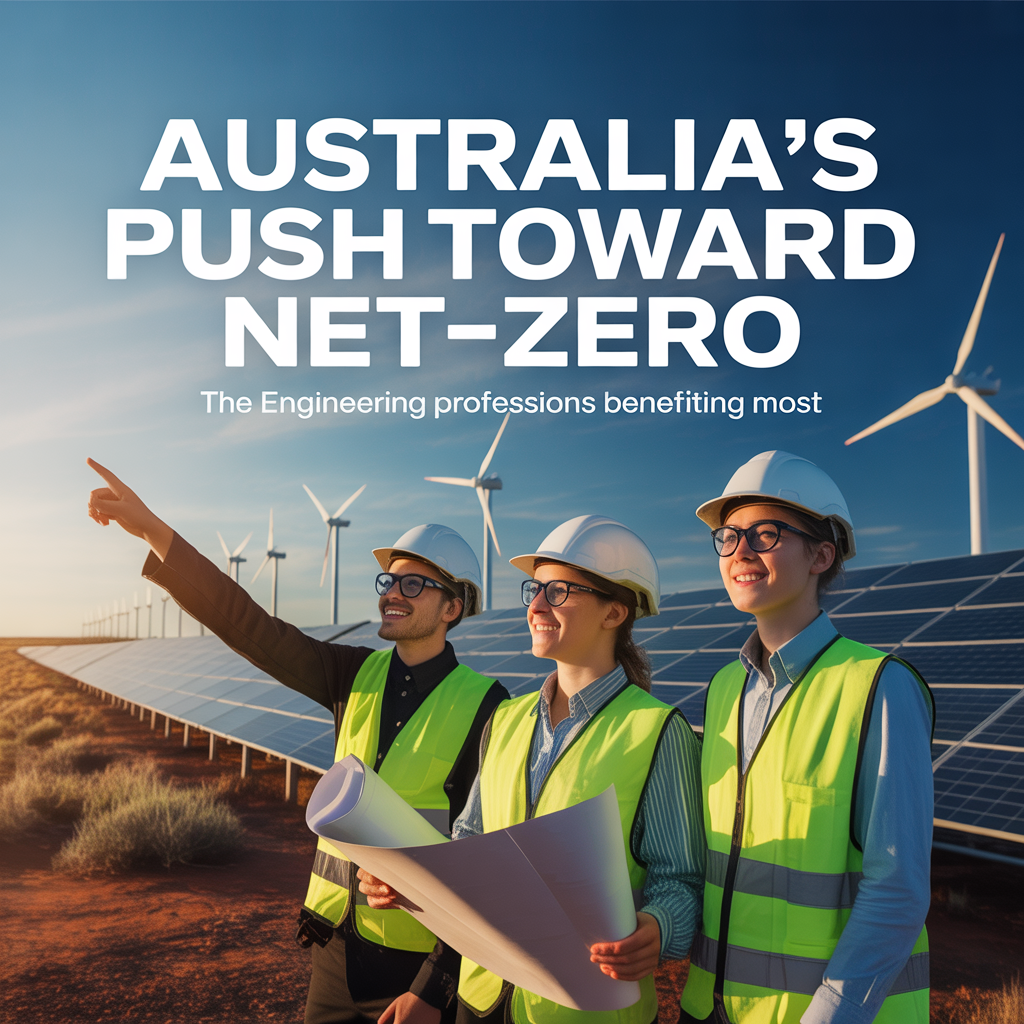
Discover how Australia’s 2050 net-zero target is creating thousands of high-paying engineering roles in renewables, hydrogen, battery storage and critical minerals. Ideal for skilled engineers considering migration.
Introduction
Australia has committed to reaching net-zero emissions by 2050 – and it is moving fast. The federal and state governments are pouring billions into renewable energy, green hydrogen, battery storage and grid upgrades. Engineers sit at the centre of this transformation. Demand for specific engineering skills now outstrips supply, pushing salaries higher and opening priority visa pathways for overseas talent. This article reveals exactly which engineering professions are benefiting most from Australia’s clean energy transition.
Australia’s Push Toward Net-Zero: The Big Picture
The Australian Government’s Powering Australia plan, combined with state-level renewable energy zones (REZs), aims for 82 % renewable electricity by 2030. Achieving this requires massive investment:
– A$120 billion+ in new transmission and grid upgrades
– 10 GW of new offshore wind capacity announced
– A$20 billion Rewiring the Nation fund
– A$2 billion Hydrogen Headstart program
– Over 45 GW of large-scale solar and wind projects in the pipeline
These projects translate directly into secure, long-term jobs for engineers across multiple disciplines.
Engineering Professions Benefiting Most from the Net-Zero Transition
1. Electrical and Power Systems Engineers
Electrical engineers dominate the list. They design high-voltage transmission lines, substations and grid-scale battery energy storage systems (BESS). Projects such as Queensland’s CopperString 2032, Victoria’s Big Battery expansion and Snowy 2.0 pumped hydro rely heavily on power systems expertise. Average salaries now exceed A$150,000–A$200,000 for senior roles.
2. Renewable Energy Engineers (Wind and Solar)
Wind energy Australia is booming. Seven offshore wind zones declared in 2024 will deliver 30 GW+ by 2040. Solar PV engineering also grows rapidly with multi-gigawatt solar farms under construction in NSW, Queensland and Western Australia. Mechanical and electrical engineers with turbine or PV plant experience are in extremely short supply.
3. Hydrogen and Chemical Process Engineers
The Australian hydrogen economy is accelerating. Fortescue, Origin and Stanwell are building gigawatt-scale green hydrogen projects requiring chemical engineering hydrogen specialists, electrolyser technology experts and process safety engineers. Western Australia and Queensland lead the charge.
4. Civil and Structural Engineers (Energy Infrastructure)
Civil engineering net zero projects include thousands of kilometres of new transmission towers, offshore wind foundations, pumped hydro tunnels and substation platforms. Major contractors report critical shortages of site-based and design civil/structural engineers.
5. Mining and Minerals Processing Engineers (Critical Minerals)
Lithium, cobalt, rare earths and nickel are essential for batteries and renewables. Critical minerals mining Australia is expanding rapidly in Western Australia, Queensland and South Australia. Mining engineering decarbonisation roles – including electrification of mining fleets – are also surging.
#### 6. Environmental and Sustainability Engineers
Every major project now requires environmental engineering Australia expertise for impact assessments, carbon accounting and biodiversity offsets. ESG engineering jobs have become mandatory for publicly listed companies and government-funded developments.
Skills Shortage = Fast-Track Migration Opportunities
Engineers Australia’s latest skills assessment data shows the fastest processing times ever for:
– Electrical Engineering
– Mechanical Engineering
– Civil Engineering
– Chemical Engineering
Many of these occupations appear on both the Core Skills Occupation List and the Priority Migration Skilled Occupation List (PMSOL legacy), meaning:
– 190 and 491 state nomination priority
– Higher points for Expression of Interest (EOI)
– Potential for employer-sponsored 482 or 494 visas in regional areas
States such as Queensland, Western Australia and South Australia actively target renewable energy engineers with relaxed work experience requirements and lower points thresholds.
Conclusion
Australia’s push toward net-zero by 2050 is not just an environmental goal – it is one of the largest engineering employment booms in the nation’s history. Electrical, renewable, hydrogen, civil and critical minerals engineers enjoy unprecedented demand, rising salaries and multiple visa pathways. If you hold qualifications and experience in any of these fields, now is the ideal time to explore migration options.