




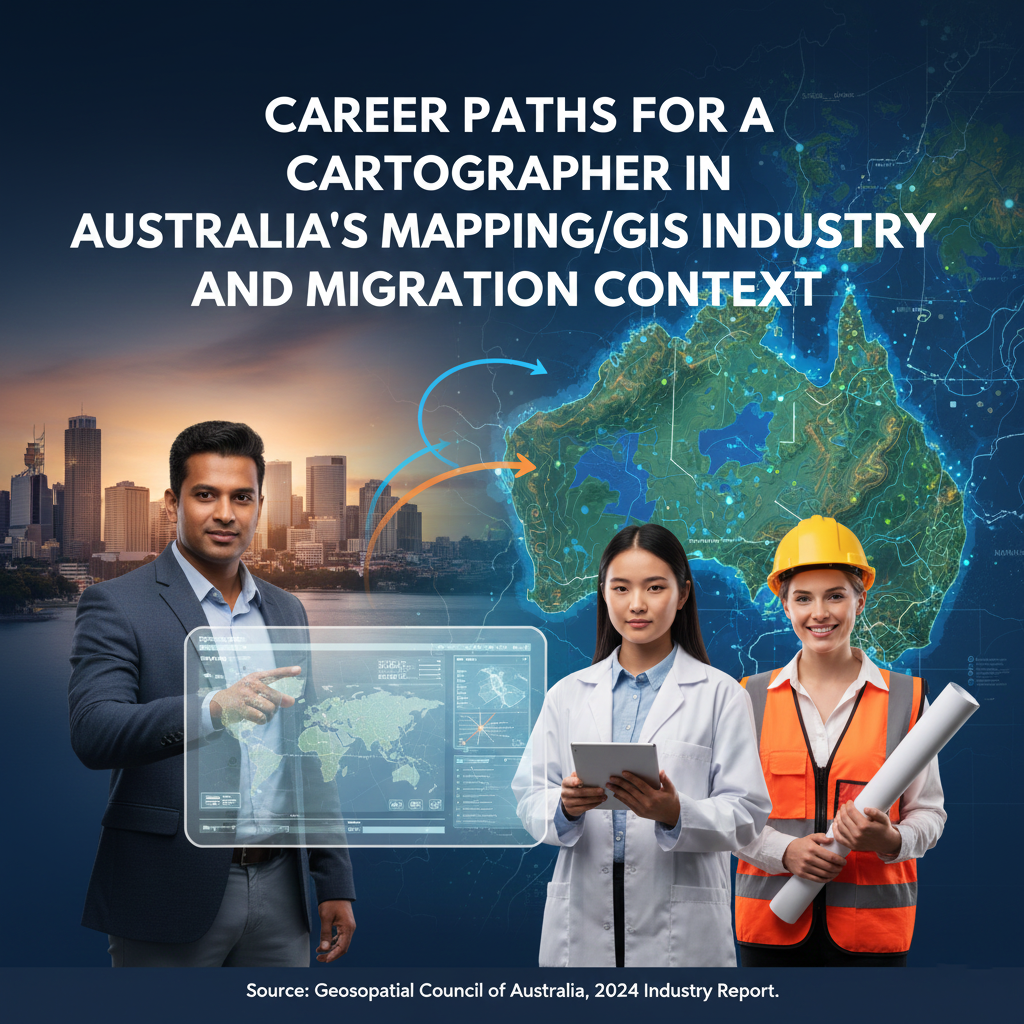
Introduction
Australia’s mapping and geospatial sector grows faster than almost any other technical field. Over 5,100 GIS and spatial jobs are advertised annually on SEEK and Jobs in Spatial, with Canberra, Melbourne and Brisbane leading demand. Cartographer (ANZSCO 232214) and related geospatial roles remain on the Medium and Long-term Strategic Skills List, offering direct access to permanent residency. Salaries start at AUD 95,000 for graduates and reach AUD 160,000+ for senior analysts. This guide covers career paths, in-demand skills, key employers, and the exact migration process for cartographers and GIS professionals.
Where the Jobs Are in 2025
Canberra dominates defence and government geospatial intelligence roles (Defence, Geoscience Australia, PSMA Australia). Melbourne and Brisbane host major consulting firms (Jacobs, AECOM, GHD) and utilities. Western Australia recruits heavily for mining GIS and drone mapping positions (Rio Tinto, BHP, Fortescue). Environmental and local government roles spread across every state.
Hot growth areas include:
- Defence and national security mapping
- Bushfire, flood and climate-change modelling
- Digital twins and 3D city modelling
- Precision agriculture and LiDAR processing
- Drone-based mapping and real-time data
Graduate GIS jobs remain plentiful, especially in state government and large consultancies.
In-Demand Skills and Career Progression
Employers expect practical, job-ready skills:
- Bachelor or Master in GIS, Geomatics, Cartography, Surveying or Geography
- Advanced proficiency in Esri ArcGIS Pro, QGIS, FME, and Python scripting
- Experience with LiDAR, drone imagery, and remote sensing
- Strong spatial database skills (PostGIS, SQL)
- Knowledge of Australian coordinate systems and metadata standards
Career path typically follows:
- GIS Analyst / Spatial Analyst (0–4 years)
- Senior GIS Analyst / Spatial Data Scientist
- GIS Team Leader / Geospatial Project Manager
- Principal Consultant or Defence Geospatial Intelligence Analyst
Certifications in GISP-AP, Esri Technical, or remote sensing add significant value.
Salary Levels Across Experience and Location
- Graduate/Entry-level GIS Analyst: AUD 80,000 – 105,000
- Mid-level GIS/Spatial Analyst (3–7 years): AUD 110,000 – 140,000
- Senior/Lead Geospatial Analyst: AUD 145,000 – 170,000+
- Defence or Mining Specialist (clearance + experience): AUD 170,000 – 220,000
Canberra and Perth consistently pay 10–15% above state averages.
Major Employers and Recruitment Channels
Top organisations hiring in 2025:
- Government: Geoscience Australia, Defence (AGO, DSTG), state land agencies
- Mining: Rio Tinto, BHP, Fortescue, Newmont
- Consulting: Jacobs, AECOM, GHD, NGIS, Esri Australia
- Utilities & Transport: Transurban, Sydney Trains, Water corporations
Best job sources:
- Jobs in Spatial (spatialindustryjobs.com.au)
- SEEK daily alerts for “GIS Analyst”, “Spatial Analyst”, “Cartographer”
- LinkedIn headline: “GIS Analyst | ArcGIS Pro & Python | Open to Australia relocation”
- Join SSSI (Surveying & Spatial Sciences Institute) and OzRI networks
Migration Pathways for Cartographers and GIS Professionals
Cartographer (232214) is assessed by VETASSESS and sits on the MLTSSL.
Key visa options:
- Skilled Independent (189) – points-tested, no sponsor needed
- Skilled Nominated (190) – adds 5 points; ACT, NSW, VIC, QLD, WA nominate regularly
- Skilled Work Regional (491) – adds 15 points; popular for regional GIS roles
- Temporary Skill Shortage (482) – many defence and mining employers sponsor
Current invitation rounds show GIS-related occupations invited at 85–95 points (189) and 75–85 points (491) offshore.
Conclusion
Australia’s mapping and GIS industry offers diverse, well-paid career paths and some of the clearest skilled migration routes available. High demand across government, defence, mining and environmental sectors ensures strong job security. Begin your VETASSESS skills assessment and targeted applications today — the Australian geospatial community actively welcomes overseas talent.