



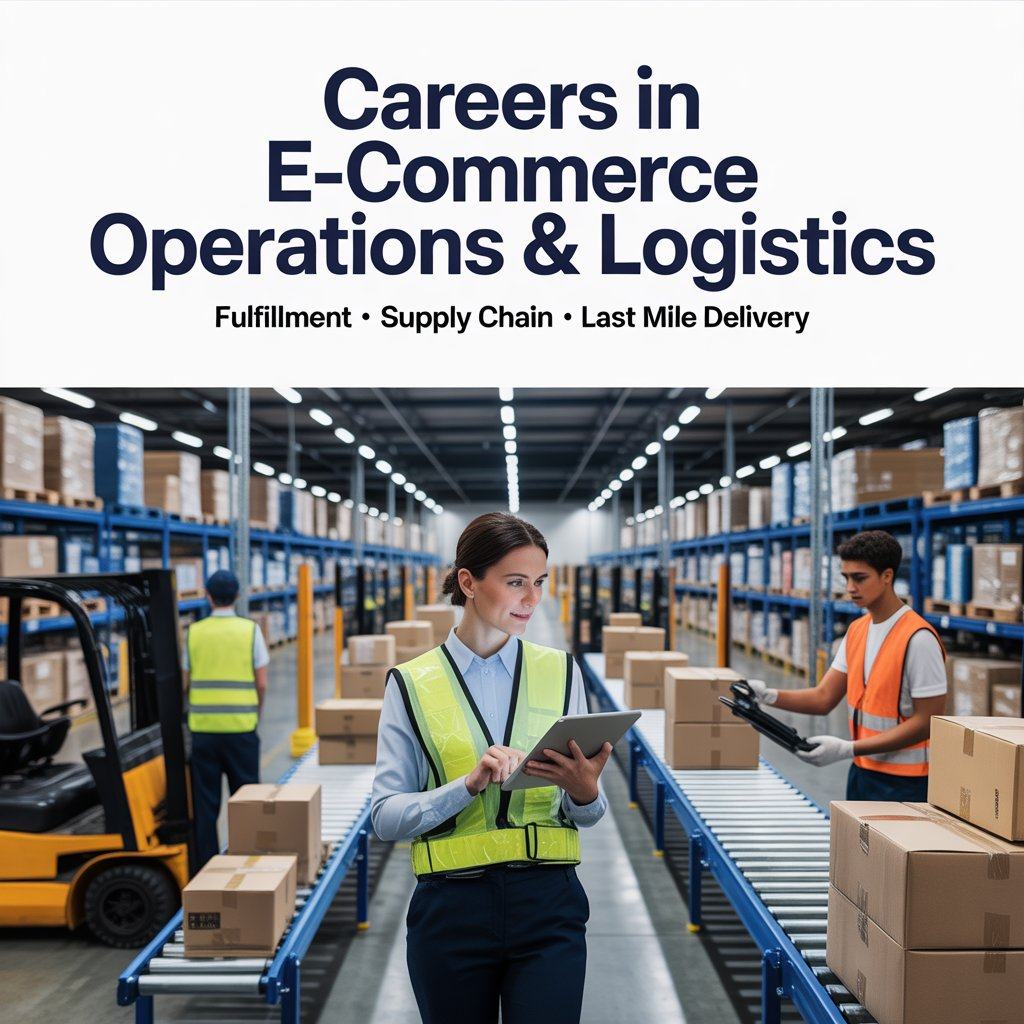
Explore careers in e-commerce operations, supply chain management, and last mile delivery. Learn about roles, skills, and opportunities in this fast-growing industry.
Introduction
The e-commerce industry has exploded, with global online sales projected to reach $7.4 trillion by 2025. This growth fuels demand for skilled professionals in e-commerce operations and logistics, particularly in fulfillment, supply chain management, and last mile delivery. These careers offer dynamic roles, competitive salaries, and opportunities to shape the future of online shopping. Whether you’re drawn to warehouse operations, logistics coordination, or optimizing delivery networks, this article explores the diverse career paths, key skills, and growth potential in this thriving sector.
Understanding E-commerce Operations and Logistics
E-commerce operations encompass the processes that ensure products move seamlessly from seller to buyer. This includes warehouse operations, inventory management, order fulfillment, and transportation logistics. Logistics management ties these elements together, ensuring efficiency and customer satisfaction. Careers in this field range from hands-on roles in fulfillment centers to strategic positions in supply chain optimization. As online shopping grows, companies like Amazon, Walmart, and Shopify seek professionals to streamline operations and meet rising consumer expectations. These roles require adaptability, problem-solving, and a knack for efficiency.
Key Roles in Fulfillment Operations
Fulfillment operations focus on processing and shipping customer orders. Roles include warehouse associates, inventory managers, and fulfillment center supervisors. Warehouse associates handle picking, packing, and shipping, often using warehouse automation tools like robotic pickers. Inventory managers oversee stock levels, ensuring products are available without overstocking. Supervisors coordinate teams, optimize workflows, and maintain safety standards. These roles demand attention to detail and the ability to work in fast-paced environments. Entry-level positions often require minimal experience, making fulfillment operations an accessible entry point into e-commerce careers.
The Role of Supply Chain Management
Supply chain management involves overseeing the entire journey of a product, from raw materials to delivery. Professionals in this field, such as supply chain analysts or logistics coordinators, design and optimize distribution networks. They use supply chain analytics to forecast demand, reduce costs, and improve efficiency. These roles require strong analytical skills and knowledge of software like SAP or Oracle. As businesses prioritize supply chain optimization, careers in this area offer strong growth potential, with opportunities to advance into strategic leadership positions.
Last Mile Delivery: The Final Step
Last mile delivery ensures products reach customers’ doorsteps. Roles include delivery drivers, logistics coordinators, and last mile optimization specialists. Drivers work for companies like UPS or Amazon, navigating routes to meet tight delivery windows. Coordinators manage schedules and track shipments, while optimization specialists use data to improve delivery operations. These roles are critical as customer expectations for fast, reliable delivery grow. Last mile delivery offers flexible, entry-level jobs as well as specialized roles requiring expertise in logistics management.
Emerging Trends and Technologies
The e-commerce logistics landscape is evolving with technologies like warehouse automation, AI-driven supply chain analytics, and drone delivery. Automation reduces manual labor in fulfillment centers, creating demand for technicians to maintain robotic systems. AI tools help predict inventory needs and optimize delivery routes. Last mile optimization increasingly relies on data analytics to cut costs and improve speed. Professionals skilled in these technologies are highly sought after, with opportunities to work on cutting-edge innovations that redefine e-commerce operations.
Skills and Qualifications for Success
Careers in e-commerce operations and logistics require a mix of technical and soft skills. Entry-level roles like warehouse associates need physical stamina and teamwork. Mid-level roles, such as inventory managers, demand organizational skills and familiarity with inventory management software. Senior roles in supply chain management or logistics coordination require analytical thinking, problem-solving, and leadership. Certifications like APICS for supply chain or Six Sigma for process improvement can boost employability. Adaptability and tech-savviness are key as the industry embraces digital transformation.
Career Growth and Opportunities
The e-commerce sector offers clear paths for advancement. Entry-level workers in fulfillment operations can move into supervisory roles or specialize in inventory management. Supply chain analysts may progress to director-level positions, overseeing global distribution networks. Last mile delivery roles can lead to logistics management or optimization specialist positions. With e-commerce sales growing, job demand remains strong. Companies also offer training programs, making it easier to gain skills like warehouse automation or supply chain analytics, paving the way for long-term career growth.
Conclusion
Careers in e-commerce operations and logistics offer diverse opportunities in fulfillment, supply chain management, and last mile delivery. From warehouse associates to supply chain analysts, these roles cater to various skill levels and interests. As e-commerce continues to grow, professionals in this field can expect competitive salaries, dynamic work environments, and room for advancement. Explore job openings in fulfillment centers or logistics firms to start your career in this fast-paced industry today.