




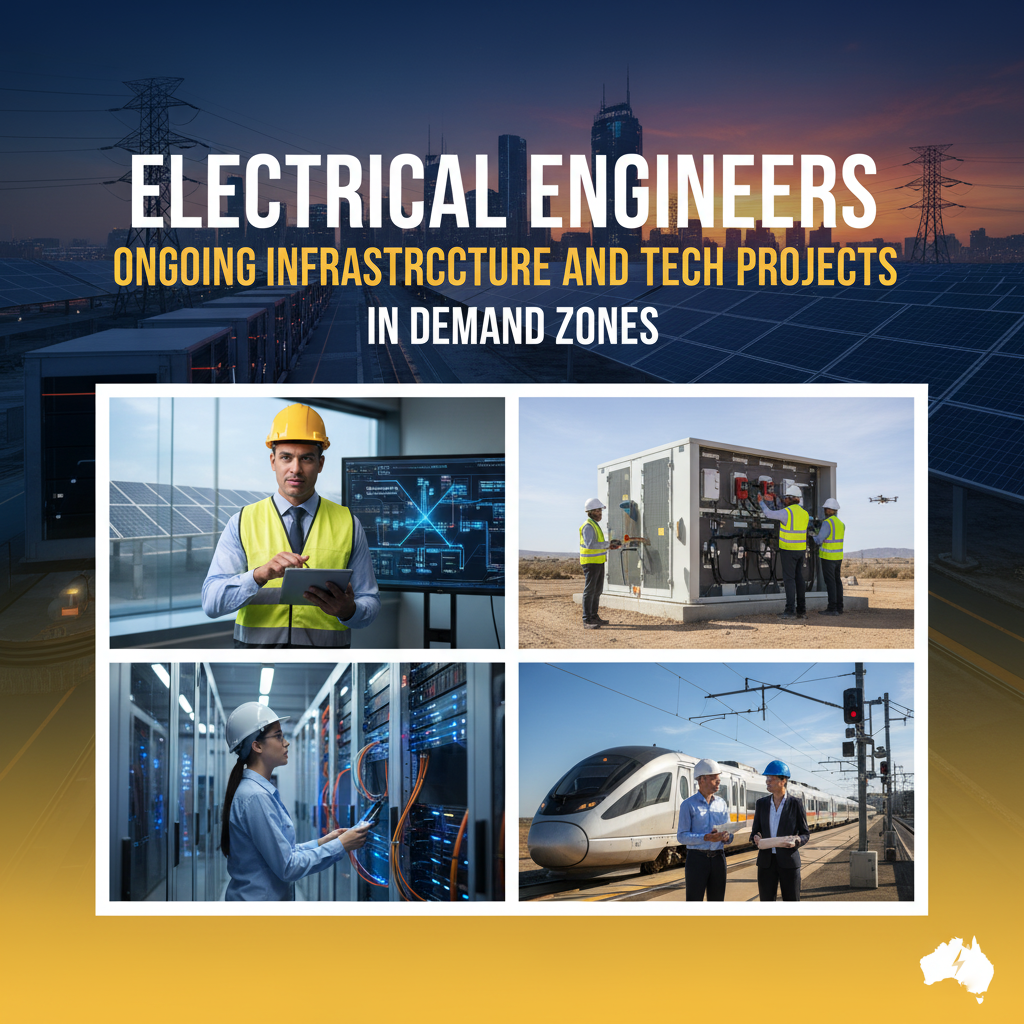
Discover the booming Electrical Engineers Demand in Australia’s high-growth zones across renewable energy, transport, and data centre infrastructure. Learn about key Engineering Jobs Australia and skilled migration visa pathways.
Introduction
Australia faces critical workforce shortages in engineering, a significant challenge given the nation’s massive investment in critical infrastructure and cutting-edge technology. The transition to clean energy, alongside extensive urban and transport infrastructure upgrades, drives a surging Electrical Engineers Demand. This presents a powerful, immediate opportunity for skilled international electrical engineers. This article details the ongoing infrastructure and tech projects creating these in-demand roles and outlines potential Skilled Migration Visa pathways.
The Powering of Tomorrow: Renewable Energy and Smart Grids
The national shift toward Renewable Energy and a net-zero future is the single largest driver of Electrical Engineering Careers right now. Australia is committed to integrating immense capacity from sources like solar and wind, which necessitates vast upgrades to the national power network.
This surge in activity translates directly into high-value Electrical Engineers Demand in several key areas. Power Systems Engineering expertise is essential for stability and grid connection, particularly in designing high-voltage transmission lines and Substation Design. A critical, high-growth area is Energy Storage / Battery Energy Storage Systems (BESS). Engineers skilled in integrating large-scale BESS facilities—often located in Regional Australia Jobs zones—are highly sought after to ensure a reliable energy supply when the sun isn’t shining or the wind isn’t blowing. Furthermore, the development of a smarter, more resilient Smart Grid requires specialists in Automation and Control to manage complex, bi-directional power flows efficiently. Queensland Projects, often resource-heavy, and major solar/wind farms across Regional Australia are key hotbeds for these roles.
Major Projects: Transport, Mining, and Digital Infrastructure
Beyond the energy revolution, core Major Projects in Transport Infrastructure and heavy industry are fueling intense Electrical Engineers Demand in major cities and resource zones. City-shaping developments like the Sydney Metro and the Perth Metronet expansion require expertise in Railway Signalling Engineering and Power Distribution for electrified networks. Tunnels, roads, and rail hubs rely heavily on complex electrical systems, offering steady Engineering Jobs Australia in Sydney Infrastructure and Perth Engineering Jobs.
In the resource sector, particularly in Western Australia and Queensland, Mining & Resources companies are undergoing significant modernization. This requires electrical engineers for Utilities Infrastructure upgrades, High Voltage (HV) systems, and implementing sophisticated Automation and Control systems for autonomous mining fleets. A newer, rapidly expanding area is Data Centre Infrastructure. As technology adoption skyrockets, major cities like Melbourne are seeing large-scale data centre builds—a key part of the Melbourne Tech Sector—that require highly specialised electrical engineers for Digital Engineering, uninterruptible power supplies (UPS), and robust cooling systems design. These roles often require strong Project Management skills to ensure timely and safe delivery.
Securing Your Future: Immigration Pathways for In-Demand Occupations
Electrical Engineers (ANZSCO 233311) feature prominently on the Skilled Occupation List (SOL), confirming their status as In-Demand Occupations critical to Australia’s economic future. This listing opens several pathways for Skilled Migration Visa applications.
The most common pathways include the points-tested independent (Subclass 189) and state-nominated visas (Subclass 190). Achieving State Nomination from states like South Australia (leading in renewable energy) or New South Wales (Sydney Infrastructure) and Western Australia (Perth Engineering Jobs / Mining & Resources) often provides additional points, significantly increasing the chance of an invitation. The regional visa (Subclass 491), which targets Regional Australia Jobs, provides a direct pathway to permanent residency after three years and offers an attractive points boost. A positive skills assessment from Engineers Australia is the mandatory first step for all skilled migration applications. Understanding these visa options and aiming for regions with high-need Workforce Shortages and ongoing Major Projects will optimise an engineer’s migration strategy.
Conclusion
The convergence of massive Infrastructure Projects and the pivot to a green-energy economy means Electrical Engineers Demand is not just strong—it’s structurally embedded for the next decade. Roles in Renewable Energy, Smart Grid, and Critical Infrastructure in High-Growth Zones across Australia promise stability and high-impact work. Start your skills assessment and explore State Nomination options to secure your place in these rewarding Electrical Engineering Careers.