




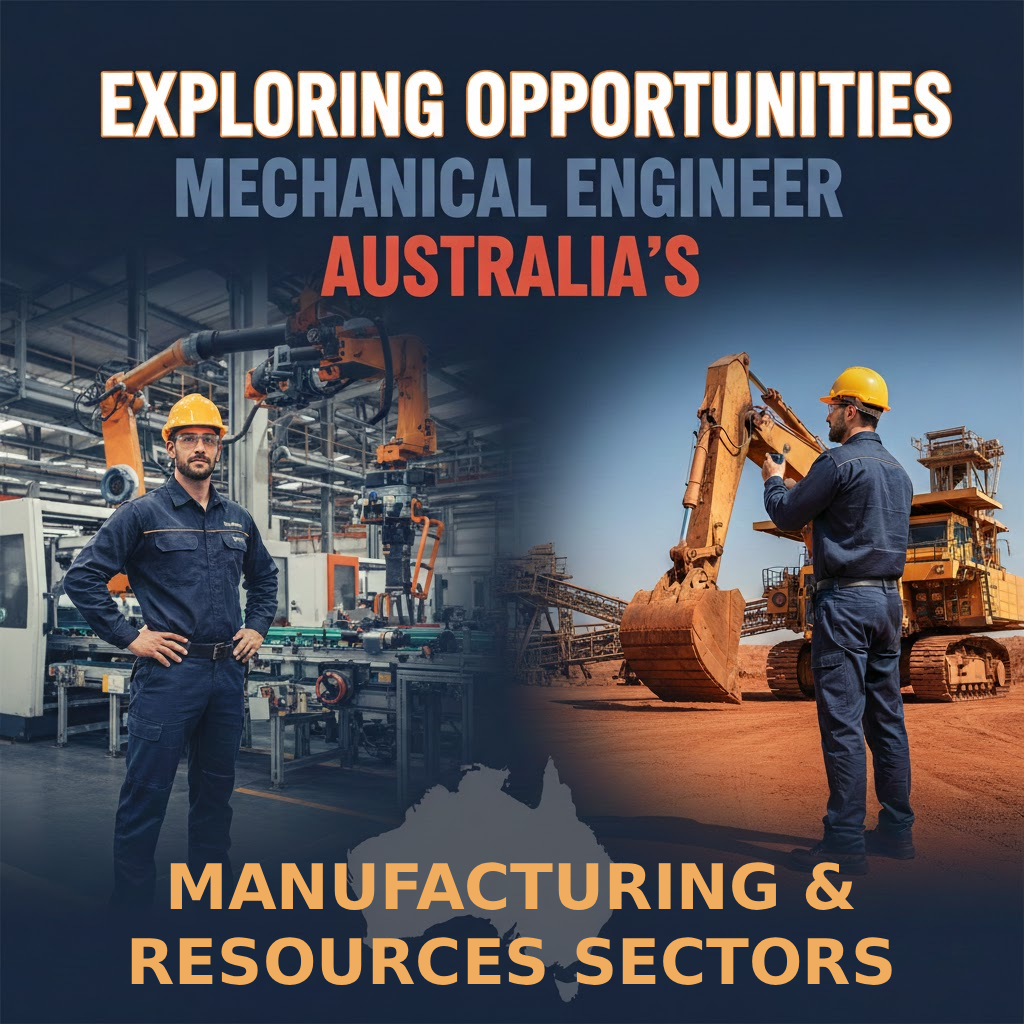
Discover high-demand roles for mechanical engineers in Australia’s manufacturing, mining, oil & gas, and LNG sectors. Explore salaries, visas, key locations like Perth and the Pilbara, and pathways to permanent residency.
Introduction
Australia faces a critical shortage of mechanical engineers. The resources and manufacturing sectors alone need thousands of skilled professionals by 2030. Western Australia’s iron ore and lithium boom, Queensland’s coal and LNG projects, and national defence programs like AUKUS drive this demand. Mechanical engineers who understand rotating equipment, pressure vessels, piping design, or Industry 4.0 technologies find multiple pathways to rewarding careers and permanent residency.
Why Australia Needs Mechanical Engineers Right Now
The resources sector powers Australia’s economy. Iron ore, lithium, gold, LNG, and critical minerals generate billions in exports each year. Companies such as BHP, Rio Tinto, Fortescue, Woodside, Chevron Australia, and Santos operate massive projects in the Pilbara, Bowen Basin, Goldfields, and Gladstone. These projects require reliability engineers, maintenance engineers, project engineers, and design engineers who know pumps, compressors, turbines, ASME codes, API standards, HAZOP, and risk assessment.
At the same time, advanced manufacturing grows rapidly. Naval shipbuilding under AUKUS, defence manufacturing in Adelaide, automation, robotics, additive manufacturing, and 3D printing create new roles in Melbourne, Brisbane, and Perth. Engineers with SolidWorks, AutoCAD, Inventor, FEA, Lean Manufacturing, or Six Sigma skills stand out.
Top Opportunities by Industry and Location
1. Mining and Critical Minerals
The Pilbara, Bowen Basin, Goldfields, and Mount Isa remain global hotspots. Mechanical engineers work on rotating equipment, asset management, RCM (Reliability Centered Maintenance), root cause analysis, and corrosion engineering. Lithium mining and battery metals projects in Western Australia offer some of the highest salaries worldwide. FIFO (Fly-In Fly-Out) and DIDO (Drive-In Drive-Out) rosters dominate, with packages often exceeding AUD 180,000–250,000 plus bonuses.
2. Oil & Gas and LNG
Western Australia’s North West Shelf, Ichthys, and Gorgon projects need process engineers, piping design specialists, and pressure vessel experts. Perth serves as the engineering hub, while Karratha and Port Hedland host site-based roles. Contractors like Bechtel, Worley, Monadelphous, and UGL hire hundreds of mechanical engineers every year.
3. Heavy Industry and Manufacturing
Civmec, Austal, and ASC in Henderson and Osborne build naval vessels and submarines. Roles focus on welding engineering, NDT, materials engineering, and advanced manufacturing. South Australia and Western Australia lead defence projects.
4. Emerging Sectors
Automation, robotics, and Industry 4.0 transform traditional manufacturing. Companies in Melbourne and Brisbane seek mechanical engineers with experience in additive manufacturing and digital twins.
Salary Expectations and Lifestyle
Experienced mechanical engineers in resources earn AUD 140,000–220,000 base, often with uplifts, bonuses, and superannuation. Graduate mechanical engineers start at AUD 80,000–110,000. Perth jobs dominate, but Brisbane, Adelaide, Newcastle, and Kalgoorlie also offer strong opportunities. FIFO rosters typically follow 2:1 or 8:6 patterns, providing long breaks and high savings potential.
Visa and Registration Pathways
Most mechanical engineers enter on the Temporary Skill Shortage (TSS) 482 visa or Skilled Independent (189) visa. Mechanical Engineer (ANZSCO 233512) appears on the Medium and Long-term Strategic Skills List (MLTSSL), opening pathways to permanent residency through Employer Nomination Scheme (186) or Skilled Nominated (190) visas.
Engineers Australia assesses qualifications for migration. Many employers fast-track applications and sponsor the 494 Regional visa for site-based roles. Achieving RPEng, NER registration, or Chartered Engineer status with Engineers Australia boosts employability and points for permanent residency.
How to Stand Out in the Australian Market
Tailor your CV to highlight specific tools (SolidWorks, AutoCAD, Inventor), standards (ASME, API), and methodologies (Lean, Six Sigma, HAZOP). Australian employers value practical site experience with rotating equipment, pumps, compressors, and turbines. Mention any exposure to RCM, asset management, or root cause analysis. Network on LinkedIn with recruiters in Perth and Brisbane, and register with specialist agencies that place engineers at BHP, Rio Tinto, Woodside, and Fortescue.
Conclusion
Mechanical engineers who target Australia’s resources and manufacturing sectors access high salaries, clear permanent residency pathways, and work on world-scale projects. Update your skills, align your experience with Australian priorities, and apply now—the demand has never been stronger.