




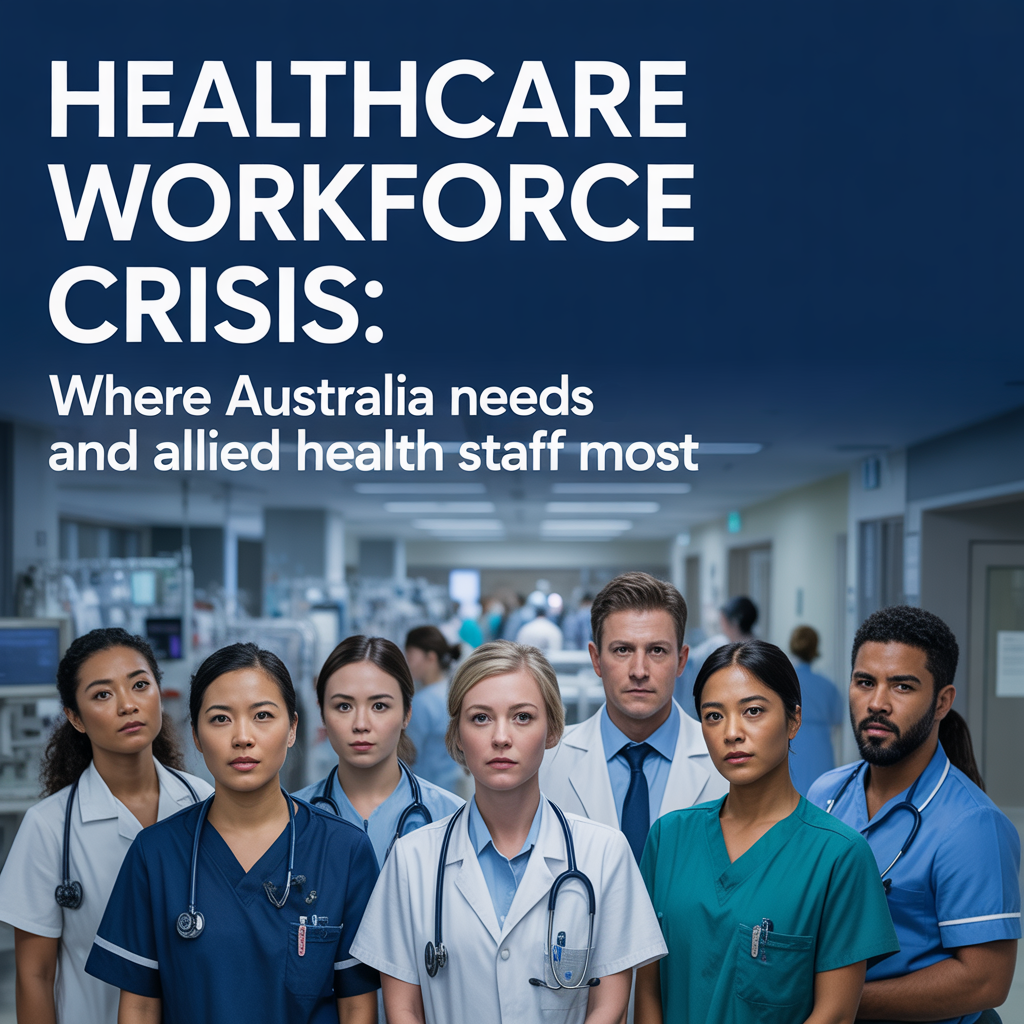
Discover the regions and specialties facing the worst nursing and allied health shortages in Australia in 2025. Explore high-demand areas for international nurses and fast-track migration pathways.
Introduction
Australia faces a deepening healthcare workforce crisis. By 2030 the country will need an extra 100,000 nurses and tens of thousands of allied health professionals. Regional and rural areas suffer the most acute shortages, while aged care, mental health, and disability services struggle to fill roles. International nurses and therapists who choose these high-need locations gain priority processing, regional incentives, and clearer pathways to permanent residency. This guide reveals exactly where Australia needs you most right now.
The Scale of Australia’s Nursing and Allied Health Shortage
The numbers tell a stark story. The Australian Government’s 2024–25 health workforce projections show a deficit of over 82,000 full-time equivalent nurses by 2035 if current trends continue. Allied health faces similar gaps: physiotherapy, occupational therapy, and speech pathology all appear on the Priority Migration Skilled Occupation List.
Regional and remote areas carry the heaviest burden. Rural hospitals operate with vacancy rates above 25% in many specialties. Aged care providers report one in five nursing positions unfilled. The NDIS workforce shortage now exceeds 20,000 workers nationwide. These gaps directly affect patient care—longer wait times, cancelled procedures, and increased burnout among existing staff.
Regions Desperately Seeking Nurses and Allied Health StaffSome parts of Australia offer almost guaranteed employment and migration advantages.Western
Australia – especially the Kimberley and Pilbara
Remote nursing posts and fly-in fly-out critical care roles come with salaries up to AUD 150,000 plus generous housing allowances. Public hospitals in Broome, Karratha, and Port Hedland actively recruit overseas nurses with 491 visa sponsorship.
Northern Territory – Alice Springs and Darwin
Indigenous health services and the Royal Darwin Hospital face chronic critical care and mental health nursing shortages. The NT Designated Area Migration Agreement (DAMA) fast-tracks visa processing for enrolled nurses, registered nurses, and allied health professionals.
Rural Queensland – Wide Bay, Darling Downs, and Far North Queensland
Cairns, Bundaberg, and Toowoomba hospitals report perioperative, emergency, and midwifery vacancy rates above 30%. Aged care providers in these regions sponsor 482 and 494 visas with minimal experience requirements.
Tasmania – statewide shortage
Every major hospital on the island has open nursing rosters. Launceston General Hospital and the Mersey Community Hospital offer relocation packages and permanent residency pathways through the Tasmanian Skilled Occupations List.
South Australia – whyalla, Mount Gambier, and Riverland
Regional public hospitals and aged care facilities provide 186 visa pathways for nurses with as little as one year of post-registration experience.
Specialties in Highest Demand Nationwide
Beyond location, certain fields offer the fastest job offers:
– Aged care nursing – driven by an ageing population and new staffing mandates
– Mental health nursing – every state reports severe shortages
– Disability support workers and allied health under NDIS – occupational therapists and physiotherapists top the list
– Critical care, emergency, and perioperative nursing – major hospitals and regional centres compete fiercely
– Community and primary health nursing – especially in Indigenous communities and outer metropolitan areas
Why Regional and Rural Roles Give Migration Advantages
Nurses and allied health professionals who accept positions outside Sydney, Melbourne, and Brisbane activate powerful visa incentives. The Regional Occupation List opens 491 and 494 visa pathways with lower points requirements and five-year routes to permanent residency. Many regional employers also qualify for the Designated Area Migration Agreement (DAMA), which reduces English and experience thresholds.
States like Western Australia, Northern Territory, and South Australia regularly add nursing and allied health roles to concession lists, allowing applicants with IELTS 6.0 (or equivalent) instead of 7.0 to qualify.
Conclusion
Australia’s healthcare workforce crisis creates extraordinary opportunities for qualified nurses and allied health professionals. Regional areas and high-need specialties offer immediate jobs, higher salaries, relocation support, and accelerated permanent residency pathways. If you hold nursing or allied health qualifications, 2025 represents one of the best windows in a decade to make the move.