




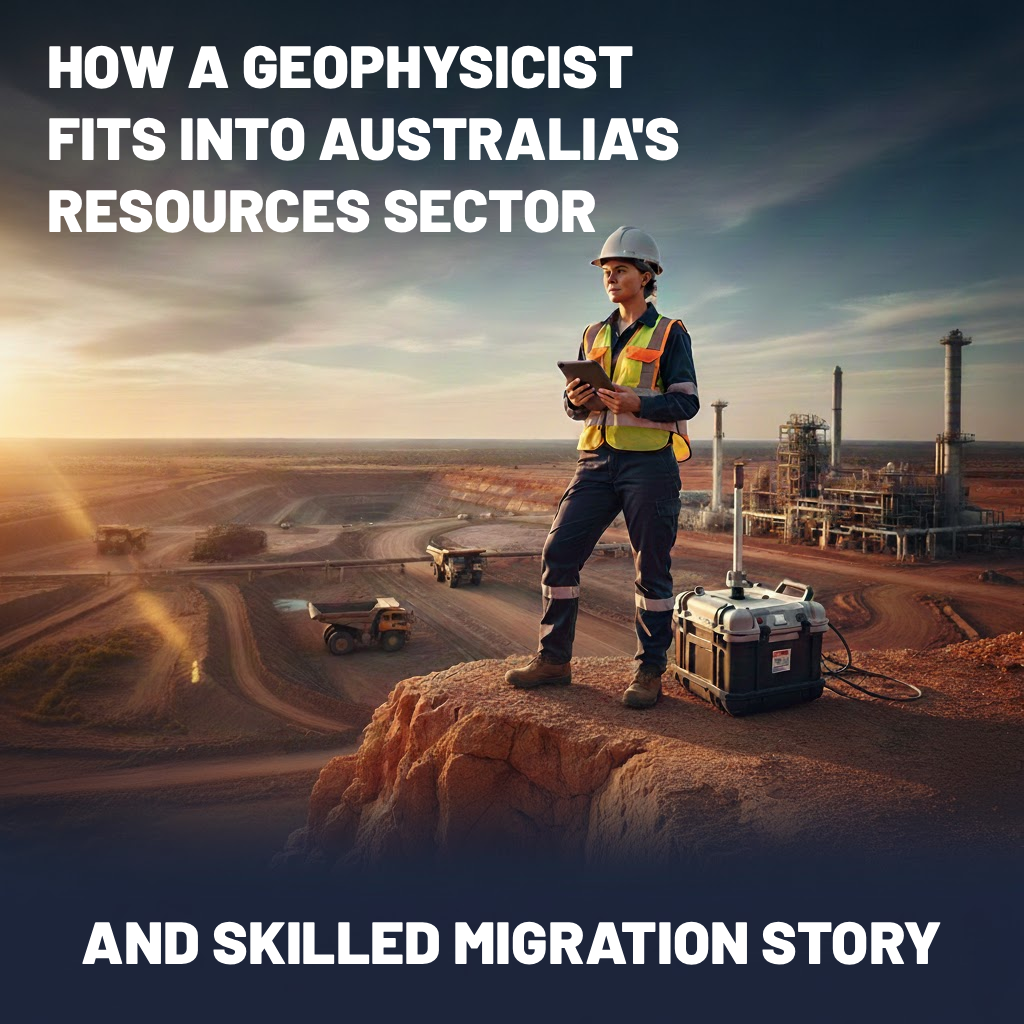
Explore how geophysicists contribute to Australia’s thriving resources sector amid workforce shortages, and discover skilled migration pathways for professionals in earth sciences and STEM occupations.
Introduction
Australia’s resources sector generates 10.4% of the nation’s GDP and accounts for over 60% of merchandise exports by value. This industry faces persistent workforce shortages, particularly in specialized roles like geophysics, which drives demand for skilled migrants. Geophysicists apply their expertise in seismic surveying and geological surveying to locate mineral resources, support oil and gas exploration, and advance resource extraction. As Australia navigates energy transition and environmental challenges, these professionals fit seamlessly into the sector’s growth story. This article examines their role and how skilled migration programs facilitate entry for qualified geophysicists.
The Role of Geophysicists in Australia’s Resources Sector
Geophysicists study the Earth’s physical properties to uncover hidden resources. They use advanced techniques like seismic surveying to map subsurface structures, identifying deposits of minerals, petroleum, and groundwater. In Australia’s mining industry, which employs over 300,000 people and contributes significantly to economic output, geophysicists locate ore bodies and assess geological risks. Their work ensures efficient resource extraction, minimizing environmental impact through precise data analysis.
Beyond mining, geophysicists support oil and gas exploration in regions like Western Australia and Queensland. They interpret data from gravity, magnetic, and electrical surveys to pinpoint viable sites, aiding companies in meeting production targets. As the sector shifts toward energy transition, environmental geophysics gains prominence. Professionals monitor groundwater contamination, evaluate carbon storage potential, and contribute to renewable energy projects, such as geothermal exploration.
Workforce shortages amplify the need for these experts. Projections indicate Australia will add 22,000 jobs in mining and energy by 2030, with geoscientists in high demand. In Western Australia alone, over 11,000 additional workers are required by 2029 to support expansions. Geophysicists integrate into multidisciplinary teams, collaborating with engineers and environmental scientists to drive innovation. Their contributions extend to policy development, where they inform sustainable practices and resource management strategies. This expertise not only boosts productivity but also aligns with Australia’s commitment to responsible mining.
Skilled Migration Pathways for Geophysicists
Australia’s immigration policy prioritizes STEM occupations to address skills gaps in key industries. Geophysicists qualify under ANZSCO code 234412, listed on the Core Skills Occupation List (CSOL), which guides eligibility for various visa programs. This replaces earlier lists like the Medium and Long-term Strategic Skills List (MLTSSL) and Skilled Occupation List (SOL), streamlining access for professionals in earth sciences.
Key Australian visa programs include the Skilled Independent Visa (Subclass 189), which operates on a points-tested system. Applicants earn points for age, English proficiency, qualifications, and work experience in geophysics. Successful candidates receive permanent residency without employer sponsorship. For those with job offers, the Temporary Skill Shortage Visa (Subclass 482) allows up to four years of work, often leading to permanent options like the Employer Sponsored Visa (Subclass 186).
Priority migration occupations favor roles in the resources sector due to ongoing shortages. Geophysicists benefit from faster processing if their skills match critical needs in mining or oil and gas. State-specific nominations, such as Queensland’s Skilled Occupation Lists, further enhance opportunities by targeting regional demands. Applicants must undergo skills assessments from bodies like VETASSESS, confirming their qualifications align with Australian standards.
Geophysicists from overseas bring diverse expertise, filling gaps in seismic and environmental surveying. With the sector’s emphasis on innovation, migrants contribute to projects advancing Australia’s global competitiveness in mineral resources.
Challenges and Opportunities in Australia’s Resources Sector for Geophysicists
Workforce shortages persist in Australia’s resources sector, exacerbated by an aging workforce and competition from other industries. Geoscientist shortages threaten capabilities in mining and beyond, including climate adaptation efforts. Remote locations and demanding field conditions deter local talent, creating openings for skilled migrants adept at resource extraction technologies.
Opportunities abound amid energy transition. Geophysicists apply their skills to critical minerals exploration, essential for batteries and renewables. Government initiatives, like the Critical Minerals Strategy, invest in surveying to secure supply chains. Environmental geophysics supports sustainable practices, such as monitoring mine rehabilitation and reducing emissions.
For migrants, integration involves adapting to Australian regulations and safety standards. Professional networks, including the Australian Institute of Geoscientists, offer support for career advancement. Economic forecasts predict steady growth, with the sector adding jobs despite global headwinds. Skilled geophysicists can leverage these trends for long-term stability.
Immigration policy evolves to attract talent, with streamlined processes for priority occupations. Geophysicists must stay informed on changes to maximize their fit within this dynamic landscape.
Current Trends Shaping Geophysicists’ Contributions
Digital advancements transform geophysics in Australia. Machine learning and AI enhance data interpretation from seismic surveying, accelerating discoveries in mineral resources. In oil and gas exploration, 3D modeling improves accuracy, reducing exploration risks.
Sustainability drives trends, with geophysicists leading environmental assessments. They evaluate impacts of mining on ecosystems, ensuring compliance with regulations. As Australia targets net-zero emissions, roles expand into carbon capture and geothermal energy.
Workforce diversity grows, with women in mining rising from 9,100 in 2003 to 52,800 in 2023. Skilled migration bolsters this, introducing global perspectives to tackle complex challenges.
Economic pressures, including export fluctuations, underscore the need for efficient resource extraction. Geophysicists remain pivotal, adapting to innovations while addressing shortages.
Conclusion
Geophysicists integrate vital skills into Australia’s resources sector, combating workforce shortages through exploration and sustainability efforts. Skilled migration pathways offer accessible routes for qualified professionals. Consider assessing your eligibility and consulting an immigration expert to pursue opportunities in this essential industry.