




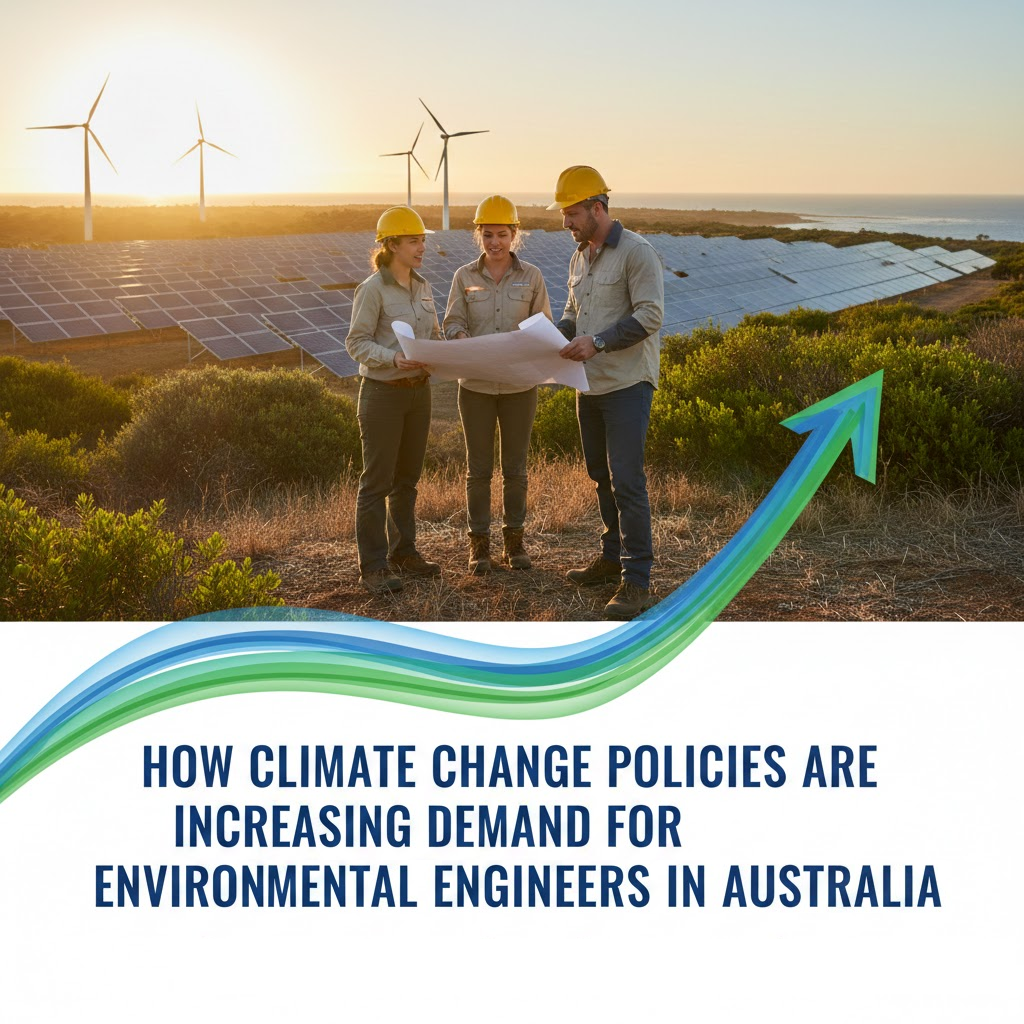
Australia’s net zero 2050 push and renewable energy transition are creating thousands of environmental engineering jobs. Discover how climate policies are fueling this boom and opening doors for skilled migrants.
Introduction
Australia has committed to net zero emissions by 2050. The country now races to cut carbon emissions 43% below 2005 levels by 2030. This rapid shift demands massive renewable energy projects, green infrastructure, and climate-resilient design. Result? A sharp surge in demand for environmental engineers. Jobs in this field grew 18% in the last three years alone, and the trend accelerates. For skilled professionals worldwide, Australia’s climate change policies have turned environmental engineering into one of the fastest-growing migration pathways.
Australia’s Climate Change Policies Are Creating Thousands of New Roles
The Australian government drives the renewable energy transition through concrete legislation and funding. The Safeguard Mechanism forces large emitters to reduce emissions yearly. The Powering Australia plan and Rewiring the Nation initiative pour billions into transmission lines, offshore wind projects, and battery storage. The Capacity Investment Scheme underwrites 32 GW of new renewable capacity. Every megawatt added requires environmental impact assessments, decarbonisation engineering, and compliance expertise. Engineers Australia reports the country needs at least 15,000 additional environmental and sustainability engineers by 2030 to meet these targets. Regional areas with solar farm development and hydrogen economy projects feel the shortage most acutely.
Where Environmental Engineers Are Needed Most in 2025–2030
Demand spreads across multiple sectors. Renewable energy projects—offshore wind in Gippsland, solar farms in NSW and Queensland, and green hydrogen hubs in Western Australia and South Australia—require specialists in site assessment and grid integration. Climate adaptation work grows fast: bushfire risk engineering, coastal erosion management, and water resource management top state priority lists after recent floods and fires. Sustainable urban planning and green infrastructure dominate capital cities. Mining and critical minerals processing companies race to meet ESG compliance and net-zero mandates. The environmental consulting boom supports all these areas with modeling, auditing, and permitting services. Graduate environmental engineer positions now appear on the Priority Migration Skilled Occupation List (PMSOL) and Core Skills Occupation List (CSOL).
Salaries, Visas, and Career Growth for Environmental Engineers
Experienced environmental engineers earn AUD 120,000–$180,000 annually, with senior roles in renewables or consulting reaching $200,000+. Regional incentives and relocation packages sweeten offers. The occupation sits firmly on the Medium and Long-term Strategic Skills List (MLTSSL), qualifying applicants for the Skilled Independent visa (189), Skilled Nominated visa (190), and Employer Sponsored visas (482 and 186). Many engineers arrive first on the Temporary Skill Shortage visa while employers fast-track permanent residency. Green skills shortage declarations in several states add extra nomination points and processing priority.
Conclusion
Australia’s ambitious climate targets have transformed environmental engineering from a niche field into a national priority. Skilled professionals who understand climate resilience engineering, renewable energy systems, and regulatory compliance now enjoy strong job security, high salaries, and clear permanent residency pathways. If you hold qualifications in this area, the timing has rarely been better to explore opportunities in Australia.