




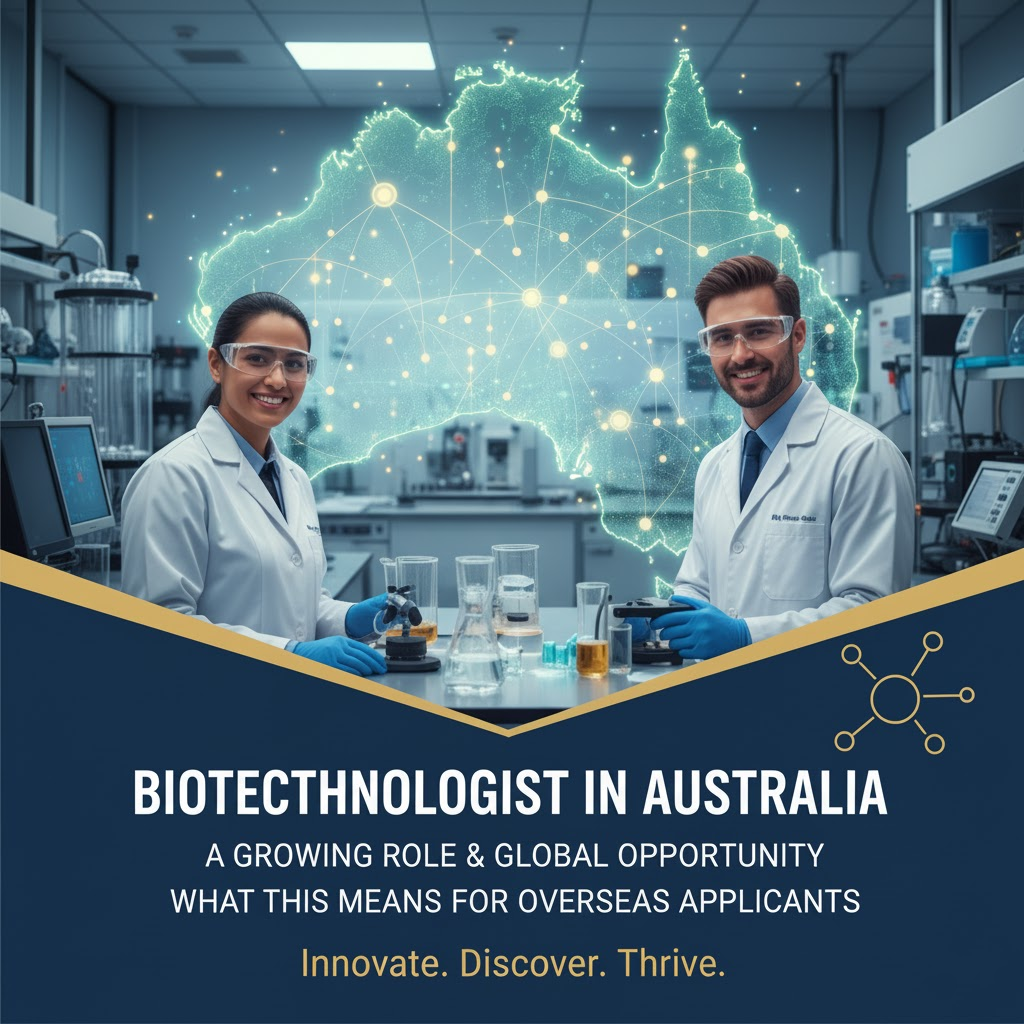
Discover biotech industry growth Australia and opportunities for overseas applicants. Learn skilled migration pathways, visa options, and job demand for biotechnologists seeking PR in Australia.
Introduction
Australia’s biotechnology sector employs over 240,000 people and contributes $7.2 billion annually to the economy. The role of biotechnologist grows rapidly, driven by medical research, agriculture, and sustainability projects. Overseas applicants gain a clear edge through skilled migration programs. This article explores biotech job demand Australia, visa pathways, and what these trends mean for international talent pursuing biotechnology careers Australia.
The Expanding Biotechnology Landscape in Australia
Australia invests heavily in life sciences. Government initiatives like the Medical Research Future Fund allocate $20 billion over a decade to innovation. Universities and firms in Melbourne, Sydney, and Brisbane lead in gene therapy, vaccine development, and biofuels.
Biotechnologist ANZSCO 234514 appears on multiple state skilled occupation lists, including South Australia skilled occupation biotechnologist. Job listings rose 18% year-over-year, according to AusBiotech reports. Companies seek experts in CRISPR, proteomics, and bioprocessing.
Start-ups cluster in hubs like the Melbourne Biomedical Precinct. CSL Limited, a global leader in plasma products, plans to hire 1,200 staff by 2026. These developments signal strong biotechnology job outlook Australia and sustained demand for skilled professionals.
Skilled Migration Pathways for Overseas Biotechnologists
Skilled migration biotechnologist options streamline entry for qualified applicants. The General Skilled Migration (GSM) program awards points for age, English proficiency, and work experience. Biotechnologist visa Australia typically starts with subclass 189 (independent) or 190 (state-nominated).
South Australia prioritizes biotechnologists for state nomination, adding 5–15 points. Applicants submit an Expression of Interest (EOI) via SkillSelect. VETASSESS biotechnologist assessment verifies qualifications against Australian standards—expect a positive outcome with a relevant bachelor’s degree and two years of experience.
Employer sponsorship offers another route. Visa sponsorship biotechnology jobs under subclass 482 (TSS) lead to PR visa biotechnologist Australia through subclass 186. Regional roles in Adelaide or Perth often include relocation support. Overseas biotechnologist migrate Australia processes take 6–12 months with complete documentation.
Practical Steps and Challenges for Applicants
Prepare early. Secure IELTS or PTE scores of at least 7.0 overall. Gather reference letters that detail laboratory techniques, project outcomes, and supervisory roles.
Network through AusBiotech careers events and LinkedIn groups. Many firms post openings on SEEK and ethicaljobs.com.au. Tailor resumes to highlight compliance with Good Laboratory Practice (GLP).
Challenges include high points thresholds—aim for 80+ in the GSM pool. Rural positions offer bonus points but require adaptability. Budget $5,000–$8,000 AUD for assessments, visas, and medicals. Engage a registered migration agent to avoid delays.
Life sciences jobs Australia growth favors specialists in synthetic biology and bioinformatics. Upskill via online courses from Coursera or edX to strengthen applications.
Conclusion
Biotechnologist jobs Australia expand amid innovation and investment. Overseas applicants who meet skills assessments and visa criteria access permanent residency and rewarding careers. Act now—update your EOI and connect with Australian employers to join this thriving sector.