




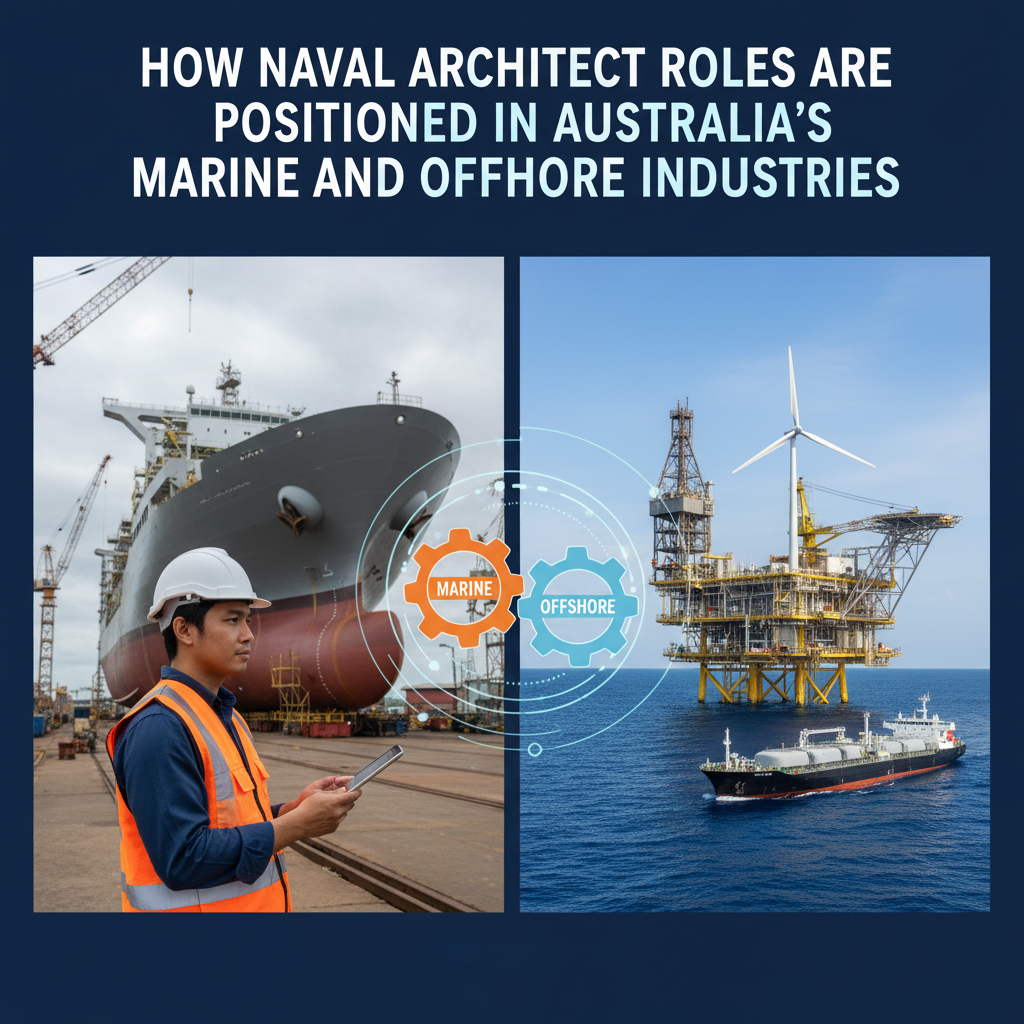
Australia’s maritime sector is undergoing a profound transformation, driven primarily by multi-billion dollar Defence Maritime Projects and a growing Australia Offshore Sector. This rapid expansion creates a high Naval Architect Demand Australia, positioning skilled professionals at the strategic centre of major national undertakings. With projects like the Continuous Naval Shipbuilding (CNS) program demanding expertise in design and construction, the Role of Naval Architect is far more than a technical one—it’s foundational to Australia’s sovereign industrial capability. These professionals are in a strong position, offering their specialised skills across defence, commercial, and emerging Marine Renewable Energy segments. This article explores the precise positioning of Naval Architect careers within the dynamic Australian Marine Industry and outlines the professional and immigration pathways for those looking to contribute.The Core
Role: Designing Australia’s Future Fleet
The Naval Architect is the master integrator for marine design, responsible for the full lifecycle of vessels and floating structures, from concept to decommissioning. Their work spans crucial specialisations like Hydrodynamics, Structural Design, and stability analysis. In Australia, this role is critically engaged across three main segments:
- Defence Maritime Projects: This is the most significant demand driver. Naval Architects are integral to the Continuous Naval Shipbuilding program, working with Defence Prime Contractor Australia firms like Austal, BAE Systems, and NAVANTIA. Their tasks include the complex design of surface warships, patrol vessels, and submarines, primarily based in Regional Centres like Osborne SA and Henderson WA.
- Commercial Vessel Design: The need for efficient, safe, and environmentally compliant commercial vessels is consistent. Naval Architects design and supervise the construction of ferries, cargo ships, tugs, and high-speed craft, ensuring compliance with Australian Maritime standards.
- Offshore and Floating Structures: The Australia Offshore Sector, including oil and gas, requires Naval Architects to design and manage Floating Structures Design—such as FPSOs (Floating Production Storage and Offloading facilities) and drill rigs—and manage complex mooring and installation operations. They also play a rising role in new fields like Offshore Wind.
The sheer scale and high-tech nature of these projects ensure a Naval Architect Job Market characterised by strong demand and competitive remuneration (Naval Architect Salary Australia averages around AU$93,000 to AU$98,000, with senior roles exceeding AU$140,000).
Continuous Naval Shipbuilding: The Key Demand Driver
The Australian Government’s commitment to building and maintaining its naval fleet in-country—the Continuous Naval Shipbuilding (CNS) plan—has fundamentally reshaped the Australian Shipbuilding landscape. This long-term, multi-generational initiative is the single greatest factor driving the current Naval Architect Demand Australia.
Strategic Employment Hubs
The shipbuilding plan has solidified key Regional Centres as maritime engineering hubs:
- Osborne, South Australia (SA): Home to major shipyards, this is the epicentre for future frigate and submarine programs, requiring deep expertise in complex combat system integration and high-end Submarine Design Australia.
- Henderson, Western Australia (WA): This region focuses on minor war vessels, patrol boats, and sustainment activities, creating a constant demand for Naval Architect Specialisation in high-speed and aluminium structures.
- Cairns, Queensland (QLD): Serves as a key location for vessel maintenance, sustainment, and support for the Australian Border Force (ABF) fleet, requiring Naval Architects skilled in repair, refits, and lifecycle management.
Working on these projects involves collaboration with international partners and the opportunity to work with cutting-edge technology, providing a premier Career Pathway Naval Architect Australia. This work is critical to national security, offering a stable and rewarding environment for highly skilled engineers.
Immigration Pathways and Professional Registration
For internationally qualified professionals, the Naval Architect role (officially recognised under ANZSCO 233916 Naval Architect) offers attractive Skilled Migration Visa Naval Architect pathways to Australia. Securing professional status and a positive skills assessment is the mandatory first step.
Skills Assessment Through Engineers Australia (EA)
The designated assessing authority for Naval Architects is Engineers Australia (EA). Overseas-qualified engineers typically need to submit a CDR (Competency Demonstration Report) to demonstrate that their engineering knowledge and skills are equivalent to an Australian-accredited qualification.
| Assessment Pathway | Requirement | Notes |
|---|---|---|
| Accredited | Washington Accord, Sydney Accord, or Dublin Accord qualification. | Streamlined process; full CDR is typically not required. |
| CDR Pathway | Competency Demonstration Report, CV, academic documents. | Required for all other qualifications; demonstrates engineering competency. |
A successful assessment is crucial for submitting an Expression of Interest (EOI) for permanent visas, such as the Subclass 189 Skilled Independent Visa, Subclass 190 Skilled Nominated Visa, or Subclass 491 Skilled Work Regional (Provisional) Visa. Given the reported Skill Shortages Australia Engineering, the chances for state nomination (190 and 491 visas) are generally favourable in states actively supporting the CNS program.
Career and Professional Development
Achieving Professional Registration Engineer Australia is a highly valued step after migration. Many Naval Architects also maintain membership with The Royal Institution of Naval Architects (RINA) Australia, a mark of professional standing globally. Continuous professional development (CPD) is essential, focusing on emerging areas like:
- Digital Ship Design: Mastery of advanced CAD/CAE software (e.g., MAXSURF, Rhino 3D, Finite Element Analysis—FEA).
- Decarbonisation: Expertise in alternative fuels (e.g., ammonia, hydrogen) and energy efficiency for a greener maritime future.
- Autonomous Vessels: Design and regulatory considerations for uncrewed or remotely operated marine systems.
The demand for these specialised skills ensures a dynamic and competitive Naval Architect Demand Australia, offering a strong trajectory from entry-level through to Senior Naval Architect and leadership roles.
Conclusion
Naval Architect roles are not just well-positioned in the Australian Marine Industry; they are in a state of high demand, driven by the historic scale of the Continuous Naval Shipbuilding program and strategic growth in the Australia Offshore Sector. Professionals who secure a positive skills assessment (ANZSCO 233916) and pursue permanent migration pathways can anticipate a stable, well-compensated, and deeply impactful Career Pathway Naval Architect Australia. If you are a skilled Naval Architect looking for a long-term, high-value career move, now is the time to finalise your professional assessment and explore Australia’s specific visa options.