




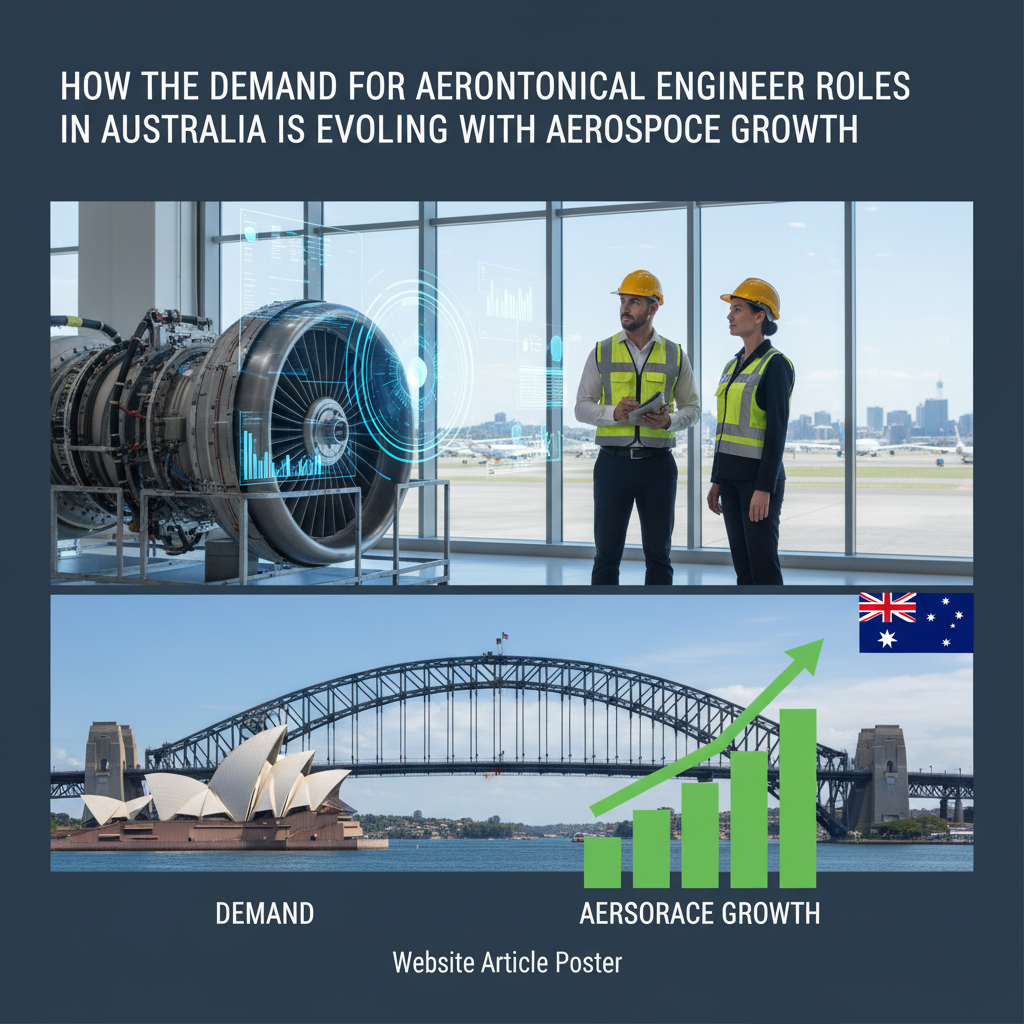
Explore how aeronautical engineer demand Australia evolves with aerospace growth Australia 2025. Discover defense, space, and MRO trends, ANZSCO 233911 job prospects, salaries, and skilled migration pathways.
Introduction
Australia’s aerospace sector accelerates at 5.25% CAGR, projected to reach USD 21.04 billion by 2033. Defense contracts, space agency expansion, and MRO hubs fuel this surge. Jobs and Skills Australia lists aeronautical engineer demand Australia among critical shortages, with over 176 vacancies in October 2025. The occupation (ANZSCO 233911) secures permanent placement on the Core Skills Occupation List, opening skilled migration aeronautical engineer Australia** routes. This guide analyzes Australia aerospace industry trends, evolving roles, salary benchmarks, and migration strategies to help engineers ride the growth wave.
Key Drivers of Aerospace Expansion and Engineer Demand
Three pillars propel aerospace growth Australia 2025: defense modernization, commercial aviation recovery, and space sector investment.
Defense Spending Surge
The 2024 Defence Strategic Review allocates A$50 billion over a decade. Projects like the Loyal Wingman drone and F-35 integration demand demand for aeronautical engineers defense Australia. Boeing Australia and BAE Systems Australia plan 300+ hires in 2025–2026.
Aviation and MRO Boom
Qantas and Virgin Australia expand fleets post-COVID. The **aeronautical engineering shortage Australia MRO** hits 15% vacancy rates in Brisbane and Melbourne hangars. Engineers skilled in composite repairs and predictive maintenance command premiums.
Space Industry Takeoff
The Australian Space Agency targets A$12 billion contribution by 2030. Gilmour Space and Black Sky Aerospace launch sites in Queensland create evolving roles aeronautical engineers space industry. Systems engineers with orbital mechanics expertise see 30% demand growth.
The job growth aeronautical engineers aviation recovery compounds annually. Labour Market Insights forecasts 6% employment rise through 2031, concentrated in Queensland’s aerospace precinct and South Australia’s defense corridor.
Shifting Skill Sets and Migration Pathways
Traditional aerodynamics expertise evolves. Employers prioritize hybrid capabilities in UAV design, sustainable fuels, and digital twins.
In-Demand Specializations
– UAV drone engineer demand Australia**: 40% of new roles focus on autonomous systems.
– Sustainable aviation aeronautical roles**: SAF certification and hydrogen propulsion projects spike 25%.
– Digital engineering: CFD, FEA, and Python scripting appear in 80% of job ads.
Salary Benchmarks
– Entry level aeronautical salary Australia**: AU$85,000–$95,000 (graduate programs at Boeing, Qantas).
– Mid-level (5 years): AU$130,000–$160,000.
– Senior/lead: AU$180,000–$220,000+ in defense contracts.
Migration Routes
ANZSCO 233911 qualifies for points-tested visas. Engineers under 45 with recognized degrees score 75–90 points easily.
- Subclass 189 (Skilled Independent): No sponsorship needed; invitations at 85 points (October 2025).
- Subclass 190 (State Nominated): Queensland adds 5 points for Queensland aerospace hub engineering jobs commitments.
- TSS 482 (Employer Sponsored): Boeing Qantas aeronautical engineer vacancies lead to PR via ENS 186 in two years.
Engineers Australia conducts skills assessments. Requirements: accredited degree (or Washington Accord equivalent) plus one year relevant experience. English: IELTS 7.0 overall.
Regional Opportunities and Strategic Positioning
Queensland emerges as the aerospace epicenter. The Wellcamp Aerospace Precinct hosts 50+ firms and offers state nomination bonuses.
South Australia follows with AUKUS submarine-adjacent roles. ADF aeronautical engineer careers provide citizenship pathways after four years service.
Actionable Strategies
- Target aerospace manufacturing demand engineers 2025 in Brisbane—network via Aviation Australia events.
- Upskill in UAV certification (CASA Part 101) or sustainable aviation fuels.
- Lodge EOI early; processing averages 6–8 months for Subclass 189.
Overseas engineers: complete CDR assessment before arrival. Many secure roles remotely, then transition via TSS 482.
Conclusion
Aeronautical engineer demand Australia surges with aerospace growth Australia 2025. Master emerging skills, target defense or space niches, and leverage Core Skills List priority. Start your Engineers Australia assessment today—secure your place in Australia’s skyward trajectory.