




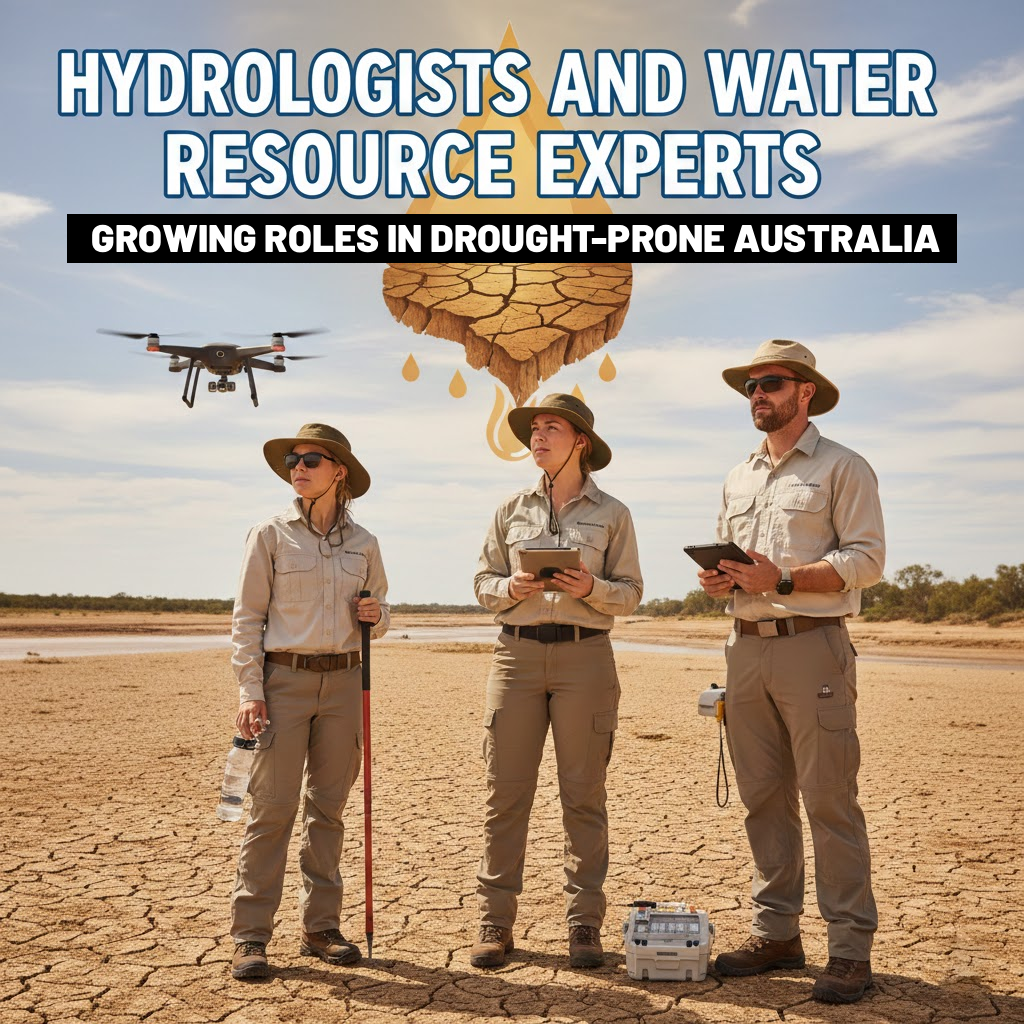
Discover why hydrologists and water resource experts enjoy strong demand in Australia. Learn about growing roles, visa pathways, salaries, and drought-driven opportunities in water resource management Australia.
Introduction
Australia faces its driest conditions on record. The Bureau of Meteorology reports that 2023–2025 ranks among the lowest rainfall periods since 1900. Prolonged drought, bushfire impacts, and climate change force the country to rethink water security. As a result, hydrologists and water resource experts now play central roles in keeping farms productive, cities supplied, and ecosystems alive. Demand for these specialists has surged, creating attractive career and immigration opportunities for qualified professionals worldwide.
Why Australia Urgently Needs Hydrologists and Water Resource Experts
Australia’s water scarcity is structural, not temporary. The Millennium Drought (1997–2009) exposed vulnerabilities, and recent dry cycles have intensified pressure on the Murray-Darling Basin, the nation’s food bowl. Groundwater levels continue to fall in many regions, while urban centers like Perth and Adelaide rely heavily on desalination and recycling.
The Australian Government’s 2024 Critical Skills List and state priority lists explicitly include hydrologists (ANZSCO 234399) and water resource engineers. Projects under the National Water Initiative and new climate-resilient water infrastructure plans require thousands of specialists in groundwater management Australia, surface water hydrology, and water modeling and forecasting. CSIRO water research predicts a 20–30% increase in demand for these roles by 2030.
Key Growth Areas Driving Jobs for Water Experts
1. Murray-Darling Basin Restoration
Billions flow into environmental flows Australia and sustainable diversion limits. Hydrologists monitor compliance and design recovery strategies.
2. Desalination and Water Recycling Expansion
Perth’s desalination plants already supply over 45% of the city’s water. New projects in Sydney, Melbourne, and regional Queensland create ongoing roles in water recycling Australia and plant operations.
3. Drought Resilience and Rural Water Supply
Programs such as the $10 billion National Water Grid fund new dams, pipelines, and rainwater harvesting Australia projects. Experts design climate-resilient water infrastructure for remote communities.
4. Mining and Coal Seam Gas Regulation
Strict water trigger laws require hydrogeologists to assess impacts on aquifers. Queensland and New South Wales offer hundreds of high-paying positions.
5. Urban Water Management and Flood-Drought Cycles
Cities need integrated water resource management (IWRM) to handle both drought and extreme rainfall events worsened by climate change.
Pathways for Overseas Hydrologists and Water Experts to Work in Australia
Australia streamlined visa options for water professionals:
– Skilled Independent Visa (Subclass 189) – points-tested permanent residency
– Skilled Nominated Visa (Subclass 190) – state nomination adds 5–15 points
– Skilled Work Regional Visa (Subclass 491) – popular in drought-affected states like NSW, Victoria, and Queensland
– Employer-sponsored 482/494 visas – common with consultancies (GHD, AECOM, Jacobs) and government bodies
A positive skills assessment from Engineers Australia or the Australian Institute of Geoscientists is mandatory. Relevant experience in drought management Australia or arid-zone hydrology significantly boosts points and job offers.
Salary Expectations and Lifestyle Benefits
Experienced hydrologists earn AUD 110,000–160,000 annually, with senior hydrogeologists in mining reaching AUD 200,000+. Regional roles often include housing allowances or relocation packages. Many positions qualify for the Regional Occupation List, speeding up permanent residency.
Conclusion
Australia’s battle against water scarcity creates long-term, meaningful careers for hydrologists and water resource experts. With priority visa processing and growing investment in water security Australia, skilled professionals can secure both rewarding jobs and a future in one of the world’s most livable countries. Start your skills assessment today and join the frontline of drought resilience.