




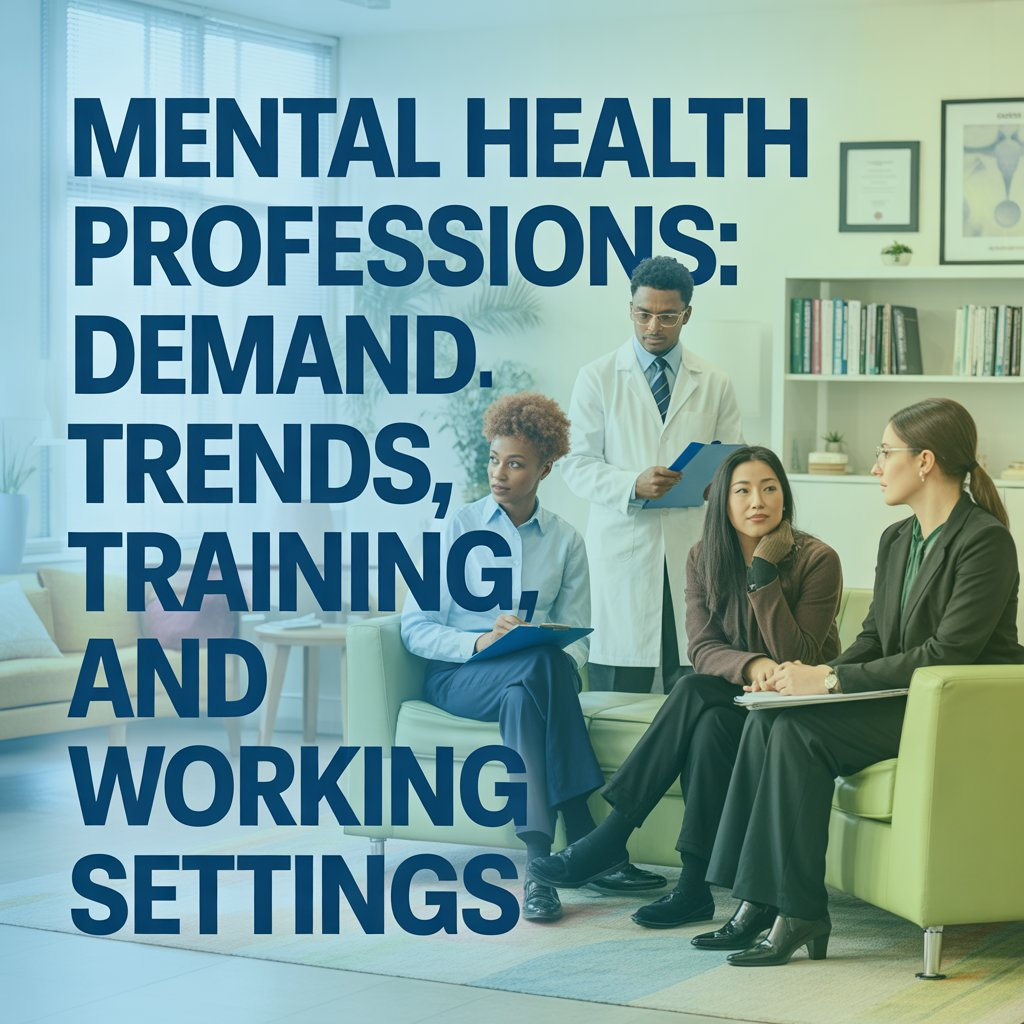
Explore mental health professions, including demand trends, training requirements, and diverse working settings. Learn about career pathways and job outlook.
Introduction
The global need for mental health services is surging, with the World Health Organization estimating a shortage of over 4 million mental health workers worldwide. Mental health professions offer rewarding career pathways for those passionate about helping others. This article dives into the demand trends driving these roles, the training required to enter the field, and the diverse working settings where professionals thrive. Whether you’re considering a career in counseling, psychology, or psychiatry, understanding these factors can guide your next steps.
Demand Trends in Mental Health Professions
The demand for mental health professionals has skyrocketed in recent years, fueled by growing awareness of mental health issues and reduced stigma. According to the U.S. Bureau of Labor Statistics, employment in mental health careers, such as counseling and psychology, is projected to grow 14% from 2020 to 2030, faster than the average for all occupations. Factors like rising rates of anxiety, depression, and substance abuse drive this need.
Psychiatry demand is particularly high, with a projected shortage of 15,000 psychiatrists in the U.S. by 2030. Rural areas and underserved communities face the greatest gaps, creating opportunities for professionals willing to work in these regions. Telehealth has also expanded access to mental health services, increasing the need for therapists and counselors skilled in virtual care. Industry growth reflects a shift toward preventive mental health care, with employers and governments investing in wellness programs.
Training Requirements for Mental Health Careers
Entering mental health professions requires specialized education and training. Most roles, such as therapists and counselors, demand at least a master’s degree in psychology, counseling, or social work. For example, a Licensed Professional Counselor (LPC) typically completes a 60-credit master’s program, including supervised clinical hours.
Psychologists need a doctoral degree (Ph.D. or Psy.D.), which takes 5–7 years, followed by licensure exams. Psychiatrists, as medical doctors, undergo the most rigorous training: a bachelor’s degree, four years of medical school, and a four-year residency. Continuing professional development is critical across all roles to maintain licensure and stay updated on evidence-based practices. Certifications in areas like cognitive-behavioral therapy or trauma care can enhance career prospects. Mental health education emphasizes both academic rigor and practical experience, ensuring professionals are equipped to handle complex cases.
Working Settings for Mental Health Professionals
Mental health professionals work in diverse environments, each offering unique challenges and rewards. Clinical settings, such as hospitals and private practices, are common, where therapists and psychiatrists provide one-on-one or group therapy. Community mental health centers serve low-income or underserved populations, often requiring professionals to address complex social issues alongside mental health concerns.
Schools and universities employ counselors to support student well-being, while corporate settings hire mental health professionals for employee assistance programs. Telehealth has emerged as a significant workplace environment, allowing professionals to reach clients remotely. Some professionals work in crisis intervention, such as hotlines or emergency response teams, requiring quick decision-making. Each setting demands adaptability and specialized skills, from navigating insurance systems in private practice to addressing cultural barriers in community care.
Career Pathways and Job Outlook
Mental health careers offer varied pathways, from entry-level roles like mental health technicians to advanced positions like clinical psychologists. Counseling careers, such as marriage and family therapy, are accessible with a master’s degree and offer strong job prospects. The median annual wage for counselors was $48,520 in 2022, with top earners in private practice or specialized fields exceeding $80,000.
Psychologists and psychiatrists often earn higher salaries, with median incomes of $81,040 and over $200,000, respectively. Employment trends favor professionals with expertise in telehealth, substance abuse, or geriatric care. Career advancement often involves pursuing additional certifications or supervisory roles. The mental health workforce is increasingly diverse, with growing opportunities for bilingual professionals or those specializing in culturally competent care.
Conclusion
Mental health professions are in high demand, offering rewarding careers for those committed to helping others. With robust training requirements and diverse working settings, from hospitals to telehealth platforms, these roles provide flexibility and growth potential. As the job outlook remains strong, now is an ideal time to explore mental health careers. Research training programs or connect with professionals in the field to start your journey toward a fulfilling career.