




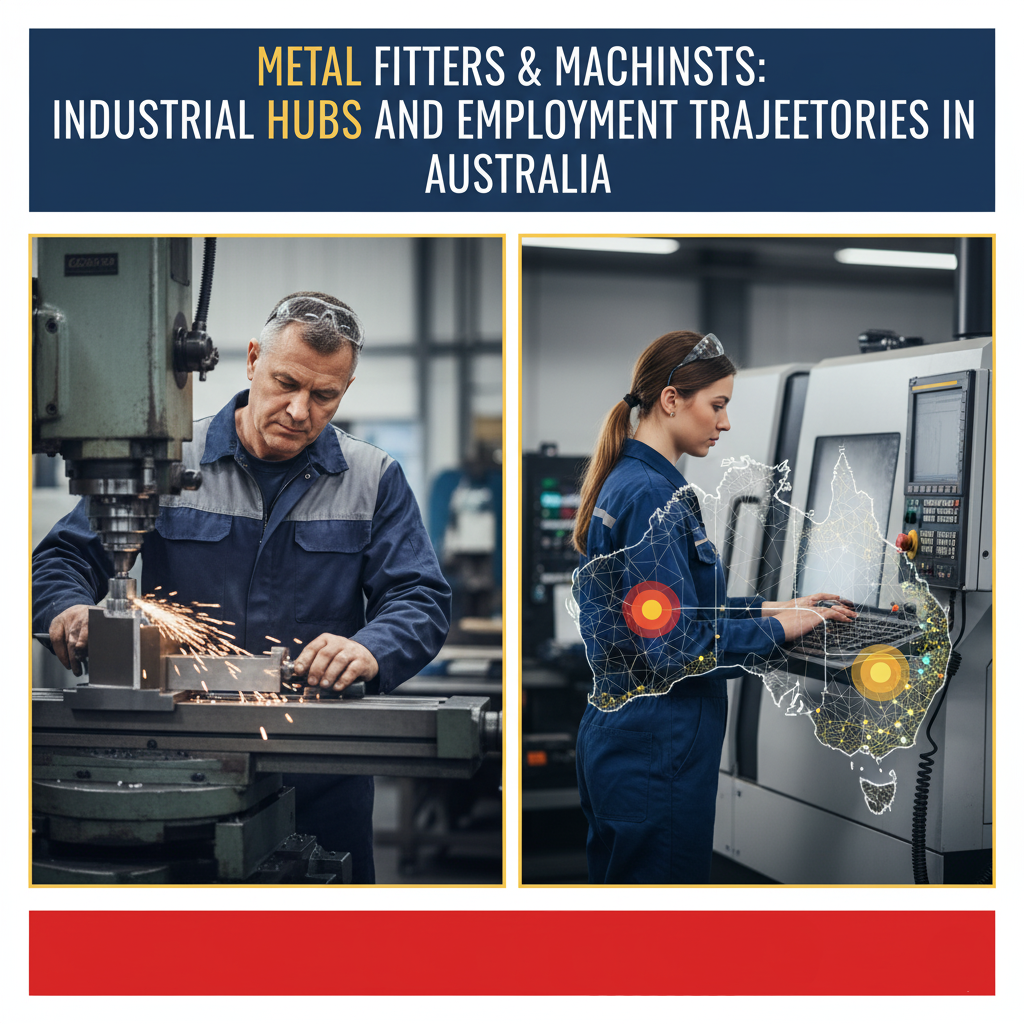
Explore demand, job locations, salaries, and skilled migration pathways for metal fitters and machinists in Australia’s key industrial hubs in 2025.
Introduction
Metal fitters and machinists play a vital role in Australia’s manufacturing and industrial sectors. With over 120,000 employed nationally and steady growth of 2,000 jobs annually, these skilled tradespeople are essential to industries like mining, transport, and construction. As Australia continues to invest in infrastructure and industry modernization, demand for metal fitters and machinists remains strong in urban and regional hubs alike.
What Do Metal Fitters and Machinists Do?
Metal fitters and machinists specialize in fitting, assembling, and maintaining metal parts used in machinery, equipment, and structural components. Their work involves:
- Reading technical drawings and specifications meticulously.
- Operating lathes, milling machines, and other precision machining tools.
- Assembling and adjusting metal components to ensure exact fit and function.
- Conducting fault diagnosis and repairs on mechanical and hydraulic equipment.
- Preparing parts for textile and manufacturing machines.
Their skills are necessary in multiple industries, including mining, aerospace, automotive, shipbuilding, and infrastructure projects. As machines become more complex and automated, their expertise remains indispensable in ensuring operational efficiency and safety.
Industrial Hubs and Geographic Distribution
Australia’s demand for metal fitters and machinists is concentrated around key industrial and resource centers. The states with the highest employment share are:
- Western Australia (26.8%): Mining hubs like Perth, Kalgoorlie, and Newman drive significant demand, especially for maintenance fitters servicing heavy machinery.
- Queensland (24.8%): Regional mining towns, ports, and manufacturing centers in Brisbane, Mackay, and Gladstone provide abundant opportunities.
- New South Wales (22.4%): Industrial hubs around Sydney, Newcastle, and Wollongong offer diverse roles in manufacturing, transport, and infrastructure.
- Victoria (16.8%): Melbourne and Geelong lead with roles in automotive manufacturing, aerospace, and infrastructure projects.
- South Australia (6.4%): Adelaide’s growing defense and manufacturing sectors require skilled fitters and machinists.
- Tasmania, Northern Territory, ACT (<3%): Smaller markets catering primarily to regional industry and government services.
While cities concentrate job opportunities, regional and remote areas also provide valuable career options given their infrastructure projects and resource extraction activities. Employers often provide attractive relocation packages and benefits reflecting the critical skills shortage.
Salary Expectations and Work Conditions
Metal fitters and machinists in Australia enjoy some of the highest pay rates among manual trades. Median weekly earnings for full-time workers reach approximately AUD 2,243, substantially higher than the national average. Typical hourly earnings range from AUD 50 to AUD 55, depending on experience, industry, and location.
Jobs often require long shifts averaging 50 hours per week, with overtime pay and penalty rates common in mining and manufacturing. While the role involves physically demanding and precise work, it offers steady employment and strong career progression pathways.
Higher pay scales are available for specialists in CNC operations, automation maintenance, and industrial machining. Training in advanced technologies enhances career resilience, especially as industries automate and digitalize.
Skilled Migration Pathways and Trade Shortages
Given persistent shortages in these trades, Australia prioritizes metal fitters and machinists through skilled migration pathways. Relevant visa options include:
- Skilled Independent Visa (subclass 189): Points-based for highly skilled applicants meeting ASCO and ACS standards.
- Skilled Nominated Visa (subclass 190): State-sponsored visa focusing on regional and high-need areas.
- Temporary Skill Shortage Visa (subclass 482): Employer sponsorship for short- and mid-term skilled roles.
- Regional Sponsored Migration Scheme (subclass 491): Encourages relocation to regional areas with incentives for permanent residency.
Applicants must obtain accreditation of their skills by authorized bodies, demonstrate English proficiency, and meet safety and qualification requirements. Many Australian companies actively sponsor overseas machinists due to the high demand and project timelines.
Trade shortage jobs in Australia for migrants encompass a blend of traditional fitting roles and newer positions requiring CNC and automation expertise. Migrant fitters who adapt to evolving industry technologies increase their chances of fast-track employment and residency.
Employment Outlook and Career Development
Employment for metal fitters and machinists is forecast to grow steadily through 2025 and beyond. Industrial modernization, increased mining output, infrastructure upgrades, and manufacturing resurgence sustain demand across states.
Career trajectories include moving from hands-on fitting to roles in quality control, workshop supervision, or industrial maintenance management. Specialized training in robotics, CNC programming, and safety compliance opens pathways to senior technician and engineering support roles.
Job seekers benefit from engaging with local trade associations, continuous training programs, and apprenticeships that blend foundational skills with emerging technologies.
Conclusion
Metal fitters and machinists are key contributors to Australia’s industrial landscape, with strong job market growth centered in mining and manufacturing hubs. Competitive pay, steady demand, and clear skilled migration pathways make these trades attractive for local and international workers alike. Harnessing advanced training and embracing regional opportunities will maximize career prospects in this vital sector.