




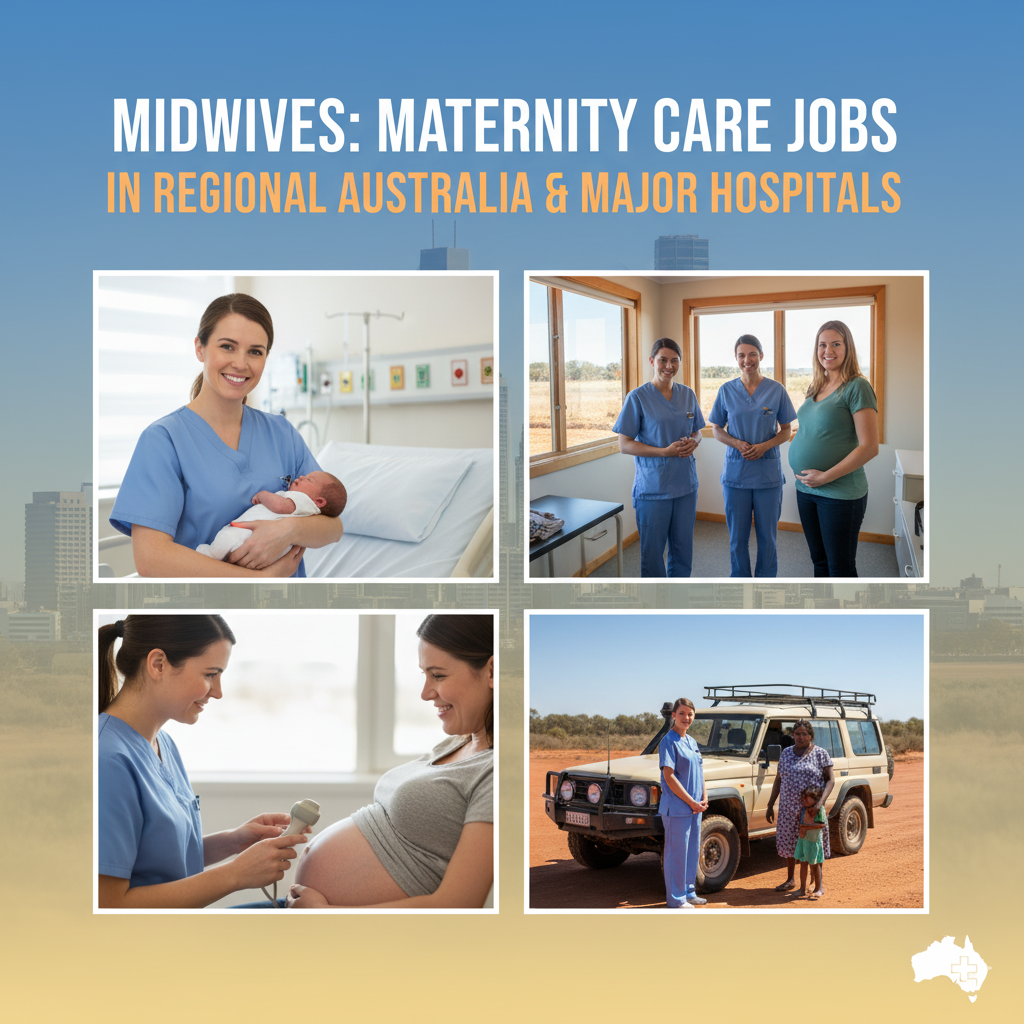
Explore high-demand Midwife Jobs across Regional Australia and Major Hospitals. Learn about the Skilled Visa pathway (ANZSCO 254111), AHPRA registration, and benefits of a Midwifery Careers in Australian Maternity Services.
Australia faces a persistent need for dedicated healthcare professionals, especially in maternity care. The demand for Registered Midwives (RM) is critical, particularly in providing quality perinatal care across vast and underserved areas. This shortage creates exceptional Healthcare Jobs Australia opportunities for qualified international midwives seeking both a rewarding career and a PR Pathway Midwife Australia. From world-class Major Hospitals Australia to unique Rural Midwifery roles, your expertise is highly valued.
The Critical Demand for Midwives in Australia
Australia’s diverse geography and growing population drive a constant, urgent demand for midwives. The need extends beyond metropolitan centers, creating significant Midwife Vacancies in Regional Australia and remote communities. Working in these areas often involves specialized roles and distinct rewards.
A career in Australian maternity services offers immense scope. Registered Midwives provide essential support through antenatal care, managing labour and delivery in the birthing suite, and critical postnatal support. In Regional Australia, the midwife’s role is often expanded, encompassing broader primary care, sometimes as a Remote Area Nurse/Midwife, and frequently engaging with Aboriginal Health initiatives. This integrated approach ensures continuity of care, a high-value model in Australian healthcare. The Australian Skilled Occupation List (SOL) consistently features the Midwife ANZSCO 254111 code, underscoring its national significance for skilled migration.
Visa Pathways for International Midwives: Subclasses and Strategy
For an international Registered Midwife, securing a work visa and a potential PR Pathway Midwife Australia involves a structured process beginning with professional recognition and a strategic visa application.
The journey starts with two mandatory steps:
- AHPRA Registration Midwife: You must register with the Nursing and Midwifery Board of Australia (NMBA), regulated by AHPRA. This confirms your qualification and competence meet Australian standards. This registration is often required before the skills assessment.
- ANMAC Skills Assessment: The Australian Nursing & Midwifery Accreditation Council (ANMAC) is the official body that assesses your qualifications and employment history against Australian benchmarks. A positive ANMAC assessment is compulsory for skilled migration visas.
Skilled Migration Visas for Midwives
Once recognized, several Australian Skilled Visas offer a direct path to employment and residency:
- Skilled Independent Visa (Subclass 189): A permanent visa that does not require state nomination or employer sponsorship. Invitations are highly competitive, based on a points test (often requiring a minimum of 80 points or higher for an invitation). It allows you to live and work anywhere in Australia.
- Skilled Nominated Visa (Subclass 190): A permanent visa requiring nomination from a State or Territory government. Nomination is granted based on the specific needs of that state, which frequently prioritize healthcare roles like midwife jobs QLD or midwife jobs WA to address shortages in their major hospitals Australia or regional centers. The state nomination adds 5 points to your total score.
- Skilled Work Regional (Provisional) Visa (Subclass 491): This provisional visa is designed specifically for working in Regional Australia for five years. It requires state/territory nomination or sponsorship by an eligible family member in a designated regional area. It adds 15 points to your total, making it an excellent option for achieving the 65-point minimum. Crucially, this visa offers a strong PR pathway through the permanent Subclass 191 visa after three years, provided you meet minimum income and residency requirements in the regional area.
Choosing the Subclass 491 is often the most strategic move for quicker migration, as Regional Australia states have greater flexibility and need, providing more opportunities for nomination and securing a PR pathway midwife Australia.
Midwifery Practice Models: Regional vs. Metro Opportunities
The type of work environment significantly varies between major urban areas and regional Australia, offering distinct professional experiences and benefits.
Major Hospitals Australia: Metro and Core Roles
In large, metro hospitals and tertiary facilities, midwives typically work within specialized units, such as a dedicated labour and delivery ward, antenatal clinics, or postnatal wards. Here, the focus is often on high-volume, high-acuity obstetrics and specialized maternity care. Career progression often leads to roles like Clinical Midwife Educator or Clinical Midwife Consultant. While shifts can be demanding, these hospitals offer extensive training, research opportunities, and exposure to complex cases. Many large hospitals utilize Team Midwifery models, but increasingly, they also offer the Midwife Group Practice (MGP) model, which provides midwives with better professional autonomy and the reward of providing full continuity of care for a smaller caseload of women.
Regional and Rural Midwifery: Caseload & Community Focus
Regional Midwifery presents a unique professional challenge and opportunity. Rural Midwife Jobs often mean working across a full scope of practice—from community antenatal clinics to managing the birthing suite and providing extensive in-home postnatal care.
A dominant and highly-valued model in these settings is the Midwife Group Practice (MGP). MGP midwives manage a caseload of women, offering continuous care throughout pregnancy, birth, and the postnatal period. This is considered the gold standard of maternity care, leading to better outcomes for mothers and babies, and higher job satisfaction for the midwife. The sense of community connection and professional satisfaction is a significant draw to these roles. Additionally, Regional Australia employers commonly offer:
- Relocation Incentives and subsidized housing.
- Higher pay rates, with some regional and remote areas paying significantly more than metropolitan centers (in some cases, well over $120,000 per year).
- Access to greater salary packaging benefits, a common tax advantage in Australian public healthcare.
- Opportunities for Endorsed Midwives (those with prescribing rights) to utilize their full skill set.
The demand is high in states like Midwife Jobs QLD, Midwife Jobs WA, and Midwife Jobs NSW, where vast distances necessitate strong rural midwifery services.
Qualification and Career Advancement
A career in Australian midwifery is one of continuous growth. After meeting the minimum requirements to become a Registered Midwife (RM), further specialization is encouraged and often rewarded with higher pay and greater autonomy.
- Advanced Practice: Many midwives pursue roles as a Clinical Midwife Consultant or Clinical Midwife Specialist, focusing on areas like lactation, diabetes in pregnancy, or high-risk obstetrics.
- Endorsed Midwife: Gaining an endorsement allows a midwife to prescribe certain medications, order specific diagnostic tests, and practice more independently, which is highly valuable in Midwife Group Practice and rural midwifery settings.
- Locum and Contract Midwifery: For those seeking flexibility or a way to sample different parts of Australia, Locum Midwife or Agency Midwife contracts are readily available, often with high hourly rates and attractive travel packages, particularly for short-term placements in regional Australia.
The combination of professional respect, excellent working conditions, competitive salaries with generous salary packaging options, and a clear path to permanent residency makes a career as a midwife in Australia one of the most compelling midwifery careers available globally.
Conclusion
A career as a Registered Midwife in Australia, whether in the specialty teams of Major Hospitals or the holistic, community-focused settings of Regional Australia, offers a clear path to professional fulfillment and permanent residency. By navigating the ANMAC and AHPRA requirements and strategically utilizing visas like the Subclass 491, international midwives can secure one of the most in-demand Healthcare Jobs Australia. Start your skills assessment and Expression of Interest today to begin your Australian midwifery careers journey.