




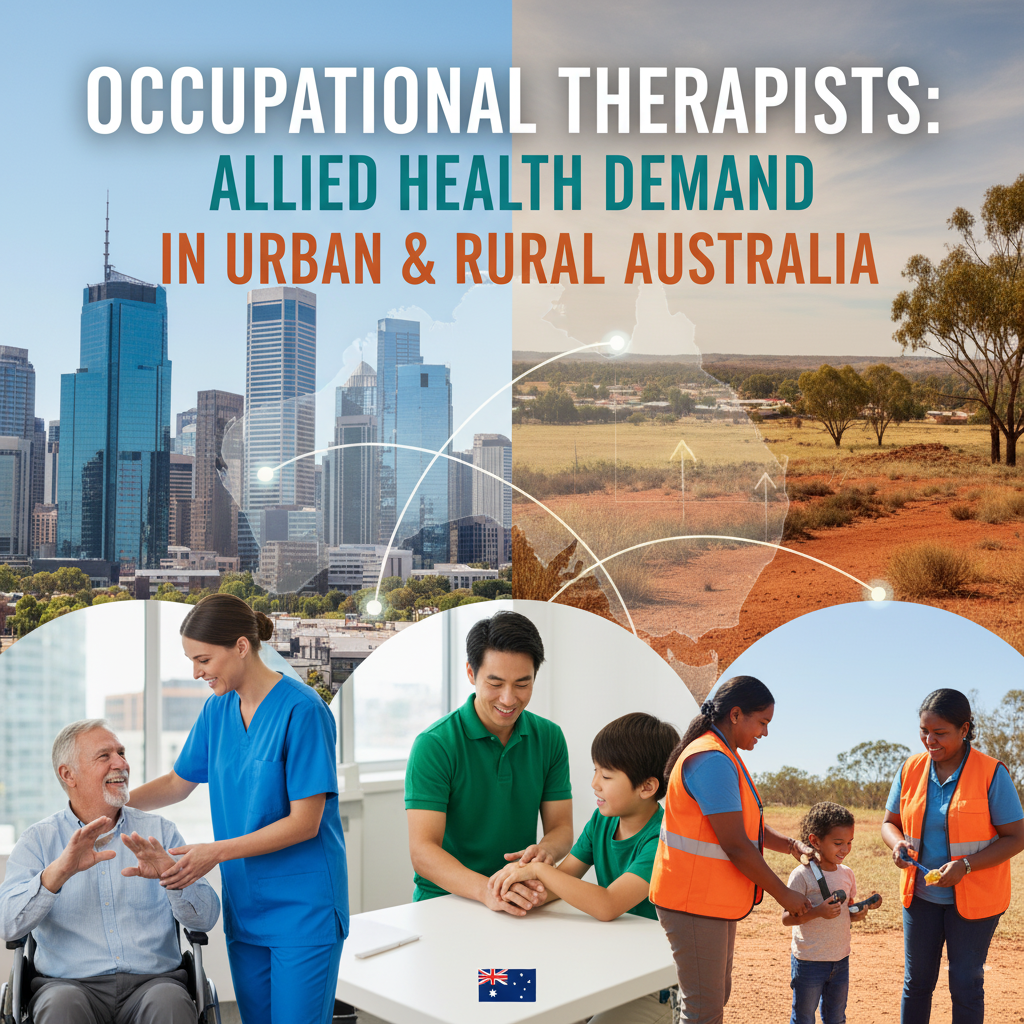
Discover the high demand for Occupational Therapists across Australia’s urban and rural areas. Learn about OT jobs, visas, OT permanent residency, and why now is the time to migrate.
Occupational Therapists: Allied Health Demand in Urban and Rural Areas
Australia faces a critical shortage of Allied Health professionals. This persistent demand creates significant opportunities for skilled migrants, particularly Occupational Therapists. Data shows a severe scarcity of OTs, with the government actively seeking qualified professionals to fill roles across the country. If you are a qualified Occupational Therapist, Australia’s migration pathways offer a clear route to a rewarding career and OT permanent residency.
The Critical OT Shortage Across Australia
The need for skilled Occupational Therapists is more urgent than ever. Australia’s aging population and the expansion of the NDIS (National Disability Insurance Scheme) drive this massive Allied Health Demand. These factors create a high volume of OT jobs in every state. The role is vital: OTs help people of all ages achieve independence in their daily lives. The government identifies this profession, classified under ANZSCO 252411, as a core priority for skilled migration. This high demand is the first and most compelling reason to pursue a Skilled Visa Occupational Therapist pathway.
Urban vs. Rural OT Jobs Australia: Understanding the Landscape
While major cities offer ample Occupational Therapy roles, the most intense demand is often found in regional areas. Urban OT salary packages are competitive, driven by private practice and high caseloads in metropolitan hospitals. However, the true OT Shortage exists outside the capital cities. Rural OT Jobs come with significant incentives to attract talent. These can include higher base salaries, accommodation subsidies, and substantial relocation allowances. Choosing Regional Occupational Therapy can also fast-track your path to OT Permanent Residency through specific state-nominated visas like the Subclass 491 OT visa.
Diverse Specializations Driving Allied Health Demand
The field of Occupational Therapy is broad, offering various specialization areas, all of which are experiencing demand. Understanding where your skills fit can refine your job search.
Paediatric OT in the Community
The NDIS has significantly boosted the need for Paediatric OT services. These roles focus on helping children develop the skills needed for school, play, and self-care. Many of these positions are found in Community Occupational Therapy settings, offering flexible, varied work. This specialty is crucial in both dense urban areas and underserved rural towns.
Mental Health OT and Holistic Care
Mental Health OT is a rapidly growing sector. OTs apply their skills to support mental well-being, focusing on the link between a person’s activities and their mental health. This critical, specialized work is needed everywhere. OTs working in mental health can find employment in hospitals, community clinics, and private practice across Australia.
Aged Care OT
With the aging demographic, Aged Care OT is consistently in high demand. These OTs work with older adults to maintain independence, safety, and quality of life. This includes home modifications, assistive technology, and developing lifestyle management strategies. Facilities and home-care providers actively seek OTs for these essential services.
Pathway to Australia: Visa and Skills Assessment
Qualified OTs seeking OT Permanent Residency must navigate two primary hurdles: skills assessment and the visa application.
The OTC Skills Assessment
The first step for any international Occupational Therapist is the OTC Skills Assessment conducted by the Occupational Therapy Council of Australia (OTC). This assessment confirms your qualifications and clinical experience meet Australian standards. A positive assessment is mandatory for applying for a skilled migration visa. Starting this process early is crucial to a streamlined move.
Securing a Skilled Visa
Many OTs successfully migrate via General Skilled Migration visas. State-nominated visas are particularly attractive. The Subclass 491 OT (Skilled Work Regional) visa is a common option for those willing to commit to working in Regional Occupational Therapy. This visa offers a pathway to permanent residency after three years, capitalizing on the need for Healthcare Jobs Regional.
The Rural Advantage: Remote OT Incentives and Pay
Working in a remote or regional location is more than a career move; it is a strategic migration pathway. States and territories offer powerful Remote OT Incentives to fill critical gaps. These often include higher pay rates—sometimes surpassing Urban OT Salary in a direct comparison—and attractive financial benefits.
Higher Earning Potential and Lower Cost of Living
While regional pay, or Rural Health Pay, may be higher due to incentives, the cost of living in remote areas is typically lower. This combination allows OTs to save substantially more than their city counterparts. Look for packages that detail signing bonuses, subsidized housing, or paid professional development. These benefits maximize the value of your move.
Conclusion
The Allied Health Demand in Australia presents a substantial, immediate opportunity for skilled Occupational Therapists. Whether you specialize in Paediatric OT, Mental Health OT, or Aged Care OT, your skills are needed. Focus on securing your OTC Skills Assessment and exploring regional visa options like the Subclass 491 OT. The road to OT Permanent Residency is clear and actively encouraged by the Australian government. Start your journey to a rewarding career and new life today.