




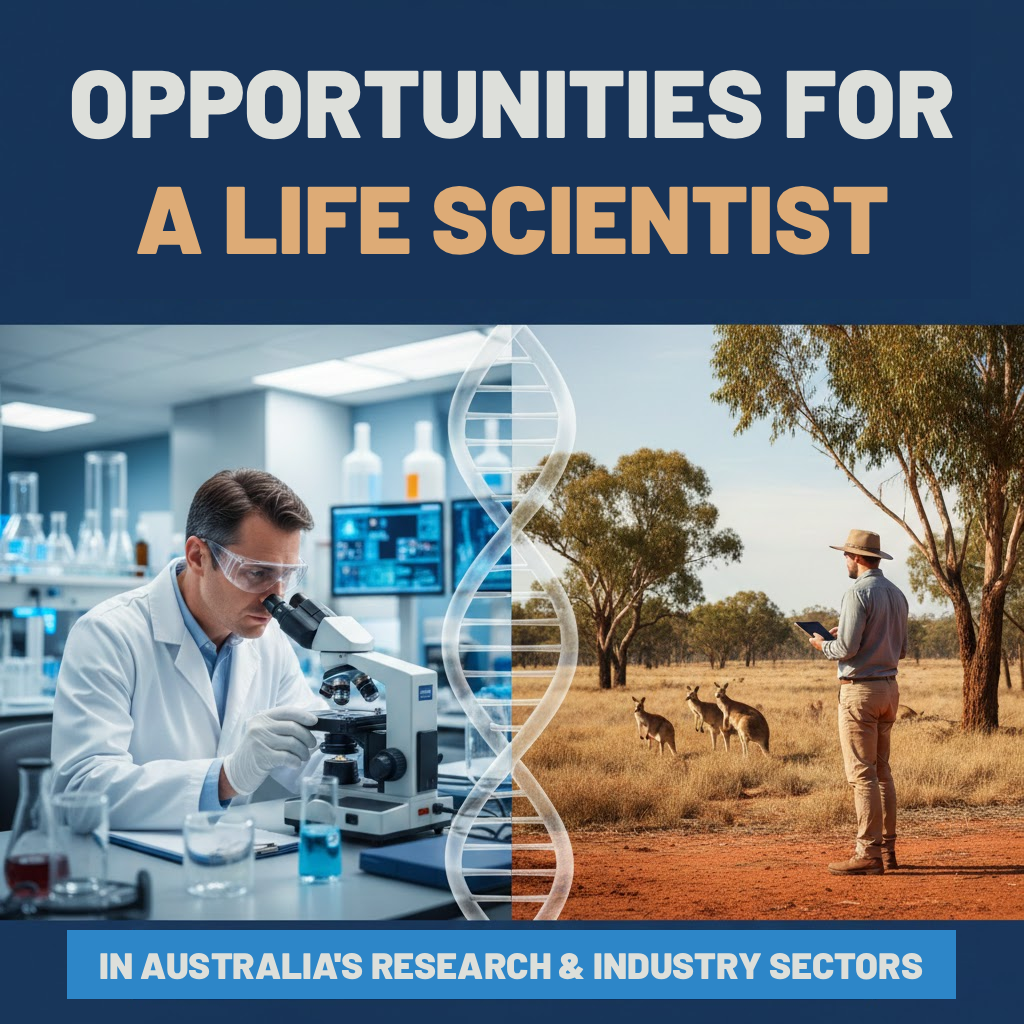
Discover growing life sciences jobs in Australia’s biotechnology, pharmaceutical, and medical research sectors. Explore STEM roles, R&D positions, innovation hubs in Melbourne and Sydney, visa pathways, and salary insights for life scientists.
Introduction
Australia’s life sciences sector employs over 250,000 people and contributes more than AUD 8 billion annually to the economy. Demand for skilled life scientists continues to rise across biotechnology careers, pharmaceutical industry opportunities, medical research positions, and emerging fields such as cell and gene therapy. This guide examines the most promising opportunities for a life scientist in Australia’s research and industry sectors and explains how international talent can secure these roles.
Thriving Research Ecosystems and Academic Opportunities
Australia hosts world-class research institutions that actively recruit life scientists. The Commonwealth Scientific and Industrial Research Organisation (CSIRO), Walter and Eliza Hall Institute, Garvan Institute, and Peter MacCallum Cancer Centre lead in medical research positions and collaborative research partnerships.
Universities including the University of Melbourne, University of Sydney, and University of Queensland offer hundreds of academic science positions and postdoctoral roles each year. Government research funding through the National Health and Medical Research Council (NHMRC) and the Medical Research Future Fund (MRFF) reached AUD 3.5 billion in recent budgets. These funds support projects in immunology, neuroscience, oncology, and infectious diseases.
Innovation hubs Melbourne and the Sydney biotechnology cluster provide proximity to leading hospitals, universities, and venture capital. Life scientists benefit from translational research environments that accelerate discoveries from bench to bedside.
Industry Growth: Biotechnology, Pharmaceuticals, and Medtech
The Australian biotechnology sector has grown 8–10% annually for the past five years. More than 1,100 companies now operate nationwide, ranging from startups to global players like CSL Limited, Cochlear, and ResMed.
Pharmaceutical industry opportunities span drug discovery, biopharmaceutical development, and clinical research trials. CSL, one of the world’s largest plasma product manufacturers, employs thousands of life scientists in Melbourne and Broadmeadows. Companies in cell and gene therapy, such as Avita Medical and Cynata Therapeutics, expand rapidly and seek expertise in stem cells, regenerative medicine, and advanced therapeutics.
Medtech innovations and medical devices research thrive in Sydney and Brisbane. Firms like ResMed (sleep apnea), Cochlear (hearing implants), and 4DMedical (lung imaging) drive demand for biologists, biochemists, and biomedical engineers. The digital health sectors also integrate life science skills for AI-driven diagnostics and telemedicine platforms.
Key Growth Areas Driving Demand
Several national science priorities shape current opportunities:
– Precision medicine and genomics
– Vaccine development and pandemic preparedness
– Antimicrobial resistance solutions
– Neuroscience and mental health therapies
– Sustainable agriculture and food security (plant and microbial sciences)
These priorities create STEM roles in Australia across government, industry, and non-profit organisations. Healthcare systems advancements further boost demand for clinical trial coordinators, regulatory affairs specialists, and data scientists with life science backgrounds.
Salary Expectations and Career Progression
Life scientists in Australia earn competitive salaries. Entry-level research officers start at AUD 75,000–90,000. Experienced scientists in industry often exceed AUD 120,000, while principal investigators or senior R&D managers reach AUD 180,000–250,000 plus bonuses.
Career progression remains strong. Many professionals move between academia, industry, and government, gaining diverse experience and networks. Economic prosperity in life sciences supports long-term stability and growth.
Pathways for International Life Scientists
Australia welcomes overseas talent through the Global Talent Visa (subclass 858), Skilled Independent Visa (189), and Employer Sponsored visas (482/186). Life science occupations appear consistently on the Priority Migration Skilled Occupation List. Strong English skills, relevant qualifications, and research or industry experience significantly improve approval chances.
Conclusion
Opportunities for a life scientist in Australia’s research and industry sectors have never been stronger. From cutting-edge medical research positions to high-impact biotechnology careers, the country offers diverse, well-funded roles in a collaborative environment. Start exploring job boards, university career pages, and company websites today to position yourself for success in this dynamic field.