




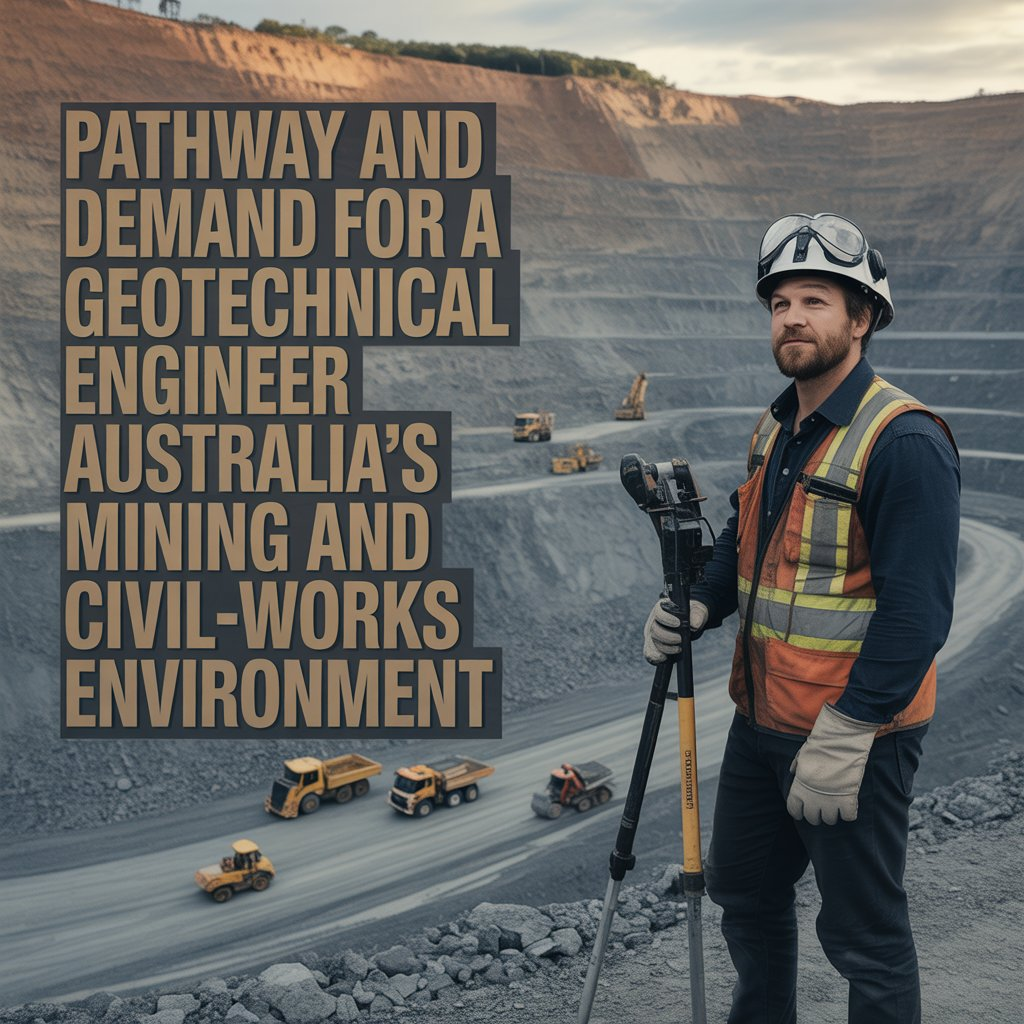
Discover pathways and demand for geotechnical engineers in Australia’s mining and civil works. Gain insights on qualifications, accreditation, salaries, and visa options to advance your career in this thriving sector.
Introduction
Australia’s mining industry generates over $400 billion annually, driving substantial demand for skilled professionals in geotechnical engineering. This sector, combined with expanding civil works infrastructure, faces challenges like slope stability and sustainable resource extraction amid growing environmental regulations. Geotechnical engineers play a critical role in addressing these issues through site investigation, foundation design, and ground improvement techniques. This article examines the career pathway for geotechnical engineers in Australia’s mining and civil-works environment, highlighting job demand, required qualifications, and industry trends. It provides essential guidance for professionals seeking opportunities in this dynamic field.
Understanding Geotechnical Engineering in Australia’s Context
Geotechnical engineering focuses on the behavior of earth materials, including soil mechanics and rock mechanics, to support safe and efficient construction projects. In Australia, this discipline integrates with the mining industry and civil construction projects, where engineers conduct site investigations to assess ground conditions for infrastructure development. Professionals analyze how soil and rock respond to pressure from structures, ensuring stability in environments prone to seismic activity or variable geology.
Key responsibilities include evaluating slope stability to prevent landslides in mining operations and designing foundations for large-scale civil works like bridges and tunnels. Tunnelling engineering, a specialized area, involves planning underground excavations while minimizing risks. Australia’s diverse terrain, from arid outback mines to coastal urban developments, demands expertise in these areas. Engineers often collaborate with multidisciplinary teams to incorporate sustainable mining practices, such as reducing water usage and rehabilitating sites post-extraction.
Industry trends in Australia emphasize innovation, with advancements in digital tools like GIS and AI for predictive modeling. As of 2025, the sector adapts to decarbonization initiatives, aligning geotechnical work with environmental goals. This evolution requires engineers to stay updated on regulations from bodies like the Minerals Council of Australia. For international professionals, understanding local standards is vital for integration into the resource sector employment landscape.
Career Pathways and Qualifications for Geotechnical Engineers
Aspiring geotechnical engineers in Australia typically begin with a qualifications engineering degree, such as a Bachelor of Engineering in Civil or Geotechnical specializations, from an accredited institution. Programs at universities like the University of Queensland offer focused studies in geotechnical engineering, preparing graduates for practical applications in mining geotechnics and civil works. Postgraduate geotechnical studies, including master’s degrees, enhance expertise in advanced topics like ground improvement and rock mechanics.
Work experience requirements are essential; entry-level roles often demand internships or supervised projects to build practical skills. Engineers Australia accreditation is a key milestone, recognizing programs that meet national standards. For professional engineer registration, candidates pursue Chartered status through the National Engineering Register, involving competency assessments and continuing professional development. This process ensures alignment with Australian practices, particularly for those with international qualifications.
The career pathway geotechnical involves progression from junior roles in site investigation to senior positions managing large-scale projects. In mining, engineers advance to roles overseeing sustainable practices, while civil works offer opportunities in infrastructure development. Gaining experience in high-demand areas like mining in Western Australia or Queensland accelerates advancement. Networking through Engineers Australia events and certifications in specialized software further strengthens prospects in this competitive field.
Job Demand and Market Forecast in Mining and Civil Works
Job demand for engineers in geotechnical roles remains robust in Australia’s mining industry and civil works infrastructure. The sector anticipates steady growth, fueled by critical minerals extraction and major projects like renewable energy transitions. As of 2025, vacancies for geotechnical engineers hover around 130-150 nationwide, with concentrations in resource-rich states. The mining boom, particularly in lithium and copper, heightens need for expertise in slope stability and ground improvement to support expanded operations.
Civil construction projects, including transportation and urban development, contribute to this demand. Infrastructure investments, projected at billions annually, require geotechnical input for foundation design and risk mitigation. Job market forecast indicates a positive outlook, with skills shortages in experienced professionals driving recruitment from abroad. Regional variations exist; Western Australia and Queensland lead in mining geotechnics, while New South Wales focuses on civil works.
Salary for geotechnical engineers averages $110,000 annually, ranging from $90,000 for entry-level to $150,000 for seniors with over eight years’ experience. Factors like location and specialization influence earnings, with mining roles often offering premiums for remote work. Industry trends in Australia, including automation and sustainable mining practices, shape future demand, emphasizing eco-friendly techniques like water recycling and biodiversity management.
Immigration and Visa Pathways for International Engineers
For international geotechnical engineers eyeing Australia’s opportunities, migration begins with a skills assessment from Engineers Australia. The Competency Demonstration Report (CDR) pathway suits those without accredited qualifications, requiring evidence of engineering competencies. Geotechnical Engineer (ANZSCO 233212) appears on the Skilled Occupation List, qualifying for visas like the Skilled Independent (189), which is points-tested and allows permanent residency.
State-nominated options, such as the Skilled Nominated (190) or Skilled Work Regional (491), provide pathways for those with lower points, often requiring commitments to regional areas. Employer-sponsored visas offer another route, particularly in high-demand mining regions. Points thresholds vary; geotechnical roles may secure invitations at 70-85 points, depending on experience.
Preparation involves demonstrating English proficiency via IELTS and gathering work experience documentation. Successful applicants benefit from Australia’s strong resource sector employment, with pathways to citizenship after residency. Consulting registered migration agents ensures compliance with evolving regulations.
Conclusion
Geotechnical engineers find promising pathways in Australia’s mining and civil-works environment, supported by strong job demand and competitive salaries. Key steps include obtaining relevant qualifications, securing Engineers Australia accreditation, and navigating visa options for immigration. Embrace industry trends toward sustainability to thrive in this sector. Consider consulting a migration expert to explore your eligibility and take the next step toward a rewarding career Down Under.